
What is the Ahmadiyya belief about the concept of Buruz/Zill/Matheel?
Introduction
The fundamental difference between the non-Ahmadi scholars and the Ahmadiyya community is the personality of the Promised Messiah. They believe that the son of Mary whose coming is reported to be Jesus, the son of Mary, peace and blessings be upon him, who will actually be revealed, while the Ahmadiyya community holds the position that Jesus, the son of Mary, has already died and the son of Mary mentioned in the hadiths is a simile of the son of Mary, and not Jesus, the son of Mary. Hearing this simile, there is an uproar among the non-Ahmadi scholars ,
Allah Almighty says in Surah Az-Zukhruf:
وَلَمَّا ضُرِبَ ابۡنُ مَرۡیَمَ مَثَلًا اِذَا قَوۡمُکَ مِنۡہُ یَصِدُّوۡنَ
And when the son of Mary is mentioned as an instance, lo! thy people raise a clamour thereat;
[Quran 43:58]
The Sufi terms such as:
- Fana fi Allah (annihilation in God),
- Fana fi Rasool (annihilation in the Prophet),
- Fana fi Shaykh (annihilation in one’s spiritual guide), and
- the poetic expression “Man to shudam, to man shudi; tan shudam, jan shudi” (I became you, and you became me; I turned body, and you turned soul)—
all reflect a deep spiritual experience of unity, love, and likeness between the seeker and the Beloved.
Similarly, expressions like “Ranjha Ranjha kardi ni main aape Ranjha hoi” (I kept chanting Ranjha’s name until I myself became Ranjha) highlight how a lover’s identity dissolves into the beloved’s being.
Such expressions reflect the inner state of spiritual union, not literal incarnation.
This shows that the appearance of someone as a likeness (Maseel, Zill, Buruz) is not at all un-Islamic. Yet, in fulfilling the message of the Holy Prophet (peace and blessings of Allah be upon him), many scholars have unfortunately adopted the attitude of the Jews and Christians—hiding the truth and presenting a man-made religion in place of true Islam.
Let us examine: Is the idea of a human being appearing as a likeness of another truly un-Islamic? Or is it actually supported in the Qur’an, Hadith, the sayings of saints and imams, and even in the writings of reliable non-Ahmadi scholars of our time?
Matheel in Quran:
The Prophets (Adam, Issa, Moses, and Muhammad) are like(Maseel) each other
Issa (as) is Maseel of Adam (as) :
اِنَّ مَثَلَ عِیۡسٰی عِنۡدَ اللّٰہِ کَمَثَلِ اٰدَمَ ؕ خَلَقَہٗ مِنۡ تُرَابٍ ثُمَّ قَالَ لَہٗ کُنۡ فَیَکُوۡنُ
Surely, the case of Jesus with Allah is like the case of Adam. He created him out of dust, then He said to him, ‘Be!,’ and he was.
[Quran 3:60]
Hadrat Muhammed (saw) is Maseel of Mosa (as):
اِنَّاۤ اَرۡسَلۡنَاۤ اِلَیۡکُمۡ رَسُوۡلًا ۬ۙ شَاہِدًا عَلَیۡکُمۡ کَمَاۤ اَرۡسَلۡنَاۤ اِلٰی فِرۡعَوۡنَ رَسُوۡلًا
Verily, We have sent to you a Messenger, who is a witness over you, even as We sent a Messenger to Pharaoh.
[Quran 73:16]
The commandment for believers to be like(Maseel) the disciples of Isaa (as) :
یٰۤاَیُّہَا الَّذِیۡنَ اٰمَنُوۡا کُوۡنُوۡۤا اَنۡصَارَ اللّٰہِ کَمَا قَالَ عِیۡسَی ابۡنُ مَرۡیَمَ لِلۡحَوَارِیّٖنَ مَنۡ اَنۡصَارِیۡۤ اِلَی اللّٰہِ ؕ قَالَ الۡحَوَارِیُّوۡنَ نَحۡنُ اَنۡصَارُ اللّٰہِ فَاٰمَنَتۡ طَّآئِفَۃٌ مِّنۡۢ بَنِیۡۤ اِسۡرَآءِیۡلَ وَکَفَرَتۡ طَّآئِفَۃٌ ۚ فَاَیَّدۡنَا الَّذِیۡنَ اٰمَنُوۡا عَلٰی عَدُوِّہِمۡ فَاَصۡبَحُوۡا ظٰہِرِیۡنَ
O ye who believe! be helpers of Allah, as said Jesus, son of Mary, to his disciples, ‘Who are my helpers in the cause of Allah.’ The disciples said, ‘We are helpers of Allah.’ So a party of the children of Israel believed, while a party disbelieved. Then We gave power to those who believed against their enemy, and they became victorious.
[Quran 61:15]
The believers are like (Maseel) Pharaoh’s wife , or Mary :
وَضَرَبَ اللّٰہُ مَثَلًا لِّلَّذِیۡنَ اٰمَنُوا امۡرَاَتَ فِرۡعَوۡنَ ۘ اِذۡ قَالَتۡ رَبِّ ابۡنِ لِیۡ عِنۡدَکَ بَیۡتًا فِی الۡجَنَّۃِ وَنَجِّنِیۡ مِنۡ فِرۡعَوۡنَ وَعَمَلِہٖ وَنَجِّنِیۡ مِنَ الۡقَوۡمِ الظّٰلِمِیۡنَ
And Allah sets forth for those who believe the example of the wife of Pharaoh when she said, ‘My Lord! build for me a house with Thee in the Garden; and deliver me from Pharaoh and his work, and deliver me from the wrongdoing people;’
[Quran 66:12]
Opponents of prophets are like (Maseel) each other :
وَقَالَ الَّذِیۡنَ لَا یَعۡلَمُوۡنَ لَوۡلَا یُکَلِّمُنَا اللّٰہُ اَوۡ تَاۡتِیۡنَاۤ اٰیَۃٌ ؕ کَذٰلِکَ قَالَ الَّذِیۡنَ مِنۡ قَبۡلِہِمۡ مِّثۡلَ قَوۡلِہِمۡ ؕ تَشَابَہَتۡ قُلُوۡبُہُمۡ ؕ قَدۡ بَیَّنَّا الۡاٰیٰتِ لِقَوۡمٍ یُّوۡقِنُوۡنَ
And those who have no knowledge say, ‘Why does not Allah speak to us, or a Sign come to us?’ Likewise said those before them similar to their saying. Their hearts are alike. We have certainly made the Signs plain for a people who firmly believe.
[Quran 2:119]
Matheel in Ahadith
The Holy Prophet (peace be upon him) is like Moses (peace be upon him) and Hazrat Ali (may Allah be pleased with him) is like Aaron (peace be upon him) :
حَدَّثَنِي مُحَمَّدُ بْنُ بَشَّارٍ، حَدَّثَنَا غُنْدَرٌ، حَدَّثَنَا شُعْبَةُ، عَنْ سَعْدٍ، قَالَ سَمِعْتُ إِبْرَاهِيمَ بْنَ سَعْدٍ، عَنْ أَبِيهِ، قَالَ النَّبِيُّ صلى الله عليه وسلم لِعَلِيٍّ “ أَمَا تَرْضَى أَنْ تَكُونَ مِنِّي بِمَنْزِلَةِ هَارُونَ مِنْ مُوسَى
And narrated Sad
that the Prophet (ﷺ) said to ‘Ali, “Will you not be pleased from this that you are to me like Aaron was to Moses
[Sahih Bukhari 3706]
The sahaba are like (Maseel) of prophets :
Do you not see what is proven in the two Sahihs of the saying of the Prophet, may God bless him and grant him peace, in the hadith of the prisoners of war, when he consulted Abu Bakr, and he suggested ransom, and he consulted Umar, and he suggested killing. He said: I will tell you about your two companions. You, Abu Bakr, are like Abraham when he said: “So whoever follows me – indeed, he is of me. And whoever disobeys me – indeed, You are Oft-Forgiving, Most Merciful.” (Surat Ibrahim: 36). And like Jesus when he said: “If You should punish them – indeed, they are Your servants; and if You forgive them – indeed, You are the Exalted in Might, the Wise.” (Surat Al-Ma’idah: 118). And like you, Umar, is like Noah when he said: “My Lord, leave not a single one of the disbelievers on the earth.” (Surat Nuh: 26). And like Moses when he said: “Our Lord, obliterate their wealth and intensify their punishment.” Their hearts, so they will not believe until they see.
[Ibn Tayimiah (rh)]
His statement to this one: “You are like Abraham and Jesus,” and to this one: “Noah and Moses” is greater than his statement: “You are to me as Aaron was to Moses.” For Noah, Abraham, Moses, and Jesus are greater than Aaron. He made these two like them, and did not mean that they were like them in everything, but in what the context indicates of severity in God and gentleness in God.
![[Ibn Tayimiah (rh)]](https://whiteminaret.org/wp-content/uploads/2025/03/Ibn-Taymiah-Maseel-of-sahaba.png.png)
Abu Jahl is the Pharaoh of this nation :
ابو جهل فرعون هذه الأمة
[Al-Mu’jam Al-Kabir of Al-Tabarani, Part Nine, Page 84]
![[Al-Mu’jam Al-Kabir of Al-Tabarani, Part Nine, Page 84]](https://whiteminaret.org/wp-content/uploads/2025/03/Abu-Jahl-is-the-Pharaoh-of-this-nation.png.png)
Abu Dharr al-Ghifari is the most similar (Maseel) person to Issa (as) :
حَدَّثَنَا الْعَبَّاسُ الْعَنْبَرِيُّ، قَالَ حَدَّثَنَا النَّضْرُ بْنُ مُحَمَّدٍ، قَالَ حَدَّثَنَا عِكْرِمَةُ بْنُ عَمَّارٍ، قَالَ حَدَّثَنِي أَبُو زُمَيْلٍ، هُوَ سِمَاكُ بْنُ الْوَلِيدِ الْحَنَفِيُّ عَنْ مَالِكِ بْنِ مَرْثَدٍ، عَنْ أَبِيهِ، عَنْ أَبِي ذَرٍّ، قَالَ قَالَ رَسُولُ اللَّهِ صلى الله عليه وسلم ” مَا أَظَلَّتِ الْخَضْرَاءُ وَلاَ أَقَلَّتِ الْغَبْرَاءُ مِنْ ذِي لَهْجَةٍ أَصْدَقَ وَلاَ أَوْفَى مِنْ أَبِي ذَرٍّ شِبْهِ عِيسَى ابْنِ مَرْيَمَ عَلَيْهِ السَّلاَمُ ” . فَقَالَ عُمَرُ بْنُ الْخَطَّابِ كَالْحَاسِدِ يَا رَسُولَ اللَّهِ أَفَنَعْرِفُ ذَلِكَ لَهُ قَالَ ” نَعَمْ فَاعْرِفُوهُ لَهُ ” . هَذَا حَدِيثٌ حَسَنٌ غَرِيبٌ مِنْ هَذَا الْوَجْهِ . وَقَدْ رَوَى بَعْضُهُمْ هَذَا الْحَدِيثَ فَقَالَ ” أَبُو ذَرٍّ يَمْشِي فِي الأَرْضِ بِزُهْدِ عِيسَى ابْنِ مَرْيَمَ عَلَيْهِ السَّلاَمُ ” .
that the Messenger of Allah (ﷺ) said: “There is no one more truthful in speech, nor in fulfilling of promises, that sky has covered and the earth has carried, than Abu Dharr, the likeness of ‘Eisa bin Mariam.” So ‘Umar bin Al-Khattab said, as if out of envy: “So do you acknowledge that for him, O Messenger of Allah?” He said: “Yes, so acknowledge it.”
[tirmidhi 3802]
Muslims of the last days are like Jews and Christians :
حَدَّثَنَا سَعِيدُ بْنُ أَبِي مَرْيَمَ، حَدَّثَنَا أَبُو غَسَّانَ، قَالَ حَدَّثَنِي زَيْدُ بْنُ أَسْلَمَ، عَنْ عَطَاءِ بْنِ يَسَارٍ، عَنْ أَبِي سَعِيدٍ ـ رضى الله عنه ـ أَنَّ النَّبِيَّ صلى الله عليه وسلم قَالَ ” لَتَتَّبِعُنَّ سَنَنَ مَنْ قَبْلَكُمْ شِبْرًا بِشِبْرٍ، وَذِرَاعًا بِذِرَاعٍ، حَتَّى لَوْ سَلَكُوا جُحْرَ ضَبٍّ لَسَلَكْتُمُوهُ ”. قُلْنَا يَا رَسُولَ اللَّهِ، الْيَهُودَ وَالنَّصَارَى قَالَ ” فَمَنْ ”.
The Prophet (ﷺ) said, “You will follow the wrong ways, of your predecessors so completely and literally that if they should go into the hole of a mastigure, you too will go there.” We said, “O Allah’s Messenger (ﷺ)! Do you mean the Jews and the Christians?” He replied, “Whom else?” (Meaning, of course, the Jews and the Christians.)
[Sahih Bukhari 3456]
Abu Bakr Al-Siddiq (ra) and Omar bin Al-Khattab (ra) are like the companions of Yusuf (as):
حَدَّثَنَا قُتَيْبَةُ بْنُ سَعِيدٍ، قَالَ حَدَّثَنَا أَبُو مُعَاوِيَةَ، عَنِ الأَعْمَشِ، عَنْ إِبْرَاهِيمَ، عَنِ الأَسْوَدِ، عَنْ عَائِشَةَ، قَالَتْ لَمَّا ثَقُلَ رَسُولُ اللَّهِ صلى الله عليه وسلم جَاءَ بِلاَلٌ يُؤْذِنُهُ بِالصَّلاَةِ فَقَالَ ” مُرُوا أَبَا بَكْرٍ أَنْ يُصَلِّيَ بِالنَّاسِ ”. فَقُلْتُ يَا رَسُولَ اللَّهِ، إِنَّ أَبَا بَكْرٍ رَجُلٌ أَسِيفٌ، وَإِنَّهُ مَتَى مَا يَقُمْ مَقَامَكَ لاَ يُسْمِعُ النَّاسَ، فَلَوْ أَمَرْتَ عُمَرَ. فَقَالَ ” مُرُوا أَبَا بَكْرٍ يُصَلِّي بِالنَّاسِ ”. فَقُلْتُ لِحَفْصَةَ قُولِي لَهُ إِنَّ أَبَا بَكْرٍ رَجُلٌ أَسِيفٌ، وَإِنَّهُ مَتَى يَقُمْ مَقَامَكَ لاَ يُسْمِعِ النَّاسَ، فَلَوْ أَمَرْتَ عُمَرَ. قَالَ ” إِنَّكُنَّ لأَنْتُنَّ صَوَاحِبُ يُوسُفَ، مُرُوا أَبَا بَكْرٍ أَنْ يُصَلِّيَ بِالنَّاسِ ”. فَلَمَّا دَخَلَ فِي الصَّلاَةِ وَجَدَ رَسُولُ اللَّهِ صلى الله عليه وسلم فِي نَفْسِهِ خِفَّةً، فَقَامَ يُهَادَى بَيْنَ رَجُلَيْنِ، وَرِجْلاَهُ يَخُطَّانِ فِي الأَرْضِ حَتَّى دَخَلَ الْمَسْجِدَ، فَلَمَّا سَمِعَ أَبُو بَكْرٍ حِسَّهُ ذَهَبَ أَبُو بَكْرٍ يَتَأَخَّرُ، فَأَوْمَأَ إِلَيْهِ رَسُولُ اللَّهِ صلى الله عليه وسلم، فَجَاءَ رَسُولُ اللَّهِ صلى الله عليه وسلم حَتَّى جَلَسَ عَنْ يَسَارِ أَبِي بَكْرٍ، فَكَانَ أَبُو بَكْرٍ يُصَلِّي قَائِمًا، وَكَانَ رَسُولُ اللَّهِ صلى الله عليه وسلم يُصَلِّي قَاعِدًا، يَقْتَدِي أَبُو بَكْرٍ بِصَلاَةِ رَسُولِ اللَّهِ صلى الله عليه وسلم وَالنَّاسُ مُقْتَدُونَ بِصَلاَةِ أَبِي بَكْرٍ رضى الله عنه.
When Allah’s Messenger (ﷺ) became seriously ill, Bilal came to him for the prayer. He said, “Tell Abu Bakr to lead the people in the prayer.” I said, “O Allah’s Messenger (ﷺ)! Abu Bakr is a softhearted man and if he stands in your place, he would not be able to make the people hear him. Will you order `Umar (to lead the prayer)?” The Prophet (ﷺ) said, “Tell Abu Bakr to lead the people in the prayer.” Then I said to Hafsa, “Tell him, Abu i Bakr is a softhearted man and if he stands in his place, he would not be able to make the people hear him. Would you order `Umar to lead the prayer?’ ” Hafsa did so. The Prophet (ﷺ) said, “Verily you are the companions of Joseph. Tell Abu Bakr to lead the people in the prayer.” So Abu- Bakr stood for the prayer. In the meantime Allah’s Messenger (ﷺ) felt better and came out with the help of two persons and both of his legs were dragging on the ground till he entered the mosque. When Abu Bakr heard him coming, he tried to retreat but Allah’s Messenger (ﷺ) beckoned him to carry on. The Prophet (ﷺ) sat on his left side. Abu Bakr was praying while standing and Allah’s Messenger (ﷺ) was leading the prayer while sitting. Abu Bakr was following the Prophet (ﷺ) and the people were following Abu Bakr (in the prayer).
[Sahih Bukhari 713]
The Scholars of the Ummaah :
The appearance of the Holy Prophet (peace and blessings of Allah be upon him) in the form of members of the Ummah :
Syed Abdul Karim Jilani (rh) :
’’اور اس امر کا بھید یہ ہے کہ آنحضرت ﷺ ہر صورت میں متصور ہو سکتے ہیں۔ پس ادیب جب آپ کو اس صورت پر دیکھتا ہے جو زندگی میں آپ کی صورت تھی تو اس کا نام صورت محمدیہ رکھتا ہے۔ اور جب کسی اور صورت میں دیکھتا ہے اور جانتا ہے کہ وہ محمد ﷺ ہیں تو اس کا نام وہی رکھتا ہے جو اس صورت کا نام ہے۔ اور دراصل وہ نام بجز حقیقت محمدیہ کے اور کسی شے پر واقع نہیں ہوتا۔ کیا تجھے معلوم نہیں کہ جب آپ شبلی رضی اللہ تعالیٰ عنہ کی صورت میں ظاہر ہوئے۔ تو شبلی نے اپنے تلمیذ سے کہا کہ میں اس امر کی شہادت دیتا ہوں کہ میں اللہ کا رسول ہوں۔ تلمیذ صاحب کشف تھا۔ اس نے نور کشف سے پہچان لیا اور کہا کہ میں بھی گواہی دیتا ہوں کہ تو اللہ کا رسول ہے۔ اور یہ ایک ایسی بات ہے جس کا انکار نہیں کیا جاتا۔ اور وہ ایسا ہی ہے جیسا کہ سونے والا دیکھے کہ فلاں شخص کی صورت میں ظاہر ہوا ہے اور کشف کا ادنیٰ مرتبہ یہ ہے کہ بیداری میں بھی وہی دیکھے جو خواب میں دیکھا ہے۔ لیکن نیند اور کشف میں فرق ہے۔ اور وہ یہ ہے کہ جس صورت میں محمد ﷺ کو نیند میں دیکھتا ہے بیداری میں اس کا نام حقیقت محمدیہ پر واقع نہیں ہوتا۔ اس لئے کہ عالم مثال کے واقعات کی تعبیر ہوتی ہے۔ پس بیداری میں حقیقت محمدیہ سے اس صورت کی حقیقت کی طرف تعبیر کی جاتی ہے۔ برخلاف اس کے کشف کہ کشف جب حقیقت محمدیہ سے تجھ پر انکشاف ہوتا ہے کہ وہ آدمیوں کی صورتوں میں سے فلاں صورت میں متجلی ہے۔ تو تجھ پر لازم ہوتا ہے کہ تو اس صورت کا نام حقیقت محمدیہ پر واقع کرے۔ اور اس صورت والے کا ایسا ادب کرے جیسا کہ محمد ﷺ کا ادب کرنا چاہئے۔ اس لئے کہ تجھے کشف سے یہ بات معلوم ہوئی کہ اس صورت والے کا ایسا ادب کرے جیسا کہ محمد ﷺ متصور ہیں۔ اس شہود کے بعد تیرے لئے یہ جائز نہیں کہ تو اس صورت کے آدمی سے وہی معاملہ کرے جو پہلے کرتا تھا۔ اس بات سے بچنا کہ مبادا میرے قول میں مذہب تناسخ کا تجھے وہم گزرے۔ میں خدا کی پھر رسول کی اس بات سے پناہ لیتا ہوں کہ میری یہ مراد ہو۔ بلکہ میری غرض یہ ہے کہ محمد ﷺ کو یہ قدرت حاصل ہے کہ وہ ہر صورت میں متصور ہوں۔ حتیٰ کہ وہ ان صورتوں میں متجلی ہوتے ہیں اور آنحضرت ﷺ کا یہ دستور جاری ہے کہ وہ ہمیشہ ہر زمانہ میں اس زمانہ کے اکمل کی صورت میں ظاہر ہوتے ہیں تاکہ ان کی شان بلند ہو۔ اور زمانہ کا اس کی طرف میلان درست اور قائم ہو۔ اور وہ ظاہر میں آنحضرت ﷺ کے خلیفہ ہوتے ہیں اور باطن میں آنحضرت ﷺ ان کی حقیقت ہیں۔‘‘
“The Secret of This Matter”
The mystery of this matter is that the Prophet Muhammad ﷺ can manifest in any form. Thus, when a refined and perceptive person sees him in the form that he had during his earthly life, he calls it the “Muhammadan Form” (Surat Muhammadiyyah). However, when he appears in another form, and the observer still recognizes that it is Muhammad ﷺ, then that form is named according to its appearance. In reality, however, that name applies only to the Muhammadan Reality (Haqiqat Muhammadiyyah) and nothing else.
Do you not know that when the Prophet ﷺ appeared in the form of Shibli (May Allah be pleased with him), Shibli said to his disciple, “I bear witness that I am the Messenger of Allah”? The disciple, who had the gift of unveiling (kashf), recognized the truth through the light of divine perception and responded, “I too bear witness that you are the Messenger of Allah.” This is a reality that cannot be denied. It is similar to a person seeing in a dream that a certain individual has manifested in a particular form.
The lowest level of unveiling (kashf) is that one sees in wakefulness what was seen in a dream. However, there is a distinction between dreams and unveiling. The difference is that when one sees the Prophet ﷺ in a particular form during sleep, the name “Muhammadan Reality” does not apply to that form in wakefulness, because events of the Alam al-Mithal (the imaginal world) require interpretation. Thus, in wakefulness, the vision of the Muhammadan Reality is interpreted according to the essence of the form in which he appeared.
In contrast, true unveiling (kashf) is when the Muhammadan Reality is revealed to you, and you perceive it manifesting in a specific human form. At that point, you must apply the name “Muhammadan Reality” to that form and show the same reverence to that individual as is due to the Prophet ﷺ. Since your unveiling has confirmed that Muhammad ﷺ is manifesting in that form, you are no longer permitted to treat that person as you did before.
Beware of misunderstanding my words and mistaking them for the doctrine of transmigration (tanasukh). I seek refuge in God—and then in His Messenger—from such a meaning! My intent is rather to clarify that the Prophet Muhammad ﷺ possesses the ability to manifest in different forms. Indeed, he appears in various forms throughout every era, always manifesting in the most perfect individual of that time so that his exalted station is upheld, and the people of that era are inclined toward him.
Outwardly, such a person is the Caliph of the Prophet ﷺ, but inwardly, the Prophet ﷺ is his very essence and reality.
[“Insan al-Kamil” (The Perfect Man), Pages 388
Author: Syed Abdul Karim Al-Jili (rh)
Publisher: Nafees Academy, Urdu Bazaar, Karachi] [Page 389]
![[“Insan al-Kamil” (The Perfect Man), Pages 388Author: Syed Abdul Karim Al-Jili (rh)Publisher: Nafees Academy, Urdu Bazaar, Karachi]](https://whiteminaret.org/wp-content/uploads/2025/03/Buruz-Abd-Qadir-Jilani-page-388.jpg)
![[Page 389]](https://whiteminaret.org/wp-content/uploads/2025/03/Buruz-Abd-Qadir-Jilani-page-389.jpg)
’’انبیاء علیہم الصلوٰۃ والسلام کے کامل تابعدار کمال متابعت اور زیادہ محبت کے باعث بلکہ محض عنایت اور بخشش سے اپنے متبوعہ انبیاء کے تمام کمالات کو جذب کرلیتے ہیں۔ اور پورے طور پر ان کے رنگ میں رنگے جاتے ہیں حتے کہ تابعوں اور متبوعوں کے درمیان سوائے اصالت اور تبعیت اور اولیت اور آخریت کے کچھ فرق نہیں رہتا۔‘‘
“The perfect followers of the Prophets, peace and blessings be upon them, absorb all the perfections of their Prophets, through their perfect obedience and great love, or rather, simply through their grace and forgiveness. And they are completely imbued with their color, so that there is no difference between the followers and the followed except for originality and subordination, priority and lastness.”
[Maktobat of Imam Rabbani Hazrat Mujaddid Alif Sani Letter No. 248, First Book, Volume 1]
![[Maktobat of Imam Rabbani Hazrat Mujaddid Alif Sani Letter No. 248, First Book, Volume 1]](https://whiteminaret.org/wp-content/uploads/2025/03/Maseel-Mujadd-Alf-Sani.jpg)
The successors (Khalifa)of Syed Ahmad Shaheed are like (Maseel) the successors (Khalifa) of the Prophet Muhammad (peace be upon him) :
’’سب سوانح نگار متفق ہیں کہ سیّد صاحب کے مریدوں میں بلند ترین مرتبہ مولوی عبد الحئیؒ اور مولوی محمد اسمٰعیل شہیدؒ کا تھا۔ بلکہ اکثر کہا جاتا ہے کہ ’’یہ دونوں بزرگ بمنزلہ حضرت ابوبکر صدیقؓ اور حضرت عمرؓ کے آپ کے یارغار اور جاں نثار تھے۔‘‘ مولوی محمد اسمٰعیل صاحب میں حضرت عمرؓ کی طرح جوش و خروش اور جراٗت و بہادری تھی اور بدعت کے خلاف وہ اسی طرح تیغ بکف رہتے تھے، لیکن اس کے باوجود مولوی عبدالحئی صاحب کو سب مریدوں سے افضل سمجھا جاتا ہے۔ وہ خاموش طبع تھے، لیکن ان کا ایمان چٹان کی طرح محکم و مضبوط تھا۔ طبیعت میں حضرت ابوبکرؓ کی طرح وقار اور تحمّل تھا۔ نہ مصیبت میں گھر کر گھبراتے تھے اور نہ کامیابی میں آپے سے باہر ہوجاتے تھے۔ آپ نے سیّد صاحب کو ہمیشہ صحیح اور نیک مشورہ دیا اور ان کے مشن پر اس وقت ایمان لائے، جب سیّد صاحب کی خوبیاں ابھی بے نقاب نہ ہوئی تھیں۔‘‘
“All biographers agree that the highest position among Syed Sahib’s disciples belonged to Maulvi Abdul Hai (RA) and Maulvi Muhammad Ismail Shaheed (RA). Rather, it is often said that “these two great men were as devoted and devoted to him as Hazrat Abu Bakr Siddique (RA) and Hazrat Umar (RA). Maulvi Muhammad Ismail Sahib had the same enthusiasm, courage and bravery as Hazrat Umar (RA) and he was equally fierce against innovation, but despite this Maulvi Abdul Hai Sahib is considered superior to all the disciples. He was quiet in nature, but his faith was as firm and strong as a rock. He was dignified and patient in nature like Hazrat Abu Bakr (RA). He was neither afraid of adversity nor did he lose his temper in success. He always gave Syed Sahib correct and good advice and believed in his mission at a time when Syed Sahib’s qualities had not yet been revealed.”
[Mawj Kawthar written by Sheikh Muhammad Ikram, page 37]
![[Mawj Kawthar written by Sheikh Muhammad Ikram, page 37]](https://whiteminaret.org/wp-content/uploads/2025/03/Maseel-for-Khalifa.jpg)
Hazrat Mirza Mazhar Janjanan (RH) and the Messenger of Allah (ﷺ) :
’’فرماتے تھے کہ ان ایام میں جب کہ آپ نے مجھے حقیقت محمدی ﷺ کی بشارت دی اور اس مقام عالی کے انوار میں جب فنا حاصل ہوگئی تو میں نے دیکھا کہ سرور عالم ﷺ میرے مقابل تشریف فرما ہیں۔ پھر دیکھا کہ آنحضرت ﷺ میری جگہ تشریف فرما ہیں اور پھر حبیب خدا ﷺ کی نشست مبارک پر میں بیٹھا ہوا ہوں پھر دیکھا کہ ہر دو نشستوں پر رسول خدا ﷺ تشریف فرما ہیں، پھر دیکھا کہ ان دونوں جگہوں پر میں ہی بیٹھا ہوا ہوں۔‘‘’’فرماتے تھے کہ ان ایام میں جب کہ آپ نے مجھے حقیقت محمدی ﷺ کی بشارت دی اور اس مقام عالی کے انوار میں جب فنا حاصل ہوگئی تو میں نے دیکھا کہ سرور عالم ﷺ میرے مقابل تشریف فرما ہیں۔ پھر دیکھا کہ آنحضرت ﷺ میری جگہ تشریف فرما ہیں اور پھر حبیب خدا ﷺ کی نشست مبارک پر میں بیٹھا ہوا ہوں پھر دیکھا کہ ہر دو نشستوں پر رسول خدا ﷺ تشریف فرما ہیں، پھر دیکھا کہ ان دونوں جگہوں پر میں ہی بیٹھا ہوا ہوں۔‘‘
“He used to say that in those days when you gave me the glad tidings of the truth of Muhammad (peace be upon him) and when I passed away in the light of this exalted place, I saw that the Lord of the Worlds (peace be upon him) was sitting in front of me. Then I saw that the Holy Prophet (peace be upon him) was sitting in my place and then I was sitting on the blessed seat of the Beloved of God (peace be upon him). Then I saw that the Holy Prophet (peace be upon him) was sitting on both seats, then I saw that I was sitting in both of these places.”
[Maqamat Mazhari Page 287]
![[Maqamat Mazhari Page 287]](https://whiteminaret.org/wp-content/uploads/2025/03/Mirza-Mazhar-Janjanan-RH.jpg)
’’حاجی محمد فاخر جو کہ حدیث کے اکابر علماء میں سے تھے کہتے تھے کہ حضرت میرزا مظہر متابعتِ جناب مصطفیٰ ﷺ میں شان عظیم کے مالک ہیں۔ چنانچہ میں نے ایک شب دیکھا کہ عراقی گھوڑ ا مع ساز و یراق (کامل ساز و سامان) حضرت رسول خدا ﷺ کے دروازہ ء مبارک پر کھڑا ہے۔ میں نے پوچھا کہ یہ گھوڑا کس کا ہے؟ کسی نے جواب دیا کہ یہ رسول خدا ﷺ کا ہے۔ جب میں اندر سے باہر آیا تو پھر کسی نے کہا کہ وہ گھوڑا میرزا جان ِ جاناں کا ہے۔ میں نے اس خواب کی یہ تعبیر کی کہ حضرت مظہر کا طریقہ اتباع سنت حبیب خدا ﷺ (پر مبنی) اور جادہ ء صراط مستقیم میں راسخ قدم ہے۔‘‘
“Haji Muhammad Fakhir, who was one of the great scholars of Hadith, used to say that Hazrat Mirza Mazhar was a great follower of the Holy Prophet (PBUH). So one night I saw an Iraqi horse with complete equipment standing at the door of the Holy Prophet (PBUH). I asked who this horse belonged to? Someone replied that it belonged to the Holy Prophet (PBUH). When I came out from inside, someone said that the horse belonged to Mirza Jan-e-Janaan. I interpreted this dream as Hazrat Mazhar’s way of following the Sunnah of the Beloved of God (PBUH) and being firmly on the straight path.”
[Maqamat Mazhari Page 289]
![[Maqamat Mazhari Page 289]](https://whiteminaret.org/wp-content/uploads/2025/03/Maseel-Mirza-Mazhar-Janjanan-RH.jpg)
Judge Sanaullah Baihaqi of the time :
’’مرزا مظہر جانجاناں کے خلفاء میں سے قاضی ثناء اللہ پانی پتی بہت مشہور ہیں۔ شاہ عبدالعزیز انہیں بیہقیِ وقت کہا کرتے تھے۔‘‘
“Among the successors of Mirza Mazhar Janjanan, Qazi Sanaullah Panipati is very famous. Shah Abdul Aziz used to call him Baihaqi-e-Waqt.”
[Rud Kausar – Page 649]
![[Rud Kausar – Page 649]](https://whiteminaret.org/wp-content/uploads/2025/03/Judge-Sanaullah-Baihaqi-of-the-time.jpg)
What Is Buruz ?
How Did Hadrat Ahmad (AS) Define The Buruz ?
” وقد جرت عادة اكثر علماء الاسلام انهم يسمون البروز قدما ويقولون مثلا ان هذا الرجل على قدم موسى وذالك على قدم ابراهيم”
“Most Islamic scholars have traditionally referred to spiritual manifestation as ‘Qadam’ (spiritual path or station). They say, for example, that this man follows the Qadam of Moses, and that one follows the Qadam of Abraham.”
[Lujjat Al-Nur , Rohani Khazain vol 16 page 367]
![[Lujjat Al-Nur , Rohani Khazain vol 16 page 367]](https://whiteminaret.org/wp-content/uploads/2025/03/What-Is-Buruz-By-Hadrat-Ahmad-as.png)
Ibn Arabi (rh) uses the term “Qadam”:
وأما المفردون فمنهم من هو على قلب محمد ﷺ والختم منهم أعني خاتم الأولياء الخاص. فأما الأقطاب الاثنا عشر فهم على قلوب الأنبياء عليهم السلام فالواحد منهم على قلب وإن شئت قلت على قدم وهو أولى فإني هكذا رأيته في الكشف بإشبيلية وهو أعظم في الأدب مع الرسل والأدب مقامنا، وهو الذي أرتضيه لنفسي ولعباد الله، فنقول : إن الأول أعني واحداً منهم على قدم نوح عليه السلام. والثاني: على قدم إبراهيم الخليل عليه السلام، والثالث: على قدم موسى عليه السلام والرابع على قدم عيسى عليه السلام. والخامس على قدم داود عليه السلام. والسادس: على قدم سليمان عليه السلام والسابع على قدم أيوب عليه السلام. والثامن : على قدم إلياس عليه السلام والتاسع: على قدم لوط عليه السلام. والعاشر : على قدم هود عليه السلام والحادي عشر على قدم صالح عليه السلام. والثاني عشر : على قدم شعيب عليه السلام
“As for the Mufarradun (the solitary ones), among them are those who are upon the heart of Muhammad ﷺ, and the seal of them, meaning the Seal of the Saints, is among them. As for the twelve Qutb (spiritual poles), they are upon the hearts of the prophets, peace be upon them. One of them is upon the heart—or, if you prefer, upon the Qadam (spiritual path or station), which is more appropriate—for this is how I witnessed it in divine unveiling in Seville. It is a greater form of etiquette with the messengers, and etiquette is our station. This is what I choose for myself and for the servants of God.
Thus, we say: The first of them is upon the Qadam of Noah, peace be upon him.
[Al-Futuhat Al-Makkiyah Vol 7 Page 114]
The second is upon the Qadam of Abraham, the Close Friend (Khalil), peace be upon him.
The third is upon the Qadam of Moses, peace be upon him.
The fourth is upon the Qadam of Jesus, peace be upon him.
The fifth is upon the Qadam of David, peace be upon him.
The sixth is upon the Qadam of Solomon, peace be upon him.
The seventh is upon the Qadam of Job, peace be upon him.
The eighth is upon the Qadam of Elias, peace be upon him.
The ninth is upon the Qadam of Lot, peace be upon him.
The tenth is upon the Qadam of Hud, peace be upon him.
The eleventh is upon the Qadam of Salih, peace be upon him.
The twelfth is upon the Qadam of Shu’ayb, peace be upon him
![[Al-Futuhat Al-Makkiyah Vol 7 Page 114]](https://whiteminaret.org/wp-content/uploads/2025/03/Ibn-arabi-used-the-term-Qadam.png)
Imam Rabbani Hazrat Mujaddid Alif Sani Speaking about Buruz :
کمون و بروز (پوشیدہ ہوتا اور ظاہر ہو جاتا، جو بعض مشائخ نے بیان کیا ہے اس کا تناسخ سے بالکل کوئی تعلق نہیں ہے کیونکہ تناسخ میں نفس کا تعلق دوسرے بدن کے ساتھ اس لئے ہوتا ہے کہ اس کے لئے حیات و زندگی ثابت ہو اور اس کو حس و حرکت حاصل ہو۔ اور پروز میں نفس کا تعلق دوسرے بدن سے اس غرض کے حصول کے لئے نہ س بدن کو کمالات حاصل ہوں اور درجات وصول ہو جائیں ۔ جیسا راس شخص کے جسم میں بروز ( ظہور کرے تو اس کا یہ تعلق اس شخص کی ی زنده حساس اور متحرک ہے۔ اور وہ چیز جو اس ظہور ہوتی ہے۔ لیکن مستقیم الاحوال مشائخ کمود لب کشاء او یا فضوں کو بلا اور فتنہ میں نہیں ڈالتے۔
“Concealment and Manifestation” (Kamun wa Burooz)
That which some Sufi masters have spoken about—of something remaining hidden and then becoming manifest—has absolutely no relation to the doctrine of transmigration (tanasukh). In transmigration, the soul attaches itself to another body in order for that body to attain life, consciousness, and movement.
However, in Burooz (manifestation), the soul’s connection to another body is not for the purpose of granting it life, but rather so that the body may attain spiritual perfections and higher ranks. For example, if a soul manifests in a particular person’s body, this connection does not mean that the soul is alive, sentient, or moving within that body in the way transmigration suggests. Rather, what appears in such a manifestation is something else entirely.
Those spiritual masters who are upright in their states, whose inner realities are veiled, and whose speech remains measured, do not disturb others with such discussions nor do they create confusion or tribulation.”
[Maktobat of Imam Rabbani Hazrat Mujaddid Alif Sani Volume 2 Page 215]
![[Maktobat of Imam Rabbani Hazrat Mujaddid Alif Sani Volume 2 Page 215]](https://whiteminaret.org/wp-content/uploads/2025/03/Imam-Rabbani-Hazrat-Mujaddid-Alif-Sani-Buruz.png)
Shah Wali Allah Dehlavi (rh) differentiates between two types of Buruz :
والبروز على ضربين حقیقی و مجازی
” [ Buruz] is of two kinds: real and metaphorical.”
[Tafeemat-e-Illhaiyyah Second Juz Tahfeem Number 228, Page 197]
![[Tafeemat-e-Illhaiyyah Second Juz Tahfeem Number 228, Page 197]](https://whiteminaret.org/wp-content/uploads/2024/01/Tahfeemat-Ilhayiyyah-P.-197.png)
tegories. Sometimes it happens that the true essence of a person becomes manifest in his progeny or descendants, as it will happen in the case of our Prophet (peace be upon him) and Mahdi. That is, Mahdi will be the true manifestation of the Prophet (peace be upon him).”
[Tafeemat-e-Illhaiyyah Second Juz Tahfeem Number 228, Page 197]
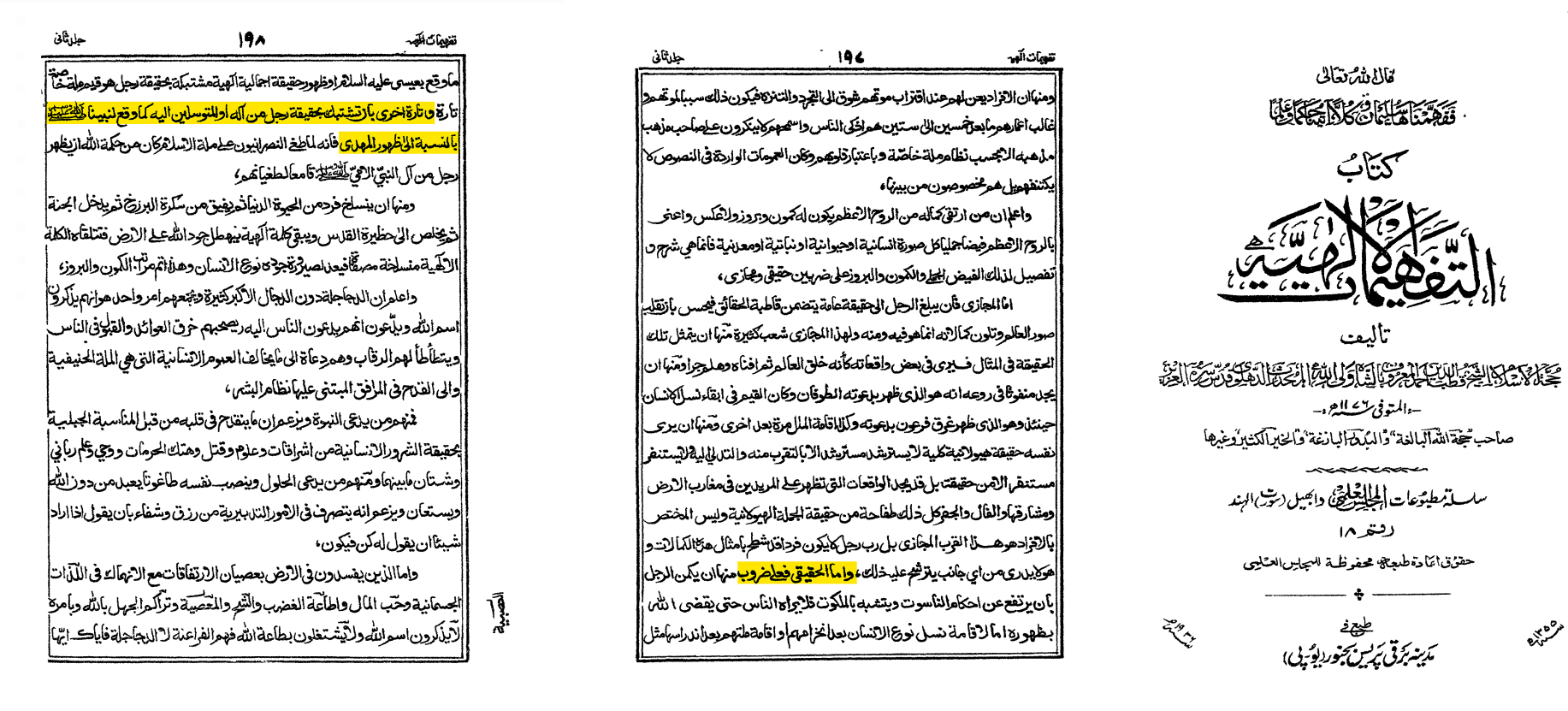
The belief in being a likeness (Maseel) and a shadowy manifestation (Zilli Broozi) in the writings of Deobandi scholars:
Haji Imdadullah Muhajir Makki is the counterpart (Maseel) and manifestation (Buruz) of Syed Ahmad Shaheed (RH):
’’اس سے تو واقعہ بالکل صاف اور یہ دعویٰ انشاء اللہ غیر مشتبہ ہوجاتا ہے کہ حضرت حاجی صاحب قبلہ کا وجود گویا ایک حیثیت سے حضرت سید احمد شہید بریلوی رحمۃ اللہ علیہ ہی کا نقشِ ثانی، اور بروز صفائی تھا. ۔۔۔۔۔مرشد تھانوی حضرت حکیم الامت قدس اللہ سرہ کے ملفوظات میں ایک سے زائد مقامات میں اس قسم کے فقرے ملتے ہیں، مثلًا قصص الاکابر میں ہے، مولانا تھانوی نے فرمایا ’’حضرت حاجی (یعنی حضرت حاجی امداد اللہ صاحب) اپنے زمانہ میں مثل حضرت سید احمد کے تھے۔‘‘
This makes the matter completely clear, and, InshaAllah, this claim becomes unquestionably evident that the existence of Hazrat Haji Sahib Qibla was, in a certain sense, a naqsh-e-sani and buruz of Hazrat Syed Ahmad Shaheed Barelvi (رحمۃ اللہ علیہ).
In the sayings (Malfuzat) of Murshid Thanvi, Hazrat Hakim al-Ummah (قدس اللہ سرہ), similar statements are found in multiple places. For example, in Qisas al-Akabir, it is mentioned that Maulana Thanvi said:
“Hazrat Haji (meaning Hazrat Haji Imdadullah Sahib) in his time was like Hazrat Syed Ahmad.”
[Sawaneh Qasmi, Part One, Page 87]
![[Sawaneh Qasmi, Part One, Page 87]](https://whiteminaret.org/wp-content/uploads/2025/03/Haji-Imdadullah-Muhajir-Makki-is-the-counterpart-and-manifestation-of-Syed-Ahmad-Shaheed-RH.jpg)
Qasim Nanotvi All the prophets (علیهم السلام) are the Zill of the Messenger of Allah (ﷺ) :
’’انبیاء میں جو کچھ ہے وہ ظل اور عکس محمدی ہے‘‘
All the prophets (علیهم السلام) are the Zill of the Messenger of Allah (ﷺ).
[Tazhir al-Nas by Maulana Muhammad Qasim Nanotvi, Page –39]
![[Tazhir al-Nas by Maulana Muhammad Qasim Nanotvi, Page –39]](https://whiteminaret.org/wp-content/uploads/2025/03/Tahzeer-AL-Nass-Zill-Aqida.jpg)
A Zill is not equal to the original :
Qari Muhammad Tayyib Sahib, in the footnotes of Sawaneh Qasmi, describes Maulana Qasim Nanotvi Sahib as the Zill of the Noble Prophet (ﷺ), Deoband as the Zill of Madinah Munawwarah, and the four companions of Nanotvi Sahib as the Zill of the Rightly Guided Caliphs of the Noble Prophet (ﷺ). He clarifies that a Zill is not equal to the original :
[Sawaneh Qasmi, Part Two & Part Three, Footnote, Page 82.
[’اختیاری اورا کتسابی امور میں جن کے لئے پیروئ سنت اور اتباع محبوب حقیقی کی دولت مقدر ہوتی ہے ان کے لئے تکوینی اور غیر اختیاری امور میں بھی مطابقۃ و مشابہۃ کا دروازہ پہلے ہی سے کھول دیا جاتا ہے تاکہ ظل اور اصل میں خلقی اور اختیاری تطابق کی سعادت بہم پہنچادی جائے اور اصل کا پورا پورا عکس ظل میں نمایاں ہوجائے۔مثلًا تمہید میں حضرت مؤلف سوانح دام مجدہ نے نانوتہ کی جغرافیائی صورت کہ کھجوروں کے جھنڈ کے جھنڈ نانوتہ کو ڈھانپے ہوئے ہیں، مدینۃ النبی سے مشابہ دکھلائی ہے۔ دیوبند کی حالت قبل از ورود حضرتِ والا صاحب سوانح مخطوطہ نے انتہائی ظلم و جہل کی دکھلائی ہے جس کا تذکرہ تاسیس مدرسہ دیوبند کے ضمن میں آرہا ہے، جو اشبہ ہے زمانہ جاہلیت کے۔ پھر حضرتِ والا کے ورود سے علم و عمل کا ماحول بن جانا اور کمال کی روشنی پھیل جانا دکھلایا ہے جو اشبہ ہے طلوع آفتابِ رسالت کے، یہاں حضرت مؤلف سوانح دام مجدہ حضرت والا کی مدت اصلاح و تربیت دس سال دکھلا رہے ہیں جو اشبہ ہے مدنی زندگی کے دس سال کے، اور حضرت شیخ المشائخ حاجی امداد اللہ صاحب نے حضرت والا کے ایک خاص قلبی حال (انتہائی ثقل و بوجھ سے زبان کے منوں وزنی ہوجانے) پر حضرت والا کو فرمایا کہ مبارک ہو، حق تعالیٰ آپ کو علوم نبوت سے سرفراز فرمائے گا جو حسبِ ارشاد حضرت حاجی صاحب اشبہ ہے ثقلِ وحی کے، پھر صاحب سوانح مخطوطہ نے نور نبوت کے زیرسایہ حضرت والا اور ان کے تین ساتھیوں مولانا محمد یعقوب صاحب مولانا رفیع الدین صاحب اور حاجی محمد عابد صاحب کو خلفاءِ اربعہ سے تشبیہ دیتے ہوئے دینی اصلاح کے عناصر اربعہ سے تعبیر فرمایا اور لکھا کہ حضرت والا حلم و کرم، رحمت و شفقت اور وفورِ علم میں نسبتِ صدیقی سے سرفراز تھے، مولانا محمد یعقوب صاحب جلال و شدت میں نسبت فاروقی سے ممتاز تھے۔مولانا رفیع الدین صاحب انکسار نفس اور حیاء میں نسبت عثمانی سے مشرف تھے اور حضرت حاجی محمد عابد صاحب قوت فیصلہ اور اصابت رائے میں نسبت مرتضوی رکھتے تھے۔نور نبوت کی تربیت کے زیرسایہ و زیرسرکردگی حضرت والا حق تعالیٰ نے ان ہی عناصر اربعہ سے تجدید و احیائے دین کا کام اس مدرسہ کے راستہ سے لیا۔ اس طرح حق تعالیٰ نے ظل اصل کا عکس ایک ہی جہت سے نہیں جہات متعددہ سے نمایاں فرمایا۔جو ثمرہ ہے عالم تکوین میں حضرت والا کے کمال اتباع سنت اور اکمالِ محبت نبوی کا۔گویا اختیاری اتباع چونکہ آپ کی سرشت میں خلقۃً ودیعت کردیا گیا تھا جسے نمایاں ہونا تھا۔اس لئے تکوینی طور پر حضرت والا کی طبیعت و فطرت ہی نے نہیں بلکہ آپ سے متعلقہ زمان و مکان اور احوال و سوانح نے بھی اصل کے متعلقات زمان و مکان اور احوال و سوانح کے عکس اتارنے کی سعادت پائی۔ کوئی جاہل یا معاند اس سے معاذ اللہ حضرت والا کے لئے نبوت کا اثبات یا عیاذاباللہ نبی سے مساوات نہ سمجھ لے بلکہ نبوت کی انتہائی غلامی اور محکومی سے یہ اختیاری اور تکوینی مشابہت صاحب تصنیف کو نصیب ہوئی ہے۔ یہ ہمسری یا مساوات نہیں بلکہ انتہائی غلامی اور پیروئ نبوۃ کی دلیل ہوتی ہے۔ محمد طیب غفرلہٗ‘‘
In matters of choice and acquired qualities, for those destined to follow the Sunnah and emulate the True Beloved, the door to resemblance and similarity in natural and involuntary aspects is opened beforehand. This ensures that the Zill and the original attain the honor of both natural and voluntary conformity, and the complete reflection of the original becomes evident in the Zill.
For example, in the introduction, the esteemed author of Sawaneh (may his glory endure) has shown the geographical appearance of Nanota—where clusters of date palms cover the town—as resembling Madinah al-Nabi. The state of Deoband before the arrival of Hazrat Wala, as described in the manuscript of Sawaneh, is depicted as being in extreme darkness and ignorance, which is likened to the era of Jahiliyyah. Then, after the arrival of Hazrat Wala, an environment of knowledge and action emerged, spreading the light of perfection—resembling the rising of the sun of Prophethood.
The esteemed author of Sawaneh (may his glory endure) has shown that Hazrat Wala’s period of spiritual training and reformation lasted ten years, which corresponds to the ten years of the Madinan life of the Prophet (ﷺ). Hazrat Sheikh al-Mashaikh Haji Imdadullah Sahib once remarked upon a particular state of Hazrat Wala—where his tongue became so heavy due to an overwhelming burden that it felt as if it weighed tons—saying, “Congratulations! Allah Almighty will honor you with the knowledge of Prophethood.” This, as per Hazrat Haji Sahib’s statement, resembled the Thiqal-e-Wahi (burden of revelation).
Furthermore, the author of the Sawaneh manuscript, under the shadow of the light of Prophethood, compared Hazrat Wala and his three companions—Maulana Muhammad Ya’qub Sahib, Maulana Rafiuddin Sahib, and Haji Muhammad Abid Sahib—to the four Rightly Guided Caliphs. He described them as the four fundamental elements of religious reformation. He wrote:
Hazrat Wala was honored with the Nisbat-e-Siddiqi, due to his forbearance, generosity, mercy, kindness, and immense knowledge.
Maulana Muhammad Ya’qub Sahib excelled in Nisbat-e-Faruqi, due to his majesty and intensity.
Maulana Rafiuddin Sahib was adorned with Nisbat-e-Usmani, due to his humility and modesty.
Haji Muhammad Abid Sahib was distinguished with Nisbat-e-Murtazavi, due to his decisiveness and accuracy of opinion.
Under the shade of the nurturing light of Prophethood and under the leadership of Hazrat Wala, Allah Almighty used these four elements to revive and renew religion through this institution (Darul Uloom Deoband). In this way, Allah Almighty manifested the reflection of the original in the Zill, not just in one aspect but in multiple dimensions. This was a fruit of Hazrat Wala’s complete adherence to the Sunnah and his utmost love for the Prophet (ﷺ).
Since voluntary obedience was innately instilled in him, it had to manifest. Thus, not only did Hazrat Wala’s nature and disposition reflect the original, but even the time, place, circumstances, and events associated with him mirrored those of the original.
No ignorant or antagonistic person should misunderstand this, assuming—God forbid—that this implies proving Prophethood for Hazrat Wala or, God forbid, equating him with the Prophet (ﷺ). Rather, this resemblance—both voluntary and involuntary—is a result of his absolute servitude and submission to Prophethood. This is not equality or parity, but rather the ultimate form of servitude and obedience to the Prophetic way.
— Muhammad Tayyib (May Allah forgive him)
Publisher: Maktabah Rahmaniyyah, Urdu Bazar, Lahore.]
![[Sawaneh Qasmi, Part Two & Part Three, Footnote, Page 82.Publisher: Maktabah Rahmaniyyah, Urdu Bazar, Lahore.]](https://whiteminaret.org/wp-content/uploads/2025/03/Sawaneh-Qasmi-Zill-Buruz-aqida.jpg)
The Similarity Between the Circumstances of Qasim Nanotvi and the Messenger of Allah (peace be upon him):
The author of Sawanih Qasimi, Syed Manazir Ahsan Gilani, quotes the statement of Maulana Mansoor Ali Khan:
’’آپ کے (سیدنا الامام الکبیر کے) اکثر حالات مناسبت رکھتے تھے حالات فیض آیات، حضرت سید الکونین، رسول الثقلین، ختم المرسلین، محبوب رب العالمین صلی اللہ علیہ وسلم سے‘‘
Most of your (Syedna Al-Imam Al-Kabir’s) circumstances bore resemblance to the blessed circumstances of Sayyid Al-Kawnain, Rasool Al-Thaqalain, Khatm Al-Mursaleen, Mahboob-e-Rabb Al-Aalameen (peace and blessings be upon him).”
[Sawanih Qasimi, Volume 1, Page 604]
![[Sawanih Qasimi, Volume 1, Page 604]](https://whiteminaret.org/wp-content/uploads/2025/04/The-Similarity-Between-the-Circumstances-of-Qasim-Nanotvi-and-the-Messenger-of-Allah.jpg)
After quoting this, he writes:
’’غلام کی زندگی میں آقا کے خط وخال کی یہی جھلک ہے، جس کی طرف مسلسل اشارے کرتا ہوا چلا آیا ہوں۔‘‘
“This is the same reflection of the master’s features in the life of the servant, which I have been continuously pointing towards.”
[Sawanih Qasimi, Volume 1, Page 604]
![[Sawanih Qasimi, Volume 1, Page 604]](https://whiteminaret.org/wp-content/uploads/2025/04/The-Similarity-Between-the-Circumstances-of-Qasim-Nanotvi-and-the-Messenger-of-Allah-2.jpg)
Rasheed Ahmad Gangohi and Molvi Khalil Ahmad Are the Same :
’’ اسی طرح ایک بار کسی تذکرہ میں حضرت کی زبان سے بے اختیار نکلا کہ ’’جو میں وہی مولوی خلیل احمد‘‘
“Similarly, once in a conversation, it was uttered involuntarily from the Shaykh’s mouth, ‘I am the same as Molvi Khalil Ahmad.'”
[Tazkaratul Khalil Page 77]
![[Tazkaratul Khalil Page 77]](https://whiteminaret.org/wp-content/uploads/2025/04/Rasheed-Ahmad-Gangohi-and-Molvi-Khalil-Ahmad-Are-the-Same.jpg)
Anwar Shah Kashmiri—Exactly Like the Messenger of Allah (PBUH)?
انور شاہ کشمیری کے ایک شاگرد حکیم عبدالرشید صاحب ان کی شان بیان کرتے ہوئے فرماتے ہیں: ’’میں جب دارالعلوم دیوبند میں پڑھتا تھا تو حضرت شاہ صاحب کو ارادۃً پہروں دیکھتا اور یہ سوچتا کہ جناب رسول اکرم ﷺ کی رفتار و گفتار آپ کی نشست و برخاست قعود و قیام، لباس و پوشاک، انداز کلام و گفتگو اس طرح کا ہوگا‘‘
Anwar Shah Kashmiri’s student, Hakim Abdul Rashid Sahib, while describing his eminence, says:
“When I was studying at Darul Uloom Deoband, I would intentionally observe Hazrat Shah Sahib for hours and think that the gait and speech of the Noble Messenger (PBUH), his sitting and standing, his movements and posture, his clothing and attire, and his manner of speaking and conversation must have been like this.”
[Naqsh-e-Dawam, Footnote, Page 69]
![[Naqsh-e-Dawam, Footnote, Page 69]](https://whiteminaret.org/wp-content/uploads/2025/04/Anwar-Shah-Kashmiri—Exactly-Like-the-Messenger-of-Allah-PBUH-1.jpg)
Deobandi scholars, companions of the Prophet (PBUH)?
When our revered master, Hazrat Masih-e-Maud (AS), said about his companions, “He who found me has found the Companions (Sahabah),” and when the Ahmadiyya Community refers to these elders as “Sahabah,” non-Ahmadi scholars consider this a reason for declaring us disbelievers.
However, observe their own belief regarding their own elders:
’’امّی بی مولانا پر بہت شفیق تھیں، فرمایا کرتی تھیں کہ اختر مجھے تجھ سے صحابہؓ کی خوشبو آتی ہے، کبھی پیٹھ پر محبت سے ہاتھ رکھکر فرماتیں کیا بات ہے کہ تیرے ساتھ مجھے صحابہؓ کی سی صورتیں چلتی پھرتی نظر آتی ہیں۔مولانا محمد الیاس صاحب میں ابتداء سے صحابہ کرامؓ کی والہانہ شان کی ایک ادا اور ان کی دینی بے قراری کی ایک جھلک تھی جس کو دیکھ کر مولٰنا محمود حسن صاحب رحمۃ اللہ علیہ (شیخ الہندؒ ) بھی فرمایا کرتے تھے کہ میں جب مولوی الیاس کو دیکھتا ہوں تو مجھے صحابہؓ یاد آجاتے ہیں۔‘‘
“Ummī Bī was very affectionate toward Mawlana. She used to say, ‘Akhtar, I sense the fragrance of the Companions (Sahabah) from you.’ Sometimes, she would lovingly place her hand on his back and say, ‘What is it about you that makes me see the likeness of the Sahabah walking alongside you?’
From the very beginning, Mawlana Muhammad Ilyas Sahib possessed a passionate quality reminiscent of the noble Companions (Sahabah) and a glimpse of their restless devotion to religion. Observing this, Mawlana Mahmood Hasan Sahib (Sheikh-ul-Hind, may Allah have mercy on him) used to say, ‘When I look at Mawlana Ilyas, I am reminded of the Sahabah.'”
[“Hazrat Mawlana Muhammad Ilyas and His Religious Call,” Pages 52,53 by Syed Abul Hasan Ali Nadwi]
![[“Hazrat Mawlana Muhammad Ilyas and His Religious Call,” Pages 52,53 by Syed Abul Hasan Ali Nadwi]](https://whiteminaret.org/wp-content/uploads/2025/04/Deobandi-scholars-companions-of-the-Prophet-PBUH.jpg)
Allegation on Buruz from Yusuf Ludhianvi Sahib :
Yusuf Ludhianvi Sahib writes:
’’اسی طرح جب مرزا غلام احمد قادیانی کہتے ہیں کہ وہ بروزی طور پر (معاذ اللہ) بعینہہ محمد رسول اللہ ہیں، اور محمد رسول اللہ ﷺ کی ہر صفت اور ہر کمال انہیں بروزی طور پر حاصل ہے، تو اس کا بدیہی نتیجہ یہ ہے کہ آنحضرت ﷺ کی ازواج مطہرات بروزی طور پر، نعوذ باللہ، مرزا غلام احمد قادیانی سے منسوب ہیں، کیا آنحضرت ﷺ کی شان میں اس سے گندی گالی ہوسکتی ہے۔۔۔۔۔اور کوئی مسلمان جس کے دل میں ذرا بھی شرم و حیا ہو وہ اس بدترین حملہ کو برداشت کرسکتا ہے؟‘‘
“Similarly, when Mirza Ghulam Ahmad Qadiani says that he is, in a Burooz sense (God forbid), exactly like Muhammad Rasulullah, and that every attribute and perfection of Muhammad Rasulullah ﷺ is manifested in him in a Burooz sense, the obvious result of this is that the wives of the Prophet ﷺ, in a Burooz sense, are, God forbid, associated with Mirza Ghulam Ahmad Qadiani. Can there be a more disgusting insult to the honor of the Prophet ﷺ than this? And can any Muslim, with even the slightest sense of shame or modesty, bear such a heinous attack?”
[Qadiyaniyon Ko Dawat-e-Islam, Tuhfa Qadiyaniyyat, Volume 1, p. 162]
![[Qadiyaniyon Ko Dawat-e-Islam, Tuhfa Qadiyaniyyat, Volume 1, p. 162]](https://whiteminaret.org/wp-content/uploads/2025/04/Allegation-from-ON-Buruz-Yusuf-Ludhianvi-Sahib.jpg)
There are several responses to this absurd and blasphemous statement:
1.Hazrat Masih Maud (AS) and no elder of the Ahmadiyya community have ever expressed such a belief, nor have they made such an argument in any form.
2.Hazrat Masih Maud (AS), in all his writings, refers to the wives of the Prophet ﷺ as “Mothers of the Believers” and considers them his mothers.
3.the above statements of the Deobandi elders, Qasim Nanotwi, Rashid Ahmad Gangohi, and Anwar Shah Kashmiri are considered exactly like the Prophet ﷺ. Their character, their death, their sitting, standing, walking, and everything about them are considered to be exactly like the Prophet ﷺ. So, will Yusuf Ludhianvi and his supporters apply the same fatwas on them as they have applied to Hazrat Masih Maud (AS)?
4.Hazrat Masih Maud (AS) came 1300 years after the Prophet ﷺ, but Mawlana Khaleel Ahmad Saharanpuri and Rashid Ahmad Gangohi were both present at the same place and time. When Gangohi Sahib said about Mawlana Khaleel Ahmad, “What I am, he is also the same,” does it mean that Gangohi Sahib’s wife was, in a manifest sense, associated with Mawlana Khaleel Ahmad? And did Gangohi Sahib’s children consider Mawlana Khaleel Ahmad as their manifest father?
Other scholars talked about the Buruz, and some of them claimed it:
1.Shah Wali Allah Dehlavi claims that he is a reflection(Buruz) of the name Muhammad (saw) and the name Issa (as) :
فهمنی ربی جل جلاله انك ان انعكس فيك نور الاسمين الجامعين نور الاسم
.المصطفوى والاسم العيسوىMy Lord, the Most High, made me understand that if the light of the two comprehensive names, the light of the name al-Mustafa and the name al-Isawi, is reflected in you,
[Al-Tafhimat Al-Ilahiyyah by Shah Waliullah Dehlavi, Page 120]
![[Al-Tafhimat Al-Ilahiyyah by Shah Waliullah Dehlavi, Page 120]](https://whiteminaret.org/wp-content/uploads/2025/04/Shah-Wali-Allah-Dehlavi-claims-that-he-is-a-reflectionBuruz-of-the-name-Muhammad-saw-and-the-name-Issa-as.jpg)
2.Again Shah Wali Allah Dehlavi speaking about Buruz :
واعلم أن من ارتقى كماله من الروح الأعظم يكنون ليه كمون و بروز ولا عكس وأعنى بالروح الأعظم فيضا جمليا كل صورة إنسانية أو حيوانية أو نباتية أو معدنية فإنما هي
…….شرح و تفصيل لذلك الفيض الجملي. والكمون والبروز على ضربين : حقیقی و مجازی
وتارة أخرى بأن تشتبك بحقيقة رجل من الله او المتوسلين إليه كما وقع لنبينا بالنسبة إلى ظهورالمهدي
And know that whoever’s perfection ascends from Al-Ruh Al-A’zam (the Supreme Spirit) experiences Kamun (latency) and Burooz (manifestation), but not the reverse. And by Al-Ruh Al-A’zam, I mean a comprehensive outpouring (divine effusion), as every human, animal, plant, or mineral form is merely an explanation and detail of that comprehensive outpouring.
Kamun and Burooz are of two types: real and metaphorical….
And at other times, it becomes interwoven with the reality of a man from Allah or one of those who seek Him, just as it happened with our Prophet regarding the appearance of Al-Mahdi.
[Al-Tafhimat Al-Ilahiyyah Vol 2 by Shah Waliullah Dehlavi, Pages 237,238]
![[Al-Tafhimat Al-Ilahiyyah Vol 2 by Shah Waliullah Dehlavi, Pages 237,238]](https://whiteminaret.org/wp-content/uploads/2025/04/Again-Shah-Wali-Allah-Dehlavi-speaking-about-Buruz.png)
3. Shah Waliullah Dehlavi says that the coming Messiah will be a clone(Buruz) of the Prophet (saw) :
[Al-Khair Al-Kathir by Shah Waliullah Dehlavi, Page 236, 237.]
![[Al-Khair Al-Kathir by Shah Waliullah Dehlavi, Page 236, 237.]](https://whiteminaret.org/wp-content/uploads/2025/04/Shah-Waliullah-Dehlavi-says-that-the-coming-Messiah-will-be-a-cloneBuruz-of-the-Prophet-saw.jpg)
4.Hazrat Khwaja Ghulam Farid, the difference between Buruz and reincarnation:
تناسخ اور بروز میں یہ فرق ہے ۔ تناسخ سے مراد ہے روح کا ایک جسم سے مشکل کو جنین میں داخل ہونا۔ جب جنین روح کے قابل بن جاتا ہے۔ یعنی نطفہ ٹھیرنے کے چوتھے مینے لیکن روتا کی ایک جسم سے مفرقت اور دوسرے جی میں ہو گی بیٹی ہوتی ہے جانا در بلا وقت اور بروز یہ ہے کہ ایک روح دوسرے اکمل روح سے فیضان حاصل کرتی ہے۔ جب اس پر تجلیات کا فیضان ہوتا ہے تو وہ اس کا مظہر بن جاتی ہے اور کہتی ہے کہ میں وہ ہوں یعنی دونوں میں فرق نہیں رہتا
There is a difference between Tanasukh and Buruz. Tanasukh refers to the soul’s transition from one body to another, specifically entering a fetus when it becomes capable of receiving a soul—meaning, in the fourth month after conception. However, in Tanasukh, the departure of the soul from one body and its entry into another occurs without delay.
On the other hand, Buruz is when one soul receives spiritual grace from another, more perfect soul. When divine illuminations descend upon it, it becomes a manifestation of that soul and proclaims, “I am that person,” meaning there remains no distinction between the two.
[Maqayis al-Majalis
Malfoozat of Hazrat Khwaja Ghulam Farid page 417]
![[Maqayis al-MajalisMalfoozat of Hazrat Khwaja Ghulam Farid page 417]](https://whiteminaret.org/wp-content/uploads/2025/04/Hazrat-Khwaja-Ghulam-Farid-the-difference-between-Buruz-and-reincarnation.png)