
Deobandi Shirk Exposed: Secrets You Must Know
Introduction
The Deobandi sect, originating in South Asia in the 19th century, is a Hanafi reformist sect within Sunni Islam. Many Deobandis have adopted theological positions that overlap with Wahhabi or Salafi tendencies, particularly in their opposition to practices they view as innovations (bid‘ah) or forms of shirk (polytheism), such as istighātha (seeking help from dead saints) and excessive veneration of graves. However, despite this outward opposition, writings the founding Deobandi scholars have endorsed or permitted istighātha themselves. Deobandi texts contain clear statements affirming that calling upon the dead is allowed. Deobandis believe that asking dua from the dead (worshipping them) is allowed!
Rashid Ahmad Gangohi Encouraged Istighātha
Rashid Ahmad Gangohi (d. 1323H), a prominent Deobandi scholar and one of the founders of the Deoband sect, issued a fatwa regarding the permissibility of istighātha by permitting seeking intercession from the Prophet Muhammad صلى الله عليه وسلم at his grave. He states:
When you go to the Holy Grave, ask him for his intercession this way: Yā Rasūl Allāh, I ask you for intercession and make you my means to Allāh. Let me die as a Muslim on the path of your Ummah and Sunnah. And if you want to send greetings on behalf of someone who is not present, say: Yā Rasūl Allāh, Fulān ibn Fulān greets you; he asks for intercession through you to your Lord.
[Zubdat ul-Manāsik, pg.137]
![[Zubdat ul-Manāsik, pg.137]](https://whiteminaret.org/wp-content/uploads/2025/07/download-2-1-scaled.png)
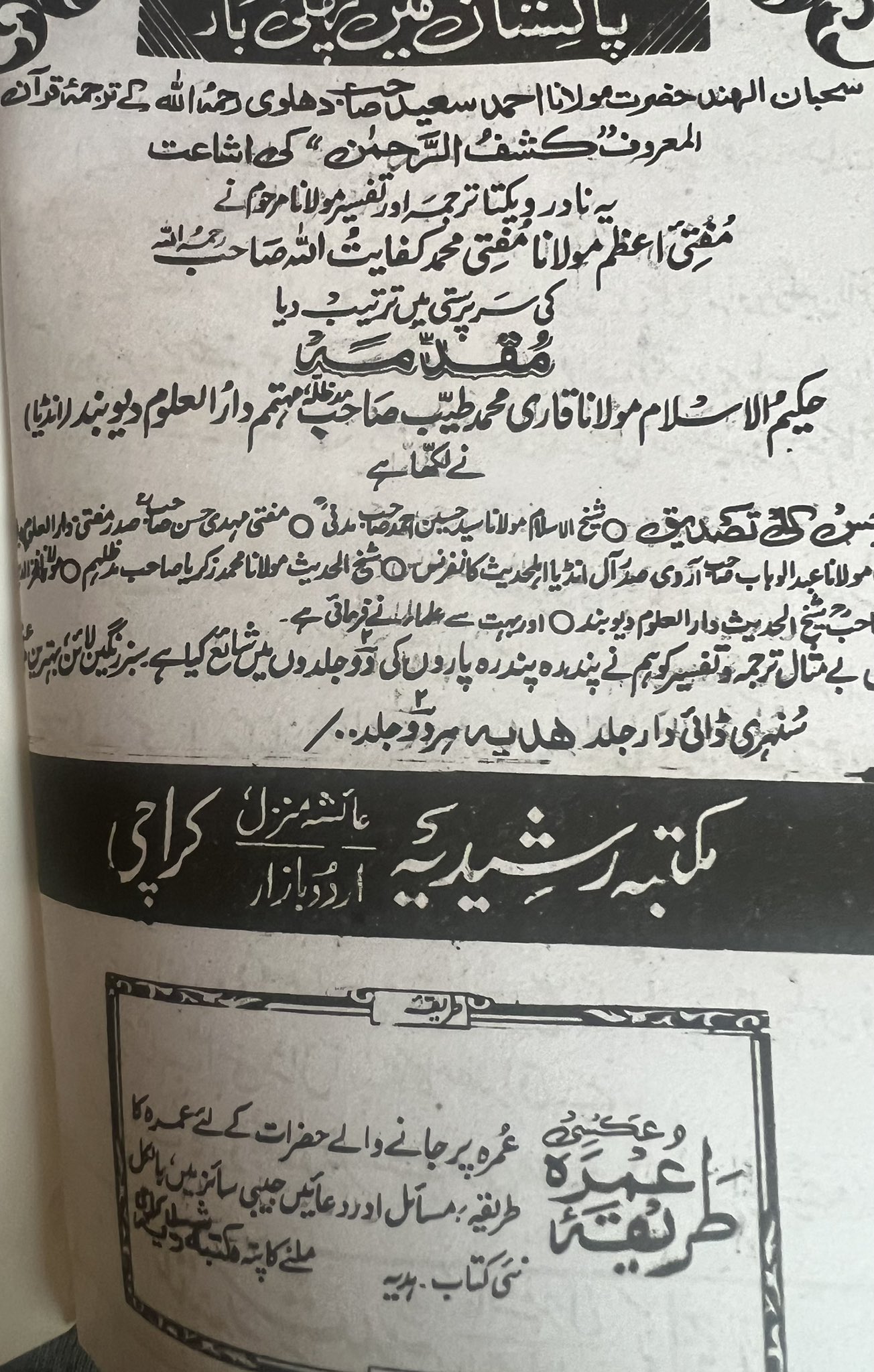
The cited book was verified by Muhammad Tayyib an-Nanotwi, Hussayn Ahmad al-Madani, Muftī Mahmud Hassan al-Gangohi, Muhaddith Muhammad Zakaria and, other Akābir of Deoband.
Muhammad ibn Abd al-Wahhab رحمه الله: Istighātha (Seeking Aid) Is Shirk
Muhammad ibn Abd al-Wahhab رحمه الله (d. 1206H), the founder of the Wahhabi sect, considered such statements like directly asking the Prophet for intercession as clear acts of shirk (polytheism). His teachings strongly opposed any form of istighātha (seeking help) from the deceased, viewing it as a violation of pure tawḥīd (monotheism).
So it is not said, “O Messenger of Allaah (or) O wali of Allaah, I ask intercession from you…” or other such (requests) such as “Reach me (to aid me) or “Rescue me” or “Heal me”, or “Aid me against my enemy” and what is similar to that, from those affairs in which none has power over except Allaah, the Exalted. When he requests any of that which has just been mentioned (from those in the life) of al-Barzakh, it is from the types of Shirk, since no text has been related from the Book or the Sunnah (for this practice), and nor any narration from the Rigteous Salaf regarding it. Rather, the Book, the Sunnah, and the consensus of the predecessors have established that this is major shirk (shirk akbar), which is fought against.
[al-Durar al-Saniyyah, vol 1, pg. 231]
![[al-Durar al-Saniyyah, vol 1, pg. 231]](https://whiteminaret.org/wp-content/uploads/2025/07/download.png)
Is There a Difference Between Istighātha (Seeking Aid) and Tashaffuʿ (Seeking Intercession)?
Some people might object that there is a difference between seeking intercession (tashaffuʿ) and istighātha (seeking aid), and therefore argue that what Gangohi practiced was not istighātha and thus not shirk. However, what they fail to understand is that Taqi al-Din al-Subki (d. 756 AH) has already clarified that there is no meaningful difference between such terms. He explained that whether it is tashaffuʿ or istighātha, they essentially refer to the same concept:
If these [three] types [of Tawassul] and the [different] situations regarding the one who asks the Prophet – sallallahu ‘alayhi wa sallam – [for aid] has become clear and the meaning has become apparent, then it should not concern you how one calls it: whether it’s Tawassul, Tashaffu’, Istighathah, Tajawwuh or Tawajjuh, because the [intended] meaning of all of these [different wordings used] is the same.
[Shifa` al-Saqam, pg. 314]
![[Shifa` al-Saqam, pg. 314]](https://whiteminaret.org/wp-content/uploads/2025/07/2025-07-20-04_18_40-download-1.png)
Mufti Muhammad ibn Adam, a student of Mufti Taqi Usmani, further stated that istighātha refers to calling upon and seeking help from other than Allah. Therefore, it would be accurate to say that Gangohi promoted a form of istighātha, since regardless of the reason, he still encouraged people to call upon Prophet Muhammad صلى الله عليه وسلم.
The second relates to calling upon and seeking the help of other than Allah (known as Istighātha and Istiʿāna). […] As such, in accordance with the position that the dead can hear in their graves, it would be permitted to request the deceased for Duʿāʾ and intercession at his grave.
https://daruliftaa.com/aqidah-belief/various-forms-of-tawassul-and-istighatha-and-their-rulings/ (Accessed: 20 July 2025)