
Sighting of the moon in Fiqh ul Ahmadiyya
Introduction
The month of Ramadan starts with the sighting of the new crescent moon(Hilal)
Abu Huraira reported Allah’s Messenger (ﷺ) as saying:
Whenever you sight the new moon (of the month of Ramadan) observe fast. and when you sight it (the new moon of Shawwal) break it, and if the sky is cloudy for you, then observe fast for thirty days.
[Sahih Muslim 1081a]
The Importance of the physical sighting of the moon
Hazrat Khalifatul Masih(aba) while emphasizing the importance of physical sighting of the moon once stated:
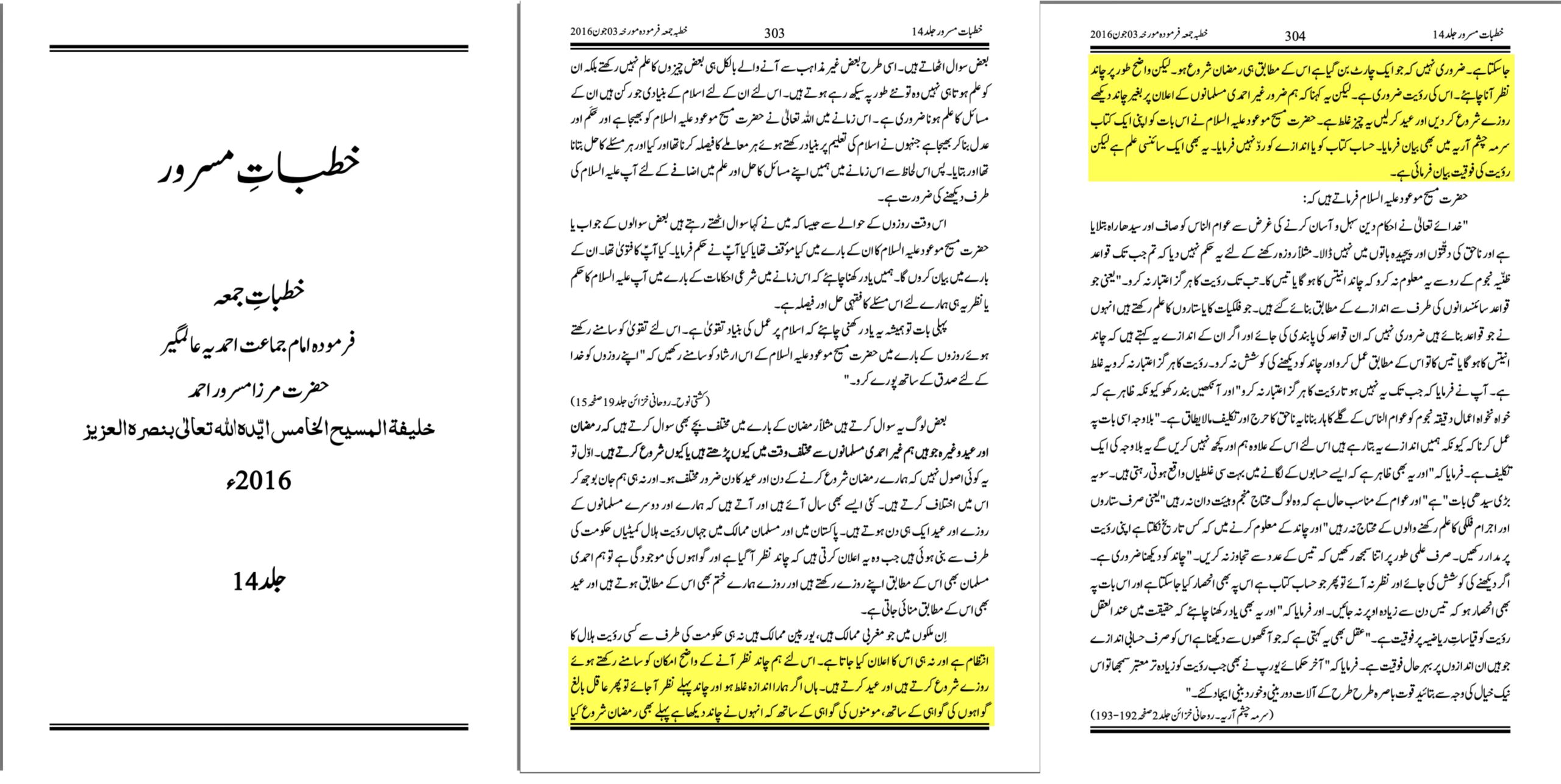
اس لئے ہم چاندنظر آنے کے واضح امکان کو سامنے رکھتے ہوئے روزے شروع کرتے ہیں اور عید کرتے ہیں۔ ہاں اگر ہمارا اندازہ غلط ہو اور چاند پہلے نظر آ جائے تو پھر عاقل بالغ گواہوں کی گواہی کے ساتھ، مومنوں کی گواہی کے ساتھ کہ انہوں نے چاند دیکھا ہے پہلے بھی رمضان شروع کیا جا سکتا ہے۔ ضروری نہیں کہ جو ایک چارٹ بن گیا ہے اس کے مطابق ہی رمضان شروع ہو۔ لیکن واضح طور پر چاندنظر آنا چاہئے۔ اس کی رؤیت ضروری ہے۔ لیکن یہ کہنا کہ ہم ضرور غیر احمدی مسلمانوں کے اعلان پر بغیر چاند دیکھے روزے شروع کر دیں اور عید کر لیں یہ چیز غلط ہے۔ حضرت مسیح موعود علیہ السلام نے اس بات کو اپنی ایک کتاب سرمہ چشم آریہ میں بھی بیان فرمایا۔ حساب کتاب کو یا اندازے کو ردّ نہیں فرمایا۔ یہ بھی ایک سائنسی علم ہے لیکن رؤیت کی فوقیت بیان فرمائی ہے
Therefore, we begin fasting and celebrate Eid keeping in mind the clear possibility of the moon being sighted. However, if our estimation proves incorrect and the moon is sighted earlier, then based on the testimony of sane and adult witnesses—the testimony of believers that they have seen the moon—Ramadan can be started earlier. It is not necessary for Ramadan to begin strictly according to a pre-determined chart.
Nevertheless, the moon must be clearly visible; its sighting (Ru’yat) is essential. But to say that we must start fasting or celebrate Eid based on the announcement of non-Ahmadi Muslims without having sighted the moon ourselves is incorrect. The Promised Messiah (peace be upon him) also explained this matter in his book, Surma Chashm-e-Arya. He did not reject calculation or estimation—as it is also a scientific branch of knowledge—but he emphasized the superiority of the physical sighting.
Ramadan and Eid don’t happen on same date for everyone
Hazrat Khalifa Rabeh(rh) emphasized the importance of starting and ending Ramadan based on local moon sightings:
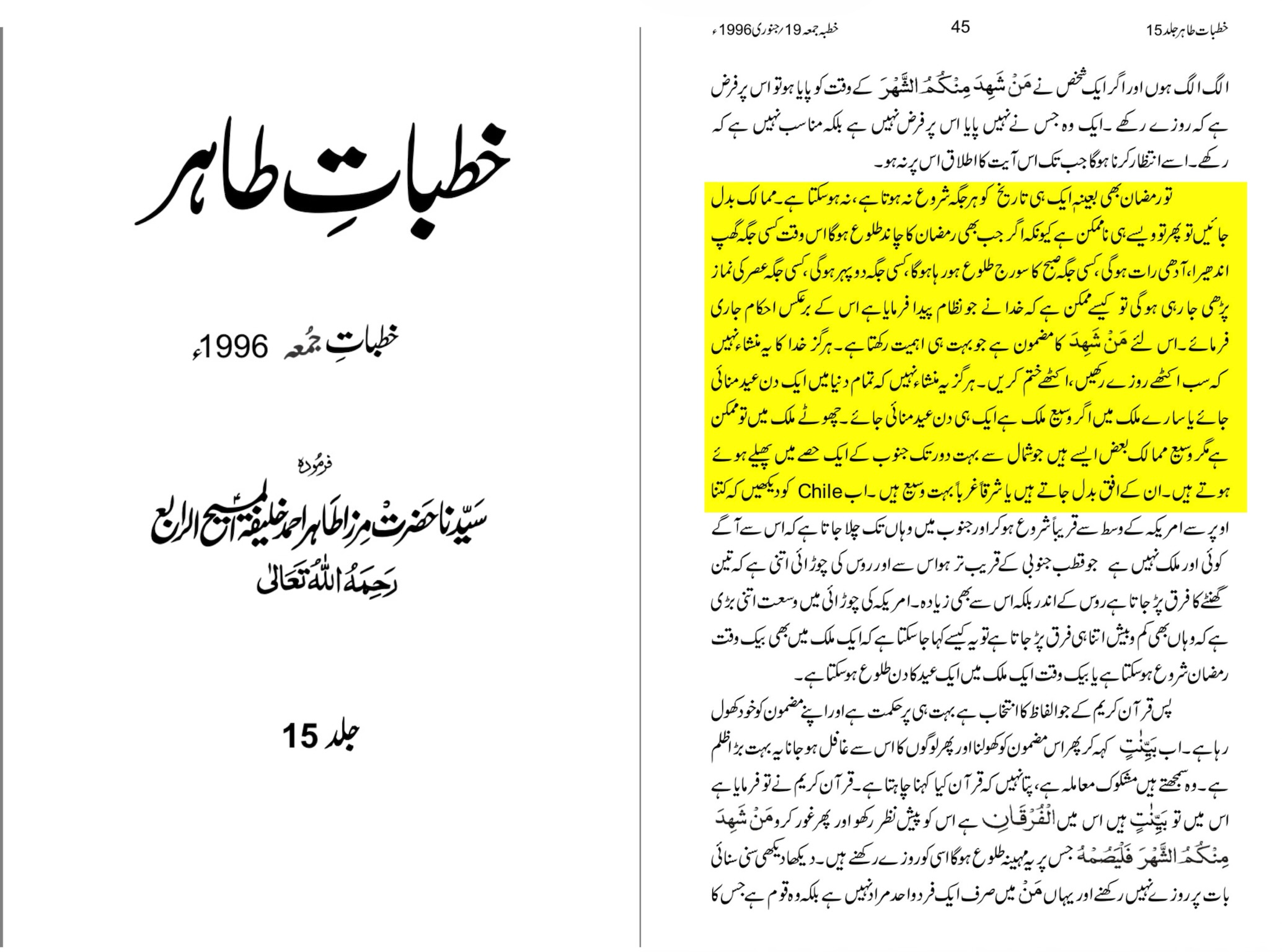
تو رمضان بھی بعینہ ایک ہی تاریخ کو ہر جگہ شروع نہ ہوتا ہے ، نہ ہو سکتا ہے۔ ممالک بدل جائیں تو پھر تو ویسے ہی نا ممکن ہے کیونکہ اگر جب بھی رمضان کا چاند طلوع ہوگا اس وقت کسی جگہ گھپ اندھیرا، آدھی رات ہوگی کسی جگہ صبح کا سورج طلوع ہورہا ہوگا کسی جگہ دو پہر ہوگی کسی جگہ عصر کی نماز پڑھی جا رہی ہو گی تو کیسے ممکن ہے کہ خدا نے جو نظام پیدا فرمایا ہے اس کے برعکس احکام جاری فرمائے ۔ اس لئے مَنْ شَهِدَ کا مضمون ہے جو بہت ہی اہمیت رکھتا ہے۔ ہرگز خدا کا یہ منشاء نہیں کہ سب اکٹھے روزے رکھیں ، اکٹھے ختم کریں ۔ ہرگز یہ منشاء نہیں کہ تمام دنیا میں ایک دن عید منائی جائے یا سارے ملک میں اگر وسیع ملک ہے ایک ہی دن عید منائی جائے ۔ چھوٹے ملک میں تو ممکن ہے مگر وسیع ممالک بعض ایسے ہیں جو شمال سے بہت دور تک جنوب کے ایک حصے میں پھیلے ہوئے ہوتے ہیں۔
Similarly, Ramadan does not—and cannot—begin on the exact same date everywhere. When countries change, it becomes even more impossible; for whenever the moon of Ramadan rises, it will be pitch black midnight in one place, the morning sun will be rising in another, it will be midday in a third, and the Afternoon (Asr) prayer will be being performed in yet another. How could it be possible for God to issue commands that go against the very system He created? Therefore, the theme of ‘man shahida’ (whoever witnesses [the month]) is of great importance. It is by no means God’s intent that everyone starts their fast together or ends it together. It is never the intent that Eid be celebrated on a single day across the entire world, or even across a single country if that country is vast. While it may be possible in a small country, there are some large nations that stretch extensively from the north down to the southern regions.
Conclusion
“The standard of moon-sighting used by Jamaat-e-Ahmadiyya is according to the visibility of the moon with the naked eye on each horizon. The visibility of the moon is determined by a combination of calculation and actual moon sighting, as was done by the Holy Prophet ﷺ. If two places do not share the same horizon, then the sighting of the moon in one area will not apply to the other.”
[Al Hakam]