
The Untold Fact in Sikhism: Muslims Buried Guru Nanak
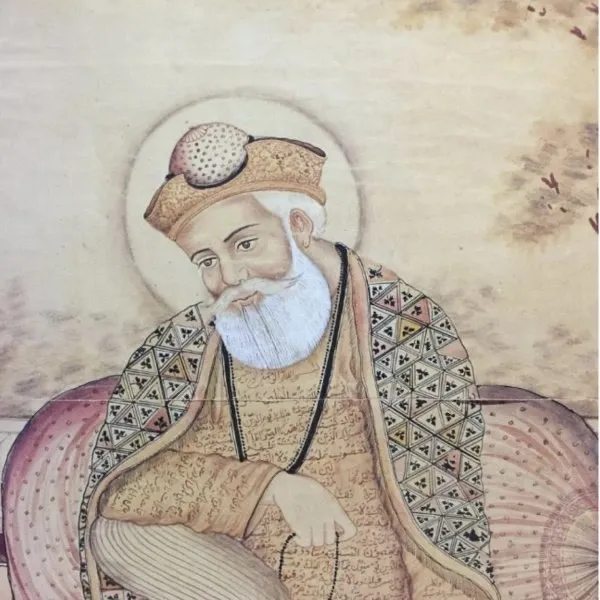
Introduction
When Guru Nanak, the founder of Sikhism, passed away, it is said that Hindus and Muslims argued over how to handle his body. Hindus wanted cremation, while Muslims wanted burial. The story goes that when both sides entered the room, the body was gone, leaving only flowers under the sheet. The sheet was then divided, and each community disposed of it according to their respective rites but how much of this story is true, and what actually happened to Guru Nanak’s body?
Sikh Scholars: Muslims Believed Guru Nanak Was a Muslim and Wanted Islamic Burial
The first point to note is that Muslims did not envy or hate Guru Nanak. In fact, many Muslims of that time believed he was a pious Sufi Muslim. The following examples from Sikh literature illustrate this perspective.
Twarikh Guru Khalsa
All the knowledge, skills, and spiritual qualities that are considered to be at the prophetic level in Islam, Pir Hussain attributed only to Guru Nanak.
![[Twarikh Guru Khalsa]](https://whiteminaret.org/wp-content/uploads/2025/12/MuslimsBuriedGuruNanakTwarikhGuruKhalsaGianiGianSingh.jpg)
Bhai Bala Janamsakhi
This text reveal Muslims calling Guru Nanak a ‘wali’ (saint) during his lifetime.
The Muslim people said that he must be a saint of God, completely absorbed in his Lord
![[Janam Sakhi Bala, p. 132]](https://whiteminaret.org/wp-content/uploads/2025/12/MuslimsBuriedGuruNanakJanamSakhiBhaiBala.jpg)
While this text shows that Muslims referred to him as Nanak Dervish Ji and that he performed Hajj. The term Dervish is an Islamic Sufi designation for a pious, ascetic person.
Mullah Jivan said, ‘Nanak Dervish ji, you have performed Hajj according to the four books’
![[Janam Sakhi Bhai Bala, p. 136]](https://whiteminaret.org/wp-content/uploads/2025/12/MuslimsBuriedGuruNanakJanamSakhiBhaiBala2.jpg)
Sikh Scholar Sardar Khazan Singh
The first detailed study of Sikh history and religion was published in 1914 by Khazan Singh. His work provides a thorough and organised account of the Sikhs and is considered a significant milestone in the early study of Sikh historiography. Sardar Khazan Singh admits Muslims claimed Baba Nanak was Muslim and demanded Islamic burial. It was then said his body mysteriously disappeared from under the covering sheet. The full account can be read here:
[…] A dispute arose between Hindus and Muhammadans regarding the disposal of his body, each party claiming the right to perform the funeral obsequies according to the form of their own respective religion. The Hindus wanted to burn it, whereas the Muhammadans maintained that, being a Muhammadan, his remains should be buried according to Moslem rites. The parties would have fallen upon each other with swords drawn, had not some considerate and more thinking men intervened. When the parties approached the body, which was closed in a room pending the decision of the dispute, they, on raising the sheet with which it had been covered, found, to their great astonishment, that it was gone. There were only some flowers beneath it instead of the body. The sheet was divided in equal halves by the contending parties and disposed of according to their respective religious ceremonies, and two tombs were erected by the parties on the spot side by side. […]
![[History and Philosophy of the Sikh religion, p. 106]](https://whiteminaret.org/wp-content/uploads/2025/12/MuslimsBuriedGuruNanakHistoryPhilosophyoftheSikhreligionKhazanSingh-scaled.jpg)
What Happened to Guru Nanak’s Body?
When the dispute arose, it is likely that Muslims took Guru Nanak’s body and buried it according to Islamic rites as Muslims believed Guru Nanak to be one of their own and thus wanted to bury him in a manner consistent with what they understood to be his values. The story about the flowers or the body disappearing was likely created to console Hindus and prevent conflict. Several factors suggests this:
Hanafi Muslims: Body Must Be Present for Funeral Prayer
During Guru Nanak’s time, there were Hanafi Muslims in Punjab. According to Hanafi fiqh, the corpse must be present for the Islamic funeral prayer (Janazah), as clearly mentioned in Fatawa ‘Alamgiri, a Hanafi fiqh legal manual. Since accounts claim that the Janazah was performed over only a sheet, this actually confirms that a Janazah did take place. However, since Hanafi law requires the presence of the body, the prayer could not have been validly performed over just a sheet. Given that it is undisputed that Hanafi Muslims conducted the Janazah, it necessarily follows that they had possession of Guru Nanak’s actual body.
Among the conditions [for the funeral prayer] is the presence of the deceased and placing him in front of the prayer area; it is not valid for someone who is absent.
![[Fatawa ‘Alamgiri]](https://whiteminaret.org/wp-content/uploads/2025/12/MuslimsBuriedGuruNanakFatawaAlamgiri.jpg)
Guru Nanak’s Prophecy on His Own Death and Islamic Burial
The Guru Granth Sahib notes that Guru Nanak prophesied he would be buried according to Islamic rites, explicitly stating that takbīr would be recited over him, which is part of the Janazah (Islamic funeral) prayer. No true follower of Guru Nanak would claim that this prophecy did not come to pass. However, if the story of his body disappearing is taken as true, where neither Muslims nor Hindus had access to his body, then Guru Nanak’s words would appear false. If honesty is the aim, this story can be contextualised to suggest that the body did disappear because, in accordance with Guru Nanak’s promise and wishes, the Muslims took his body to bury it according to Islamic rites, with the Janazah prayer performed over him which includes the takbīr.
ਮਮ ਸਰ ਮੂਇ ਅਜਰਾਈਲ ਗਿਰਫਤਹ ਦਿਲ ਹੇਚਿ ਨ ਦਾਨੀ ॥੧॥ ਰਹਾਉ ॥
mam sar moo-ay ajraa-eel girafteh dil haych na daanee. ||1|| rahaa-o.
Azra-eel, the Messenger of Death, has caught me by the hair on my head, and yet, I do not know it at all in my mind. ||1||Pause||ਜਨ ਪਿਸਰ ਪਦਰ ਬਿਰਾਦਰਾਂ ਕਸ ਨੇਸ ਦਸਤੰਗੀਰ ॥
jan pisar padar biraadaraa” kas nays dastageer.
Spouse, children, parents, and siblings—none of them will be there to hold your hand.ਆਖਿਰ ਬਿਅਫਤਮ ਕਸ ਨ ਦਾਰਦ ਚੂੰ ਸਵਦ ਤਕਬੀਰ ॥੨॥
aakhir bi-aftam kas na daarad choo savad takbeer. ||2||
And when at last I fall, and the time of my death comes, there shall be no one to rescue me; only takbīr will be recited. ||2||
![[Guru Granth Sahib, Ang 721]](https://whiteminaret.org/wp-content/uploads/2025/12/MuslimsBuriedGuruNanakGranthSb.jpg)
The English translation in the attached scan evidently mistranslates the text. It is well known that Sikh translations can sometimes be dogmatic. For example, the same translator translated “darud” as a generic prayer to God, when the text was clearly referring to Darud Sharif, a prayer specifically invoking blessings on Prophet Muhammad (SAW). On another occasion, the translator rendered “kitab Quran” as “Quran and Bible.” These mistranslations are identified in this article Guru Nanak’s Faith and Love for Muhammad ﷺ.
Hazrat Mirza Ghulam Ahmad (AS) on Guru Nanak’s Disappearance and Burial
Hazrat Mirza Ghulam Ahmad (AS) argued that Muslims buried Guru Nanak (Baba Sahib) based on these very points, he AS argued that:
- Among Muslims, creating a false grave and burying only a cloth is considered deception and sin; they would never do such a thing.
- If Muslims had only received the shroud, they would have kept it as a blessing (tabarruk) rather than burying it.
- According to Hanafi fiqh, the funeral prayer (Namaz-e-Janaza) is not valid without the presence of the body. Therefore, when Hanafi Muslims performed Baba Sahib’s Janazah, it indicates they had possession of his body.
- Baba Sahib’s cremation (karya karam) is not proven, while the funeral (Janazah) is unanimously proven. If cremation had occurred, the ashes would have been sent to the Ganges with cremation rituals, but this never happened.
- In Baba Sahib’s Janam Sakhi Kalan (Bhai Angad’s Janam Sakhi), it is mentioned that he preferred to be buried, indicating he willed his Muslim disciples to carry out his burial according to Islamic rites.
- The Granth Sahib contains a prophecy stating his Islamic funeral prayer would be offered suggesting that Guru Nanak’s (Sahib) funeral prayer was performed by Muslims.
Statement 1
Even if this idea is correct that secretly some devoted disciple took away Baba Sahib’s body, there is no doubt that such a disciple would have been a Muslim. One strong indication of this is that among Muslims, making a false grave and burying only cloth and considering it a grave is included in deception and sin. Muslims can never do such a thing, and if they had only gotten the shroud, they would have kept it with them as a blessing (tabarruk) and would never have wanted to bury it. Burying a shroud or some other cloth instead of a body is not commanded anywhere in Islam, nor is any trace of it found in the Quran and Hadith. Rather, this is a type of fraud and deception which is not permissible in Islamic law in any way.
The second indication is that at that time in Punjab there were Hanafi Muslims, and according to the Hanafi school of thought, the funeral prayer (namaz-e-janaza) is not valid without the presence of the body. So when those Hanafi Muslims performed Baba Sahib’s funeral prayer, in that case one must accept that somehow those Muslims had obtained possession of Baba Sahib’s body, and then to console the Hindus, this story was kept hidden. This is why Baba Sahib’s cremation (karya karam) is not proven, but the funeral (janaza) is unanimously proven. And Baba Sahib’s prophecy that ‘my funeral prayer will be performed’ is completely fulfilled in this situation when the funeral prayer was performed in the presence of the body, as is the common practice. But we can say with certainty that Baba Sahib’s body was never cremated, because the burning of a body cannot remain hidden in any way. If they had cremated the body, they would have also sent Baba Sahib’s ashes to the Ganges and performed the cremation rituals, but nothing like that ever happened.
Then a third indication is that in Baba Sahib’s Janam Sakhi Kalan, meaning Bhai Angad’s Janam Sakhi, it is mentioned that Baba Sahib preferred to be buried. From this it clearly emerges that Baba Sahib must have secretly willed his Muslim disciples to bury him, because when a person prefers something, they also make arrangements to achieve it, and at such a time, there is no other arrangement except a will.
![[Ruhani Khazain, Satt-Bachan, p. 236-237]](https://whiteminaret.org/wp-content/uploads/2025/12/MuslimsBuriedGuruNanakSaatBachanGhulamAhmad.jpg)
Statement 2
The performance of Baba Sahib’s funeral prayer (janaza) is very close to reason/probability, because in the Granth Sahib there is a verse in which Baba Sahib, by way of prophecy, mentioned the performance of his funeral prayer, as he says: “Dunya maqam-e-fani tahqiq dil dani, ham sar mo’az ra’il giriftah dil bech nadani, zan pisar pidar baradaran kisi nist dastgir – akhir biyaftam kas nadard chun shawad takbir.”
Meaning: The world is a place of mortality, this is a verified truth, understand it with your heart. The hairs of my head are in the hands of Azrael (the angel of death), O heart, you have no knowledge at all. Wife, son, father, brother – no one can help/support. Finally, when the takbir, meaning the funeral prayer, will be performed over me, at that time I will be helpless, and I will have fallen helplessly.
Now the word “takbir” is so clear that everyone knows that at the time of death, takbir is only for those over whom the funeral prayer (janaza) is performed.
![[Ruhani Khazain, Satt-Bachan, p. 235]](https://whiteminaret.org/wp-content/uploads/2025/12/MuslimsBuriedGuruNanakSattBachanGhulamAhmad2.jpg)
Conclusion
In conclusion, it is indisputable that Muslims buried Guru Nanak based on several points: Muslims would never bury only a cloth, Hanafi fiqh requires the presence of the body for a valid Janazah, the funeral prayer was undeniably performed, cremation never took place, Guru Nanak himself preferred burial, and the Granth Sahib contains a prophecy about his Islamic funeral prayer. Taken together, these points corroborate the claim that Guru Nanak was undoubtedly a Muslim saint RH.
Frequently Asked Questions
Did Muslims perform burial rites for Guru Nanak?
Historical Sikh records such as Twarikh Guru Khalsa and Bhai Bala Janamsakhi record that the Muslim followers of Guru Nanak regarded him as a pious Muslim saint (wali/dervish) and arranged an Islamic burial for him.
Did Guru Nanak perform the Islamic Hajj pilgrimage?
Yes. Janamsakhi records and historical Sikh traditions document Guru Nanak traveling to Makkah and Madinah to perform the Hajj.