
A Soul Bereft of Its Qualities Is Dead — Essence of Islam Vol. 2
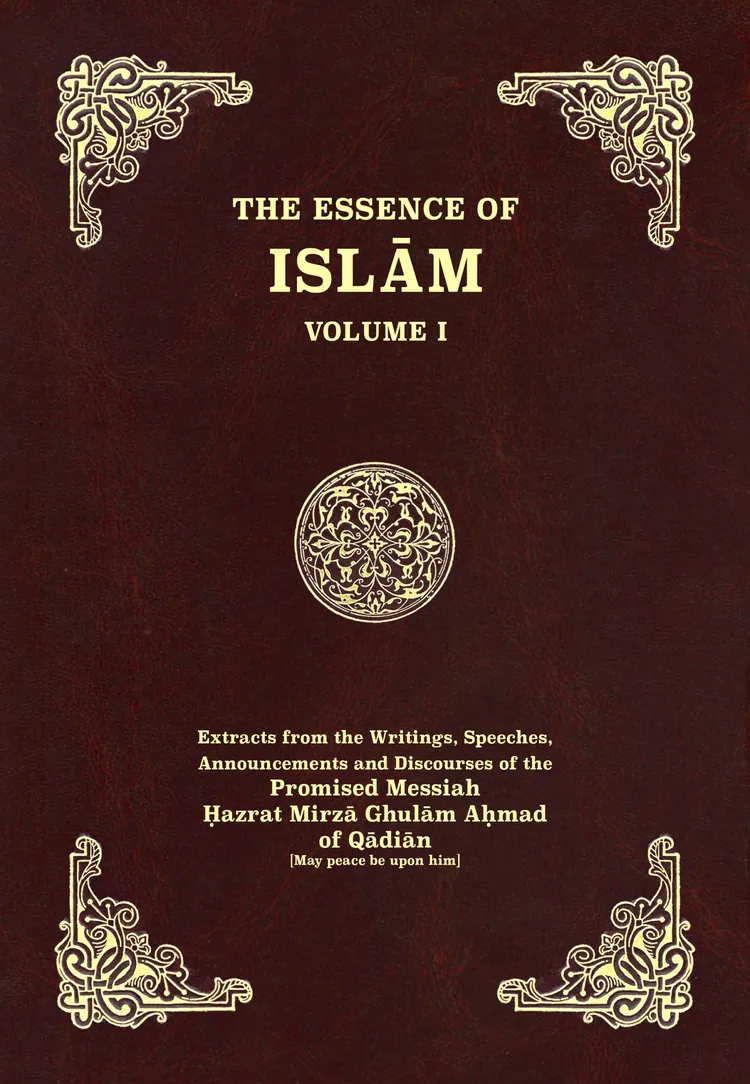
Introduction
In this discourse from Essence of Islam (Volume 2), Hazrat Mirza Ghulam Ahmad (AS), the Promised Messiah and Mahdi, expounds upon A Soul Bereft of Its Qualities Is Dead, presenting profound spiritual insights and scriptural verities.
Book Series: Essence of Islam (Volume 2)
Author: Hazrat Mirza Ghulam Ahmad of Qadian (AS)
Section: Part 15: The Soul
Navigation: Book Table of Contents | « Previous: The Soul Is the Creation of God | Next: Qualities of the Soul »
this quality makes it repulsive; however, it is not evil for a person to wish to outstrip all others in virtue and to desire to achieve spiritual uniqueness.
[Nasim-e-Da‘wat, Ruhani Khaza’in, vol. 19, pp. 389-390]
[Essence of Islam, Vol. 2, p. 394]
It may be said that if the soul is created it would follow that it is mortal in the sense that a condition in which something is bereft of its qualities may be described as death. When a medicine loses all its effect it may be described as dead. In certain circumstances the soul is bereft of its qualities and undergoes even greater changes than the body. At such times it can be said that it has died, inasmuch as when anything gives up all its essential qualities it is described as dead. That is why in the Holy Qur’an only those human souls have been described as being alive after their departure from this life which retain those essential qualities which are the purpose of their creation, that is to say, perfect love of and perfect obedience to God Almighty which is the life of the soul. When a soul departs this life full of the love of God and having devoted itself to Him, it is alive and all other souls are dead. A soul bereaved of its qualities is dead. During sleep both the body and the soul die, that is to say, they are bereft of the qualities that they possess during wakefulness and suffer a sort of death, inasmuch as anything that is bereft of its qualities cannot be described as being alive. Death does not only mean non-existence; being bereft of essential qualities is also a sort of death. For instance, when a body dies its material still survives. In the same way the death of the soul means that it has been bereft of its qualities, as happens during sleep, when both the body and the soul
ٱللَّهُ يَتَوَفَّى ٱلۡأَنفُسَ حِينَ مَوۡتِهَا وَٱلَّتِي لَمۡ تَمُتۡ فِي مَنَامِهَا ۖ فَيُمۡسِكُ ٱلَّتِي قَضَىٰ عَلَيۡهَا ٱلۡمَوۡتَ وَيُرۡسِلُ ٱلۡأُخۡرَىٰٓ إِلَىٰٓ أَجَلٖ مُّسَمًّى ۚ إِنَّ فِي ذَٰلِكَ لَأٓيَٰتٖ لِّقَوۡمٖ يَتَفَكَّرُونَ
“Allah takes away the souls of human beings at the time of their death; and during their sleep of those also that are not yet dead. And then He retains those against which He has decreed death, and sends back the others till an appointed term. In that surely are Signs for a people who reflect.” (Surah Al-Zumar, 39:43)
(Part Number 24, Surah Al-Zumar) This means that at the time of death the souls pass wholly under the control of God and lose all choice and self-consciousness. That is to say, they are deprived of the qualities of life and become as if they were nonexistent. Such of them as do not die in fact, but pass into a condition resembling death in a state of sleep, also pass under the control of God Almighty and undergo a change in which they lose all worldly consciousness and feeling. Thus, both in death and during sleep, God takes possession of the soul in such manner that it loses all choice and consciousness which are the signs of life. Then such souls upon whom death has in fact been imposed are retained by God, so that they cannot return to the world, and He restores to the world those souls upon whom death is not imposed. In this phenomenon there are signs for those who reflect. This verse shows that the soul undergoes death as well as
[Chashma-e-Ma‘rifat, Ruhani Khaza’in, vol. 23, pp. 160-164]
[Essence of Islam, Vol. 2, p. 394]
The doctrine which the Qur’an teaches is that as God has created the soul He also has power to make it nonexistent, and that the human soul is bestowed immortality by the bounty and grace of God, and not on account of any inherent quality of its own. That is why those who develop the utmost love for God and obey Him absolutely and prostrate themselves at His threshold in full sincerity and devotion are specially bestowed a perfect life; their natural senses are sharpened and their natures are invested with a light whereby they experience an extraordinary upsurge of spirituality and all the spiritual powers that they possessed in this world are vastly expanded after death. Moreover, on account of their God-given relationship with Him, they are exalted to heaven which exaltation in the idiom of the law of Islam is designated rafa‘a. But those who do not believe, and have not a relationship with God, are not bestowed such life nor are they invested with these qualities. They are like the dead. Therefore, had God Almighty not been the Creator of souls He could not have exhibited this distinction between believer and non-believer through His powerful control.
[Chashma Masihi, Ruhani Khaza’in, vol. 20, p. 372, footnote]
[Essence of Islam, Vol. 2, p. 397]
QUESTION: The Mirza Sahib and all Muslims believe, and the Qur’an affirms, that when Holy Prophet (Muhammadsaw) was asked about the souls he could not tell them anything and received the revelation: “Tell them, the soul is God’s command.” Thus the Muslims could not have gathered anything from this reply, nor was even their guide enlightened about the soul. What response was furnished by God in the affirmation that the soul is a command of the Lord? Are not all other things also the command of the Lord? ANSWER: …. How long shall I continue to correct your mistakes? From whom have you heard that the Muslims believe that the Holy Prophet (peace and blessings of Allah be on him) was not bestowed by God Almighty any knowledge about the soul, and where have you read
وَيَسۡـَٔلُونَكَ عَنِ ٱلرُّوحِ ۖ قُلِ ٱلرُّوحُ مِنۡ أَمۡرِ رَبِّي وَمَآ أُوتِيتُم مِّنَ ٱلۡعِلۡمِ إِلَّا قَلِيلٗا
“And they ask thee concerning the soul. Say, ‘The soul is by the command of my Lord; and of the knowledge thereof you have been given but a little.’” (Surah Bani Isra’il, 17:86)
(Part Number 15, Surah Bani Isra’il) (O Muhammad) the disbelievers enquire of thee about the soul, as to how and from what it has been created. Tell them: The soul is by the command of my Lord and you O disbelievers have been bestowed but little knowledge about the soul and Divine mysteries. You have on account of your lack of intelligence fallen into the error of thinking that it was the Holy Prophet (peace and blessings of Allah be on him) who was told that he had little knowledge about the soul. The context and the use of the plural pronoun make it clear that this admonition was addressed to the disbelievers….
The fact is that a company of the disbelievers enquired from the Holy Prophet (peace and blessings of Allah be on him) about the soul. This company of disbelievers was told that the soul is by the command of Allah, that is to say, it is a word of Allah or a reflection of it which, through the wisdom and power of God, manifests itself as the soul. It does not partake of Godhood but is created and is a servant of God. This is a subtle secret of Divine power of which you disbelievers have only a little perception, on account of which you are invited to have faith and to exercise your understanding….
The statement that the soul is by the command of the171
That is to say, the creation of elements out of nonexistence and the manifestation of compounds both belong to God and elements and compounds are both God’s creation.
[Surmah Chashm Arya, Ruhani Khaza’in, vol. 2, pp. 171-177]
Observe, therefore, how succinctly the Holy Qur’an has expounded a high and excellent verity within a brief verse. In contrast, the more you reflect on the doctrine of the Vedas the more you will feel embarrassed.
[Essence of Islam, Vol. 2, p. 398]
I tell you truly, without the least exaggeration, that the Holy Qur’an has expounded the qualities, faculties, powers, capacities and other wonderful particulars of the soul in such a true, clear, fine and excellent manner, and has furnished proofs of these, that it constitutes a high and fine statement, so full of wisdom comprising perfect verities that if all the four Rishis who compiled the Vedas
were to be born again and were to exert their thinking and reflection to the utmost they would not be able to achieve that degree of vastness of knowledge and high insights even if they expired in the effort.
[Surmah Chashm Arya, Ruhani Khaza’in, vol. 2, p. 234]
[Essence of Islam, Vol. 2, p. 400]
Book Series: Essence of Islam (Volume 2)
Author: Hazrat Mirza Ghulam Ahmad of Qadian (AS)
Section: Part 15: The Soul
Navigation: Book Table of Contents | « Previous: The Soul Is the Creation of God | Next: Qualities of the Soul »