
Christian Scholars: The Author of ‘Revelation’ Is Unknown | New Testament
Introduction
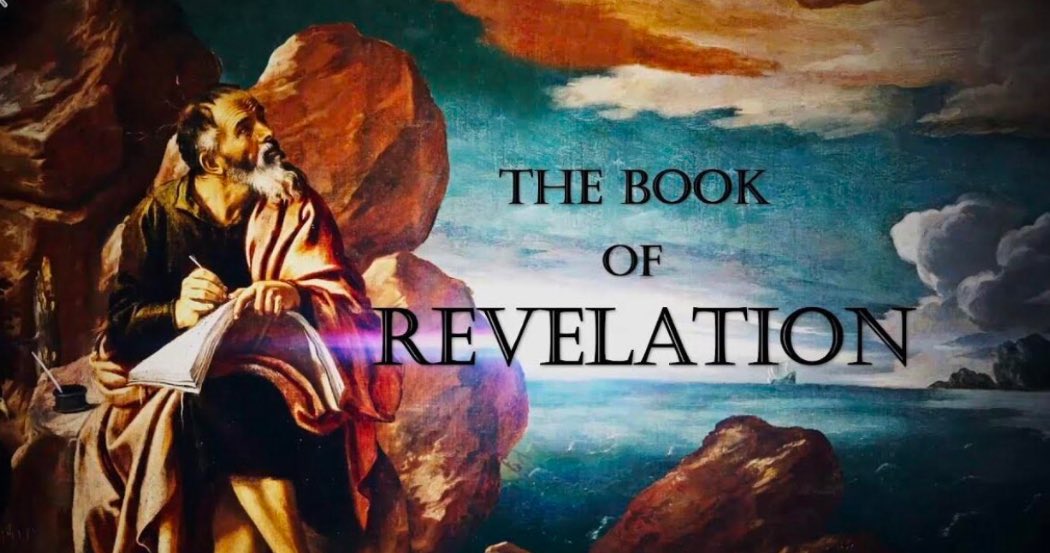
The Book of Revelation, also known as the Apocalypse or the Apocalypse of John, is traditionally attributed to the Apostle John, one of the twelve disciples of Jesus. Yet when examined historically, the question of its authorship is far less certain. The author identifies himself simply as “John” and does not identify himself as the Apostle John. Moreover, differences in language, style, theology, and historical context have led many modern scholars to distinguish the author of Revelation from the apostle traditionally associated with the Gospel of John and the Johannine letters.
Islam teaches that God originally revealed the Injil to Prophet Jesus (peace be upon him). Muslims do not, however, regard the present New Testament as identical to that original revelation. Rather, it contains a collection of writings produced and transmitted by human beings after Jesus, alongside material believed to preserve elements of his original teaching.
The Book of Revelation is one of the New Testament’s most influential books and its final book. Yet if its traditional attribution to the Apostle John cannot be established, and scholars question who actually wrote it, this raises an important point from an Islamic perspective. It highlights the distinction between the original revelation given by God to a prophet and later writings produced by people about that prophet and his teachings. It also stands in contrast to the Quran, which has been preserved in its original Arabic language and transmitted as a single, standardized scripture since the time of the Prophet Muhammad ﷺ.
Below are testimonies from Christian historians, scholars, and commentaries who question who the actual author of the Book of Revelation was.
Eusebius Pamphilus (260-340 AD)
Early Christian scholar and bishop Eusebius Pamphilus, also known as the “Father of Church History,” wrote in his historical account of early Christianity that the author of Revelation was not the Apostle John.
“I do not, therefore, deny that he was called John, and that this was the writing of one John. And I agree that it was the work, also, of some holy and inspired man. But I would not easily agree that this was the apostle, the son of Zebedee, the brother of James, who is the author of the gospel, and the general (catholic) epistle that bears his name. But I conjecture, both from the general tenor of both, and the form and complexion of the composition, and the execution of the whole book, that it is not from him.”
[The Ecclesiastical history of Eusebius Pamphilus, A Historical Review, p. 208]
![[The Ecclesiastical history of Eusebius Pamphilus, A Historical Review, p. 208]](https://whiteminaret.org/wp-content/uploads/2026/10/JohnRevelation-Eusebius-WhiteMinaret.png)
Bernard Orchard (Catholic)
A British Catholic monk notes that scholars have debated for centuries which “John” the Book of Revelation should be attributed to. He shows support for the view of Eusebius, who suggested that John the Presbyter, not John the Apostle, may have been its author, and even questioned whether Revelation should have been included in the New Testament at all.
“[…] Eusebius however (HE iv, 13, 8) says that either the book must be ranked as among the undisputed NT books or rejected as apocryphal, and suggests that its author might be John the Presbyter mentioned by Papias. This ‘other’ John might account for the story of the ‘two tombs’.
[A Catholic Commentary on Holy Scripture, The Apocalypse] [Enlarged Page Scan]
![[A Catholic Commentary on Holy Scripture, The Apocalypse]](https://whiteminaret.org/wp-content/uploads/2026/10/JohnRevelation-Catholic-BOrchard.png)
![[Enlarged Page Scan]](https://whiteminaret.org/wp-content/uploads/2026/10/The-Apocalypse.jpeg)
Peter S. Williamson
Scholar Peter S. Williamson notes difficulties in identifying the author of Revelation as the Apostle John or the writer of the Gospel and Letters attributed to him, highlighting key differences in style and authorship.
“However, there are some difficulties in identifying the author of Revelation with John the apostle or with the author of the Gospel and Letters that bear his name. First, the author of Revelation never refers to himself as an apostle but indicates he is a prophet (1:3) and a brother among the prophets (22:9), a group he distinguishes from the apostles (18:20). When Revelation speaks of the twelve apostles of the Lamb as the foundation stones of the wall of the new Jerusalem (21:14), there is no suggestion that the author includes himself in their number.”
[Scan: Catholic Commentary on Sacred Scripture by Peter S. Williamson, Author Section]
![[Scan: Catholic Commentary on Sacred Scripture by Peter S. Williamson, Author Section]](https://whiteminaret.org/wp-content/uploads/2026/10/Revelaton-PeterWilliamson.jpeg)
He further notes that several prominent Eastern Church Fathers — Cyril, Gregory, Eusebius, and Theodoret — did not believe the Apostle John wrote Revelation or even considered it part of Scripture due to its very problematic interpretations. At the end, he acknowledges that, unless new evidence emerges, the true author of Revelation cannot be known with certainty.
“Other prominent Church Fathers in the East – including Cyril of Jerusalem, Gregory of Nazianzus, John Chrysostom, Eusebius, and Theodoret – did not consider the apostle John the author of Revelation or even regard it as part of the canon of Scripture. Some of their uneasiness was due to problematic interpretations of the book and to the use made of it by the Montanists, members of a heretical early Christian sect.
The striking style differences noted by Dionysius continue to persuade most scholars that the author of Revelation was not the same person who wrote the Gospel and Epistles of John. However, some scholars maintain that the apostle John did write Revelation and explain the stylistic differences as due to the book’s apocalyptic genre, or to the apostle John’s use of a secretary (an amanuensis) in the composition of his other books, not available to him on Patmos.
Unless new information is uncovered, we cannot know for sure who wrote Revelation. […]”
[Scan: Catholic Commentary on Sacred Scripture by Peter S. Williamson, Author Section][Scan: Catholic Commentary on Sacred Scripture by Peter S. Williamson, Author Section]
![[Scan: Catholic Commentary on Sacred Scripture by Peter S. Williamson, Author Section]](https://whiteminaret.org/wp-content/uploads/2026/10/RevelationBook-PeterWilliamson-Commentary.jpeg)
![[Scan: Catholic Commentary on Sacred Scripture by Peter S. Williamson, Author Section]](https://whiteminaret.org/wp-content/uploads/2026/10/RevelationJohn-PeterWilliam-Catholic.jpeg)
Zaine Ridling
Zaine Ridling, Ph.D., notes that while some early sources, like Justin Martyr, attributed Revelation to the Apostle John, the book’s internal evidence remains inconclusive.
“[…] Although some ancient authorities (e.g., Justin, Dialogue with Trypho 81.4) have suggested that this is the apostle John, the son of Zebedee (see Mk 3.17), the internal evidence of the book itself is inconclusive.“
![[The Bible, Revelation Introduction, p.539]](https://whiteminaret.org/wp-content/uploads/2026/10/Revelation-Bible-ZaineRidling.jpeg)
He goes on to list some historical context and concludes that the traditional identification of Revelation’s author with the Apostle John is questionable.
“[…] The traditional identification of the John of the book of Revelation with the apostle of the same name is thus questionable.”
![[The Bible, Revelation Introduction, p.539-540]](https://whiteminaret.org/wp-content/uploads/2026/10/ZaineRidling.png)
Charles T. Chapman (Baptist)
Christian Baptist theologian Charles T. Chapman, Jr. also arrives at a similar conclusion:
B. Who Wrote the Book, When Was It Written, and Who Were Its First Readers?
Questions concerning the author, date, and first recipients of Revelation seem easy compared to the task of deciphering the book’s symbols. However, the question of authorship in particular is rather tricky. In 1:1, 4, and 9 the author identifies himself as John. The question is, which John? The John whom most people immediately think of, the one tradition says wrote the book, is St. John the Apostle. However, the traditional title of the book is not “The Revelation of St. John the Apostle,” but “St. John the Divine.” “Divine” means “seer,” that is, one who is granted a vision of the future. […]
Any other discussion of the identity of the author of Revelation is only so much educated guesswork.
Suffice it to say that the writer is closely associated with the same group of people that gave us the Gospel of John and the Letters of John and had their headquarters in Ephesus. We will go ahead and call the author of Revelation “John” even though there is much uncertainty about who he was.“
[The Message of the Book of Revelation by Charles T. Chapman, Jr., p.7-8]
![[The Message of the Book of Revelation by Charles T. Chapman, Jr., p.7-8]](https://whiteminaret.org/wp-content/uploads/2026/10/Revelation-WhoIsAuthor-Chapman.jpeg)
Michael P. Barber
A professor of Sacred Scripture, theology, & Catholic thought, he also states that the identity of ‘John’ is unknown and lists several early Christian scholars who were proponents of the “other John theory” of authorship.
HOLY GHOST WRITER
Who Wrote the Apocalypse and When?
Will the Real John Please Stand Up?” […] But who is this John the Revelator, who authored the Book of Revelation? Some modern scholars challenge the notion that John was the “revelator.” Others, while agreeing that John is the author, disagree as to the identity of this John. Was it John the Apostle, or was there another John who merely shared the same name?“
[Unlocking the Book of Revelation, Who Wrote the Apocalypse and When, p.1]
![[Unlocking the Book of Revelation, Who Wrote the Apocalypse and When, p.1]](https://whiteminaret.org/wp-content/uploads/2026/10/Revelation-UnknownJohn-Barber.jpeg)
Ignatius Catholic Study Bible
The Ignatius Catholic Study Bible notes that while tradition links Revelation to the Apostle John, this has been questioned since the 3rd century. Dionysius of Alexandria and modern scholars reject this view due to differences in style and themes.
” Four times the author of Revelation calls himself “John” (1:1, 4, 9; 22:8). He claims to be living in exile on the island of Patmos (1:9), where he received heavenly visions along with instructions to record them in a book (1:11,19; 2:1, etc.). Christian tradition generally identifies him as the Apostle John, son of Zebedee (Mk 3:17) and the reputed author of the Gospel and epistles of John. Testimony supporting the apostolic authorship of Revelation comes from an array of ancient writers, including St. Justin Martyr (A.D. 165), St. Irenaeus (A.D. 180), St. Clement of Alexandria (A.D. 200), St. Hippolytus (A.D. 225), and St. Athanasius (ca. A.D. 350).
It must be noted, however, that this majority report is not the only report to have come down to us from Christian antiquity. Skepticism about whether the Apostle John authored the Book of Revelation surfaced in the middle of the third century, when Dionysius of Alexandria argued that the Greek idiom of Revelation differs so markedly from the other writings of John that it could not have been penned by the same author. He also noted that several key concepts in John’s writings are absent from Revelation (e.g., life, truth, grace, joy) and that this absence weighs against a common authorship of Revelation and the other NT books attributed to the apostle (for the arguments of Dionysius, see Eusebius, Ecclesiastical History 7, 25). Most modern scholars agree with this assessment and therefore discount the tradition that connects Revelation to John the Apostle.
[Scan: Ignatius Catholic Study Bible, Introduction to The Revelation To Saint John, p.1]
![[Scan: Ignatius Catholic Study Bible, Introduction to The Revelation To Saint John, p.1]](https://whiteminaret.org/wp-content/uploads/2026/10/Revelation-UnknownJohn-Ignatius.jpeg)
Oxford Bible Commentary
The Oxford Bible Commentary states that the author of Revelation was a Christian prophet named John, who was exiled on Patmos. While John was a common name at the time, there is no reason to identify him with the Apostle John.
“B. Author and Date. The author of Revelation was a Christian prophet named John (1:1, 4; 22:8), of whom we know only that he was familiar with the Christian communities in the Roman province of Asia and at the time of writing was exiled on the island of Patmos. John was one of the most common of Jewish names in the period, and there is no reason to identify him with the apostle John, though this identification was made. […]”
![[THE OXFORD BIBLE COMMENTARY, Revelation, p.1288]](https://whiteminaret.org/wp-content/uploads/2026/10/THE-OXFORD-BIBLE-COMMENTARY-Revelation-p.1288.png)
New Oxford Annotated Bible
The New Oxford Annotated Bible states that while some early sources suggested Revelation was written by the Apostle John the internal evidence is inconclusive. It also questions the connection between the John of Revelation and the Apostle or the author of the Gospel and Letters.
“While some ancient authorities (e.g. Justin, Dialogue with Trypho 814) suggested that this is the apostle John, the son of Zebedee (see Mk 3.17), internal evidence from the book itself is inconclusive. […] The traditional identification of the John of the book of Revelation with the apostle of the same name is thus highly questionable, as is the connection of the John of the book of Revelation with the Gospel According to John or with the Letters of John.”
[THE NEW OXFORD ANNOTATED BIBLE, The Revelation to John, p. 2153]
![[THE NEW OXFORD ANNOTATED BIBLE, The Revelation to John, p. 2153]](https://whiteminaret.org/wp-content/uploads/2026/10/Revelation-UnknownJohn-OxfordNew.jpeg)
Chronological Study Bible
The Chronological Study Bible notes that a debate continues over whether the author of Revelation is John the Apostle, John the Elder, or an otherwise unknown John.
“In the 3rd century these variations of the original language prompted scholars to question the apostle John’s authorship of the Revelation. A debate still continues over whether the John who wrote this book is to be identified is to be identified with John the apostle. John the Elder (see “The First Letter of John” at 1 John 1:1), or an otherwise unknown John.”
![[Chronological Study Bible, p.1408]](https://whiteminaret.org/wp-content/uploads/2026/10/Revelation-UnknownJohn-CSB.png)
The New International Commentary on the New Testament
The New International Commentary on the New Testament states that within the Book of Revelation itself, there is no specific indication as to who exactly the author John was. The Commentary lists several suggestions from historical works and speculations about who John may have been, including John the Prophet, a young man, and others.
“Within the book itself, however, there is no specific indication as to who exactly this John was. […]”
![[Scan: The New International Commentary on the New Testament THE BOOK OF REVELATION REVISED, Authorship]](https://whiteminaret.org/wp-content/uploads/2026/10/Revelation-UnknownJohn-NIC.jpeg)
It then further asks:
“Who, then, was the John who wrote Revelation?’ Internal evidence has led most scholars to conclude that, whoever he was, there is little possibility that he was also the author of the Fourth Gospel.”
[Scan: The New International Commentary on the New Testament THE BOOK OF REVELATION REVISED, Authorship]
![[Scan: The New International Commentary on the New Testament THE BOOK OF REVELATION REVISED, Authorship]](https://whiteminaret.org/wp-content/uploads/2026/10/Revelation-UnknownJohn-NIC2.png)
The Expositor’s Bible Commentary
The Expositor’s Bible Commentary notes that during the Reformation, questions about Revelation’s authorship and canon resurfaced. Luther, offended by its content, called it ‘neither apostolic nor prophetic,’ and the authorship issue remains problematic.
“The Reformation period witnessed a renewal of the earlier questions concerning its apostolic authorship and canonical status. Thus Luther, offended by the contents of Revelation, declared that he regarded it as “neither apostolic nor prophetic.” […] To sum up, the question of authorship is problematic.”
[Scan: THE EXPOSITOR’S BIBLE COMMENTARY by Kenneth Barker & John Kohlenberger, Authorship section]
![[Scan: THE EXPOSITOR’S BIBLE COMMENTARY by Kenneth Barker & John Kohlenberger, Authorship section]](https://whiteminaret.org/wp-content/uploads/2026/10/Revelation-UnknownJohn-Expositor.jpeg)
Catholic bible press
This New Revised Standardized Version (NRSV) Bible copy suggests that the author of Revelation is probably not John the Apostle, but rather a disciple of his or another Christian leader who claimed to be living in exile on the island of Patmos.
“The author is probably not John the Apostle, but a disciple of his or another Christian leader who claimed to be living in exile on the island of Patmos.”
[The Holy Bible NRSV, Catholic Bible Press, Introduction: The Revelation to John]
![[The Holy Bible NRSV, Catholic Bible Press, Introduction: The Revelation to John]](https://whiteminaret.org/wp-content/uploads/2026/10/Revelation-UnknownJohn-CatholicPress.jpeg)
The Jerusalem Bible
The Jerusalem Bible states that it is impossible to identify the author of Revelation..
“[…] Internal evidence shows that the Revelation of John has some affinity with the other Johannine writings, but as it is so sharply distinguished from them by language, style, and some theological positions, notably its view of the parcusia, it is impossible to identify the author of Revelation with the author of the rest of the Johannine literature.”
[The Jerusalem Bible, Introduction to the Book of Revelation, p.427-428]
![[The Jerusalem Bible, Introduction to the Book of Revelation, p.427-428]](https://whiteminaret.org/wp-content/uploads/2026/10/Revelation-UnknownJohn-JerusalemBible.png)
The Bible Dictionary
The Bible Dictionary states that nothing in Revelation links the author to John the son of Zebedee or John the Elder. Sound judgment leads to the conclusion that the author is a John otherwise unknown to us.
“Author: Although the author never claims directly to be a prophet, several passages suggest such was his self-understanding (e.g., 22:9). He calls himself John (1:4). Nothing in the work links the author to John the son of Zebedee or John the Elder. Sound judgment requires the conclusion that he is a John otherwise unknown to us.”
[The Bible Dictionary by Paul J. Achtemeier, Revelation to John, p. 931]
![[The Bible Dictionary by Paul J. Achtemeier, Revelation to John, p. 931]](https://whiteminaret.org/wp-content/uploads/2026/10/Revelation-UnknownJohn-BibleDic.png)
Reading the Book of Revelation
In ‘Reading the Book of Revelation’, it states that most Christian scholars today are fully certain that the Book of Revelation was written by an unknown prophet named John and not by John the Apostle, the disciple of Jesus.
“Thus important preliminary questions include: Who wrote Revelation? When? Where? And why was it written in this form? While individual scholars may disagree on one or another detail, most today are convinced that the Book of Revelation was written in the form of an apocalypse (more in a moment) by an otherwise unknown prophet named John, who traveled through the cities of Asia Minor in the late first century. Although tradition identified this John with John the apostle, the disciple of Jesus, this is unlikely. […]”
[Reading the Book of Revelation, A Resource for Students, p. 4]
![[Reading the Book of Revelation, A Resource for Students, p. 4]](https://whiteminaret.org/wp-content/uploads/2026/10/Revelation-UnknownJohn-ROBR.png)
Conclusion
Ultimately, academic findings like this that question biblical authorship serve as historical evidence that is consistent with what the Holy Quran claimed 1,400 years ago: that the scriptures of the People of the Book (Jews and Christians) underwent human editing and lack a direct, unbroken chain of transmission back to their divine origins.
Questions for Christians
1. If we cannot establish who actually wrote Revelation, on what basis should it be accepted as authoritative Scripture?
2. Why was Revelation traditionally attributed to the Apostle John when the book itself never identifies its author as John the Apostle?
3. If there are multiple theories about who this “John” was—including John the Apostle, John the Presbyter, a prophet, or another otherwise unknown John—how can Christians be certain which person actually wrote it?
4. If prominent Christian scholars and Church Fathers themselves questioned the authorship and even the canonical status of Revelation, why should its inclusion in the New Testament be considered unquestionable?
5. If the Apostle John did not write Revelation, why should the authority of an anonymous or otherwise unknown author be placed on the same level as direct revelation given to a prophet of God?
6. If the authorship of biblical books can become uncertain over time, how can Christians be certain that the New Testament today represents exactly what was originally revealed to Jesus?
7. If God intended His revelation to serve as guidance for humanity, why would its original form, authorship, and transmission become matters of historical uncertainty?