
Punishment Follows Upon Misconduct — Essence of Islam Vol. 2
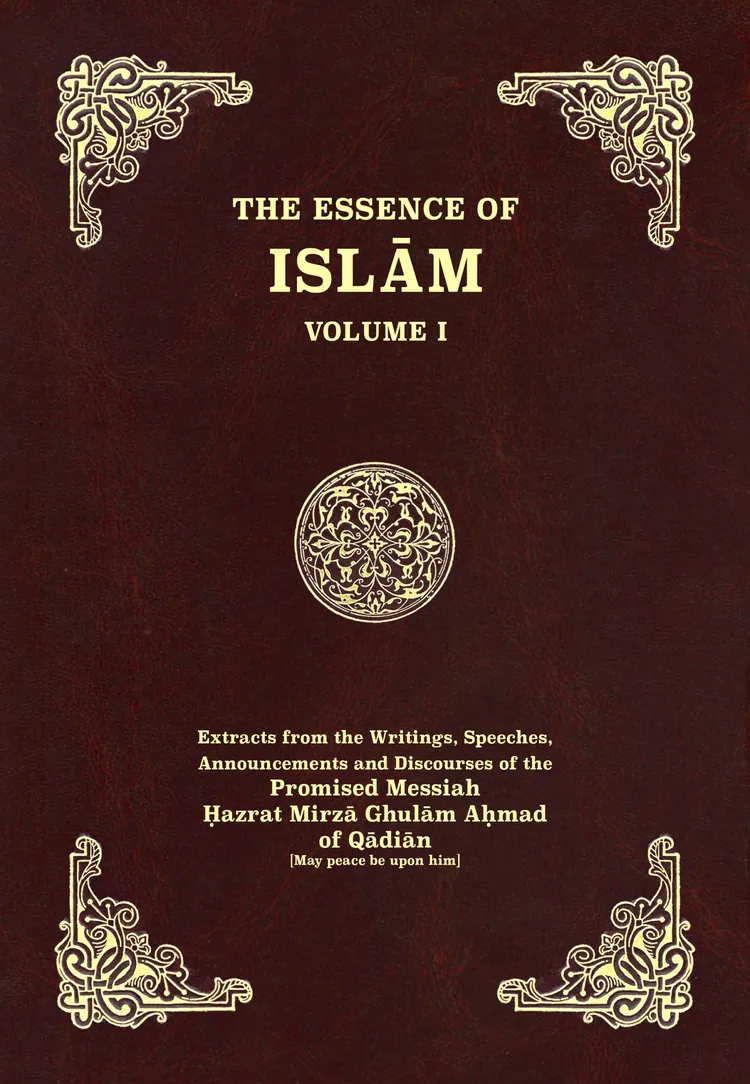
Introduction
In this discourse from Essence of Islam (Volume 2), Hazrat Mirza Ghulam Ahmad (AS), the Promised Messiah and Mahdi, expounds upon Punishment Follows Upon Misconduct, presenting profound spiritual insights and scriptural verities.
Book Series: Essence of Islam (Volume 2)
Author: Hazrat Mirza Ghulam Ahmad of Qadian (AS)
Section: Part 14: Punishment In This World
Navigation: Book Table of Contents | « Previous: How Wrongdoers Are Punished | Next: Imposture Is Punished in This World »
reward by the Master of the Day of Judgement. No one of these four attributes comprises a design which would harm man; they are all designed for his good. But in the case of a person who, through his misconduct and extravagant behaviour, puts himself outside the operation of these attributes, they begin to operate to his harm. For instance, Rububiyyat takes on the aspect of destruction and annihilation, and Rahmaniyyat is manifested in the shape of wrath and anger, and Rahimiyyat is manifested in the shape of revenge and harshness, and the design of good recompense takes on the terrifying aspect of punishment and torment.
[Anjam-e-Atham, Ruhani Khaza’in, vol. 11, pp. 7-10 footnote]
This change in the expressions of Divine attributes is brought about in consequence of a change in man’s own condition. Thus punishment, and warning of punishment, are not comprised in the basic attributes of God, inasmuch as God’s warning of punishment is not absolute so long as the person warned is alive and has the capacity to carry out a change in himself. Therefore, a change in respect of the promised chastisement is not a breach of promise. Every warning of chastisement is conditional though no condition may be expressly mentioned, except when the warning is expressed in absolute terms in which case it becomes an absolute decree and is not subject to change. This is a grand and valued principle relating to the comprehension of Divine attributes which is inherent in the Surah Fatihah.
[Essence of Islam, Vol. 2, p. 373]
It is worthy of note that the Meccans had not merely rejected the Holy Prophet (peace and blessings of Allah be on him). Simple rejection based on naivety does not entail punishment in this life. But when a disbeliever 156
But if anyone resorts to killing or conspiring to kill, or embarks upon mischief and persecution, he is bound to be chastised.
[Malfuzat, vol. III, pp. 162-163]
[Essence of Islam, Vol. 2, p. 373]
156 ‘There should be no compulsion in religion.’—Al-Baqarah, 2:257 [Publisher] 157
That is, he who fabricates a lie shall perish. At another place it is said:
وَمَنۡ أَظۡلَمُ مِمَّنِ ٱفۡتَرَىٰ عَلَى ٱللَّهِ كَذِبًا أَوۡ كَذَّبَ بِـَٔايَٰتِهِۦٓ ۚ إِنَّهُۥ لَا يُفۡلِحُ ٱلظَّـٰلِمُونَ
“And who is more unjust than he who forges a lie against Allah or gives the lie to His Signs? Surely, the unjust shall not prosper.” (Surah Al-An‘am, 6:22)
Who is guilty of greater wrong than one who fabricates a lie against God or gives the lie to His signs? It is thus clear that those who gave the lie to the word of God on the occasion of the advent of God’s Prophets were not spared by God and were destroyed by diverse types of torments. Observe what was the end of the people of Noah and of ‘Ad and Thamud and the people of Lot and of Pharaoh and the Meccan enemies of the Holy Prophet (peace and blessings of Allah be on him). Thus when those who rejected the truth were chastised in this world, how can he escape who fabricates a lie against Allah and who is mentioned in the first place in the verse just cited. Would God treat the righteous and the false alike and is there no punishment in this life from God Almighty for impostors?
يُسَبِّحُونَ ٱلَّيۡلَ وَٱلنَّهَارَ لَا يَفۡتُرُونَ
“They glorify Him night and day; and they flag not.” (Surah Ta Ha, 20:157)
159 ‘What is the matter with you? How judge ye!’—Al-Qalam, 68:37 [Publisher]
[Essence of Islam, Vol. 2]
[Essence of Islam, Vol. 2, p. 374]
Book Series: Essence of Islam (Volume 2)
Author: Hazrat Mirza Ghulam Ahmad of Qadian (AS)
Section: Part 14: Punishment In This World
Navigation: Book Table of Contents | « Previous: How Wrongdoers Are Punished | Next: Imposture Is Punished in This World »