
Salat Leads to God — Essence of Islam Vol. 2
Introduction
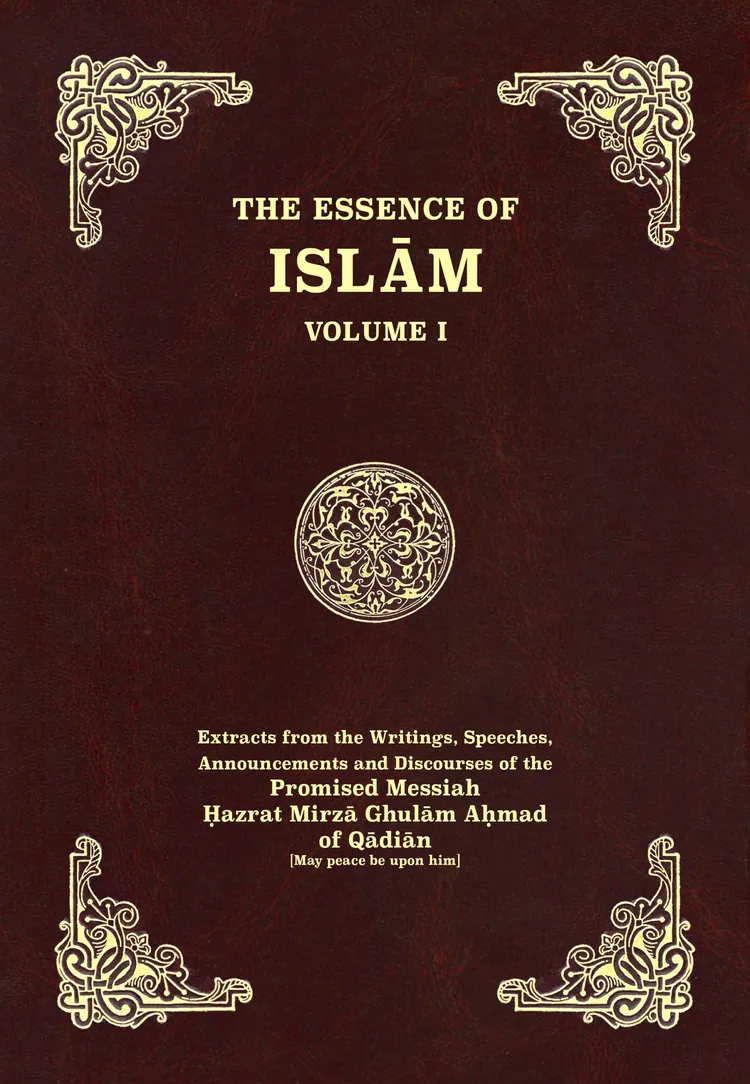
In this discourse from Essence of Islam (Volume 2), Hazrat Mirza Ghulam Ahmad (AS), the Promised Messiah and Mahdi, expounds upon Salat Leads to God, presenting profound spiritual insights and scriptural verities.
Book Series: Essence of Islam (Volume 2)
Author: Hazrat Mirza Ghulam Ahmad of Qadian (AS)
Section: Part 8: The Pillars of Islam
Navigation: Book Table of Contents | « Previous: The Pillars of Islam | Next: What Is Salat? »
for Allah alone. Some idols are manifest but some are subtle. For instance, to rely on material means beside Allah is also an idol, but a subtle one…. Those subtle idols that people carry about under their arms are difficult to throw out. Great philosophers and wise people cannot get rid of them. They are very fine insects which cannot be perceived except through the microscope of the great Grace of God. They inflict great harm on a person. Those idols are personal emotions which carry men a far distance in repudiation of the rights of their fellow beings and of God Almighty. Many who are called learned and erudite and Maulavis and who study the Ahadith cannot recognize these idols inside them, and worship them. To avoid these idols is possible only for a very brave man. Those who follow these idols cultivate rancour in their hearts, deny the rights of others, and imagine that they have captured a quarry. They lay undue stress upon material means and rely entirely upon them. Till these tendencies are removed altogether, the Unity of God cannot be established.
[Speeches to Jalsah Salana, 1906, pp. 1-5]
[Essence of Islam, Vol. 2, p. 295]
After comprehending the meaning of 107 pay full attention to the Prayer services, the observation of which has been repeatedly emphasised in the Holy Qur’an; but along with this it is said:
فَوَيۡلٞ لِّلۡمُصَلِّينَ ٱلَّذِينَ هُمۡ عَن صَلَاتِهِمۡ سَاهُونَ
“So woe to those who pray, But are unmindful of their Prayer.” (Surah Al-Ma‘un, 107:5-6)
That is, Woe unto those worshippers who are unaware of 107 Ibid.
It should be well understood that Prayer is an entreaty which a worshipper makes to God at the time of his separation from Him in torment and with a melting heart that he may be granted a meeting with God, inasmuch as no one can be purified unless God purifies him and no one can meet with God until God brings about a meeting. Man is held in a diversity of chains and collars. He desires to get rid of them but they persist. Despite man’s intense desire to be purified his Reproaching Self (Nafse-Lawwamah) does sometimes stumble. It is for God to purify a person from sin. There is no power that can purify you by force. God has prescribed Prayer for the generation of pure sentiments. Salat is a prayer which is submitted to God in travail and burning with a heart aflame, so that vicious thoughts and evil designs may be got rid of and a holy love and a pure relationship may be established and one may be enabled to keep God’s commandments. The word Salat indicates that true Prayer is not offered only with the tongue but must be accompanied by burning and sizzling and being consumed by fire. God Almighty does not accept Prayer until the worshipper at the time of prayer arrives a kind of death…. Salat is prayer at a very high level, but people do not appreciate it duly. In this age many Muslims are devoted to frequent repetition of pious formulas, as, for instance, the Naushahis and Naqshbandis, etc. It is a pity that none of these is free from innovations. These people are unaware of the reality of Salat and defame God’s commandments. For a seeker none of these innovations is of any benefit compared with the Salat. The way of the Holy Prophet (peace and blessings of Allah be on him) was that at a time of difficulty he made his ablutions and stood up in Salat and made his supplications in the Salat. My experience is that nothing takes one so near to God as Salat. The various postures of the Salat demonstrate respect, humility and meekness. In Qiyam (standing posture) the worshipper stands with his arms folded as a slave stands respectfully before his master and king. In Ruku‘ (bowing) the worshipper bends down in humility. The climax of humility is reached in Sajdah (prostration), which indicates extreme helplessness.
[Speeches to Jalsah Salana, 1906, pp. 6-8]
[Essence of Islam, Vol. 2, p. 295]
Observe Prayer services regularly. Some people content themselves with one Prayer service daily but they must remember that no one is exempt from them, not even Prophets. It is narrated in a Hadith that a company of men who had just accepted Islam requested the Holy Prophet (peace and blessings of Allah be on him) to be exempted from the Salat. He observed: A religion that does not demand action is no religion at all.
[Malfuzat, vol. 1, p. 263]
[Essence of Islam, Vol. 2, p. 297]
I tell you again that if you wish to establish a true relationship with God, hold fast to Salat in such a way that your body and your tongue and your spiritual designs and emotions should all become a true embodiment of Salat.
[Malfuzat, vol. 1, p. 170]
[Essence of Islam, Vol. 2, p. 297]
Book Series: Essence of Islam (Volume 2)
Author: Hazrat Mirza Ghulam Ahmad of Qadian (AS)
Section: Part 8: The Pillars of Islam
Navigation: Book Table of Contents | « Previous: The Pillars of Islam | Next: What Is Salat? »