
Salat to Be Offered in Arabic — Essence of Islam Vol. 2
Introduction
In this discourse from Essence of Islam (Volume 2), Hazrat Mirza Ghulam Ahmad (AS), the Promised Messiah and Mahdi, expounds upon Salat to Be Offered in Arabic, presenting profound spiritual insights and scriptural verities.
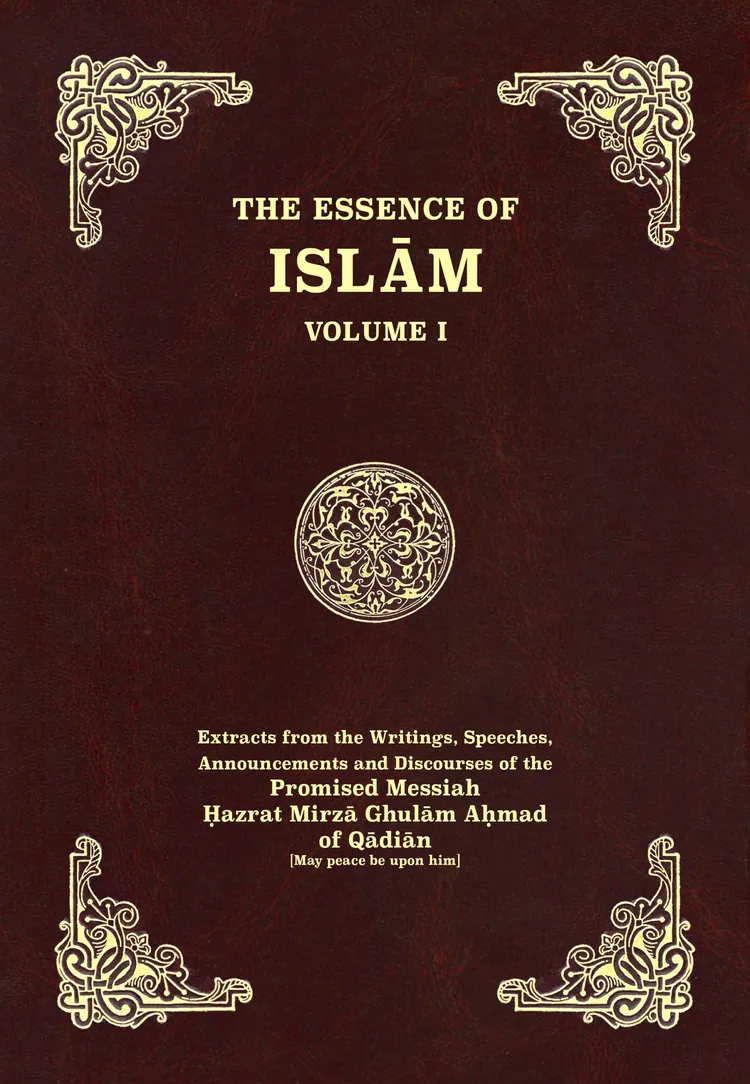
Book Series: Essence of Islam (Volume 2)
Author: Hazrat Mirza Ghulam Ahmad of Qadian (AS)
Section: Part 8: The Pillars of Islam
Navigation: Book Table of Contents | « Previous: Recitation of Al-Fatihah in Salat | Next: Supplications May Be Offered in One’s Own Vernacular »
Recitation of Al-Fatihah in Salat Prayer is the purpose and spirit of the Salat. How can that purpose be really achieved except by praying during Salat. Such a worshipper is like one who is granted an opportunity of presenting himself before the Sovereign and submitting his petition, but he says nothing at the time and after he leaves the presence he presents his petition. That would not avail him anything. That is the case of the people who do not pray humbly and earnestly during the Salat. Make all your supplication during the Salat and observe it with all its due requirements. God Almighty has taught us a prayer at the very beginning of the Holy Qur’an and has also instructed us in all the requirements of prayer. The recitation of Surah Fatihah is obligatory in the Salat, which indicates that true prayer is offered only in the course of the Salat.
[Malfuzat, vol. III, p. 258]
[Essence of Islam, Vol. 2, p. 304]
The Salat may not be observed in any language except the language of the Holy Qur’an. But after the prescribed prayers and supplications you may supplicate God Almighty in your own vernacular also. You must not neglect the prescribed prayers. The Christians having departed from this principle have lost everything.
[Malfuzat, vol. III, p. 288]
[Essence of Islam, Vol. 2, p. 304]
Supplications may be Offered in One’s Own Vernacular Make your supplications during your five daily prayer services. You are not forbidden to supplicate in your own vernaculars. The Salat is not properly observed except with concentration, and concentration cannot be achieved without humility, and humility is generated by a comprehension of that which is said. Therefore, eagerness and travail of the soul are generated more easily by supplication in one’s vernacular. But this does not mean that you should dispense with the prescribed prayers and offer the Salat in your own language. That is not what I mean. What I have in mind is that after the prescribed prayers you should also supplicate in your own language. There is a special blessing in the prescribed prayers. Salat means prayer. Therefore during the Salat pray for deliverance from the calamities of the here and the hereafter, and that your end may be good. Pray also for your wives
[Essence of Islam, Vol. 2]
[Essence of Islam, Vol. 2, p. 305]
Book Series: Essence of Islam (Volume 2)
Author: Hazrat Mirza Ghulam Ahmad of Qadian (AS)
Section: Part 8: The Pillars of Islam
Navigation: Book Table of Contents | « Previous: Recitation of Al-Fatihah in Salat | Next: Supplications May Be Offered in One’s Own Vernacular »