
Belief in Kalimah — Essence of Islam Vol. 2
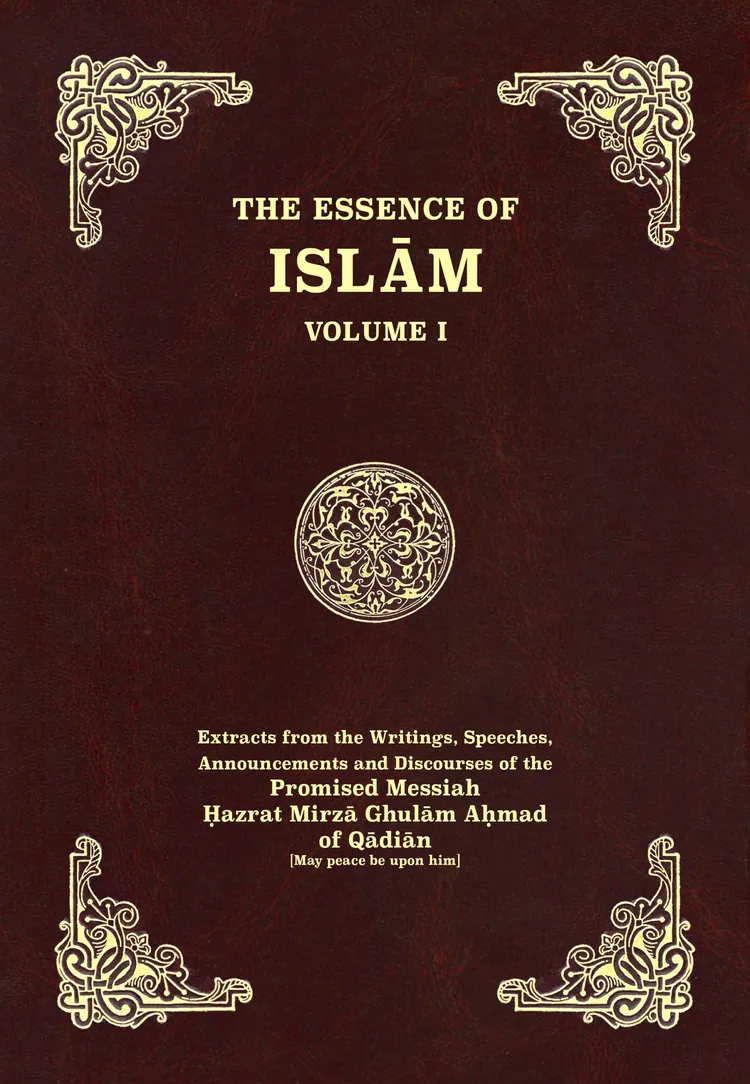
Introduction
In this discourse from Essence of Islam (Volume 2), Hazrat Mirza Ghulam Ahmad (AS), the Promised Messiah and Mahdi, expounds upon Belief in Kalimah, presenting profound spiritual insights and scriptural verities.
Book Series: Essence of Islam (Volume 2)
Author: Hazrat Mirza Ghulam Ahmad of Qadian (AS)
Section: Part 7: Salvation
Navigation: Book Table of Contents | « Previous: Did Crucifixion Save Christians From Sin? | Next: The Pillars of Islam »
100
Surely good deeds do away with evil deeds. We can also say that vice has a poisonous quality, which destroys, and that virtue has the quality of an antidote that rescues from death. For instance, to shut all the doors of a room is a vice, the necessary consequence of which is darkness. Opposed to this is the opening of the doors that face the sun. This is the virtue the necessary consequence of which is that the light that had been shut off will re-enter the room.
[Kitab-ul-Bariyyah, Ruhani Khaza’in, vol. 13, pp. 76-81]
[Essence of Islam, Vol. 2, p. 289]
Your saying is quite true that it is the teaching of the Holy Prophet (peace and blessings of Allah be on him) that sins are removed by the affirmation that: 101
It is a reality that he who believes in God as One without associate and that Muhammad, the chosen one (peace and blessings of Allah be on him) was sent by the same All-Powerful Unique One, will doubtless attain salvation, if he dies in the belief. There is no salvation under heaven through the suicide of anyone and no one can be more insane than one who thinks so. But to believe in God as One without associate and so Compassionate that by His great mercy, in order to rescue the world from misguidance, He sent His Messenger whose name is
101 There is none worthy of worship except Allah and Muhammad is the Messenger of Allah. [Publisher] 102
falls upon a heart, the dark passions of the ego disappear. The essence of sin is that there is a tumult in the passions of the ego by yielding to which a person is called a sinner, and the meaning of: 103
which are derived from its various meanings in the Arabic lexicon is that: That is, there is no one to be desired, or to be loved, or to be worshipped, or to be obeyed except Allah. Now it is obvious that this concept is totally opposed to the reality of sin and its true source. If a person with the sincerity of his heart establishes this meaning in his soul, then necessarily any opposite concept will be driven out of his heart, inasmuch as opposites cannot subsist together. When the passions of the ego are excluded, that is the condition which is called true purity and real righteousness. The purpose of the second part of the credo, that is
103 Ibid. to say, to believe in the Messenger of God, is that faith might be established in the Word of God also, for it is necessary for a person who confesses that he desires to become an obedient servant of God that he should believe in God’s commandments; and belief in God’s commandments is not possible without belief in him through whom the commandments have been conveyed. This is the true meaning of the credo.
[Nur-ul-Qur’an No. 2, Ruhani Khaza’in, vol. 9, pp. 418-420]
[Essence of Islam, Vol. 2, p. 289]
293
[Essence of Islam, Vol. 2]
[Essence of Islam, Vol. 2, p. 291]
Book Series: Essence of Islam (Volume 2)
Author: Hazrat Mirza Ghulam Ahmad of Qadian (AS)
Section: Part 7: Salvation
Navigation: Book Table of Contents | « Previous: Did Crucifixion Save Christians From Sin? | Next: The Pillars of Islam »