
Complete Fullfilment of Propagation — Essence of Islam Vol. 4
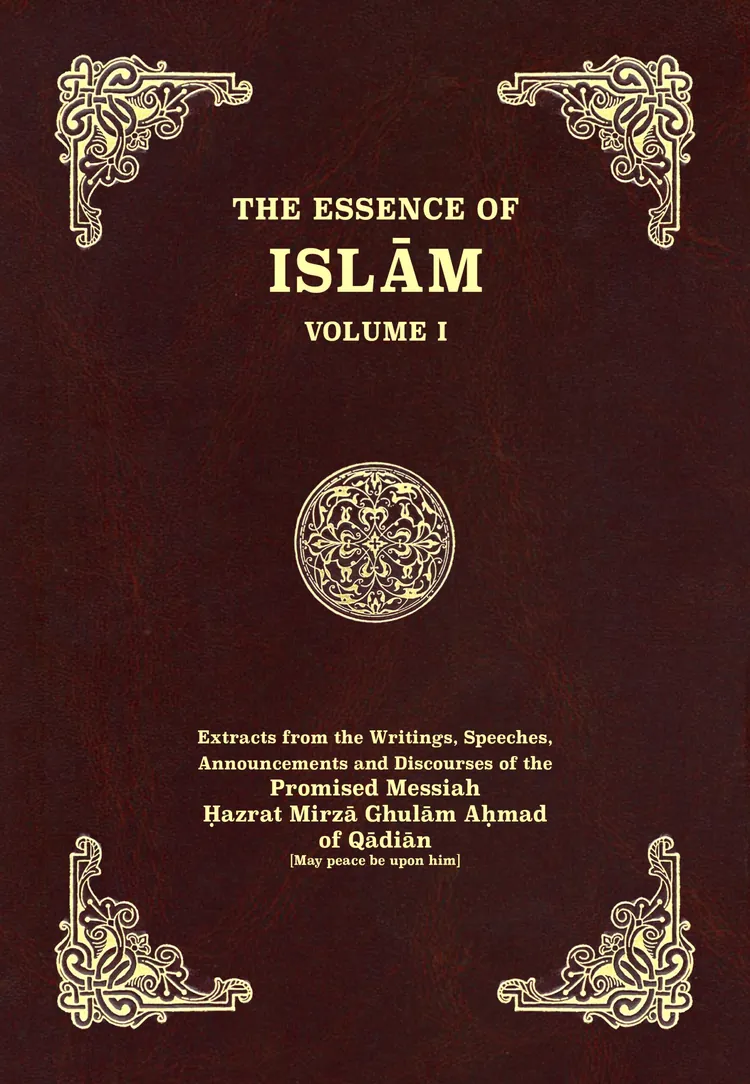
Introduction
In this discourse from Essence of Islam (Volume 4), Hazrat Mirza Ghulam Ahmad (AS), the Promised Messiah and Mahdi, expounds upon Complete Fullfilment of Propagation, presenting profound spiritual insights and scriptural verities.
Book Series: Essence of Islam (Volume 4)
Author: Hazrat Mirza Ghulam Ahmad of Qadian (AS)
Section: Part 5: Propagation, Establishment of a Holy Jama’at, and Instructions
Navigation: Book Table of Contents | « Previous: Significance of Bai‘at | Next: Purpose of the System of Bai‘at »
Propagation, Establishment of a Holy Jama‘at, and Instructions vation, and attaining the pleasure of God Almighty. It is thus obvious that Bai‘at does not mean simple repentance, because man can bring it about by himself. Rather, it denotes the understanding, blessings and signs which pull one in the direction of true repentance. Its real purpose is to commit one’s ego to the service of one’s guide and to acquire in return the knowledge, the understanding and the blessings which should strengthen faith and increase true understanding, so that a pure relationship may be established with God Almighty; and thus, having obtained deliverance from worldly hell, one might be delivered from the hell of the hereafter; and, having been cured of blindness in this world, one might be secure against blindness in the hereafter.
[Darurat-ul-Imam, Ruhani Khaza’in, vol. 13, p. 498]
[Essence of Islam, Vol. 4, p. 237]
Below is a summary explanation of the conditions of Bai‘at to which the seekers of truth are called in a pamphlet on 1st January, 1888, on the subject of propogation.138 [1] A person entering into the covenant of Bai‘at would sincerely undertake that up to the day of his death he shall abstain from associating any partner with Allah; 138 The reference is to Sabz Ishtihar, a portion of which is translated above on pp. 235-236 of this book. [2] That he shall keep away from falsehood, adultery, treachery of the eye, disobedience, vice, wrongdoing, dishonesty, disorder, and rebellion and that he shall not permit himself to be carried away by his egoistic passions, however strong they might be; [3] That he shall perform the five daily prayers without fail, according to the command of God and His Messengersa, and, to the best of his ability, shall try to offer Tahajjud prayer and will constantly invoke the blessings of Allah upon the Holy Prophetsa, and will continuously seek forgiveness for his sins and out of sincere love for God, reminding himself of the bounties of God Almighty, will occupy himself with His praise and glorification; [4] That he shall in no way harm Allah’s creatures in general and Muslims in particular by giving way to his passions, neither with his hand nor with his tongue or by any other means; [5] That in all circumstances whether of joy or sorrow, prosperity or adversity, bounty or trial, he shall prove himself faithful to God Almghty, and that in every condition he shall submit to God’s decree, being ready to endure every kind of insult and pain in His cause, and that in the hour of any misfortune he will not turn away from Him but will rather draw closer; [6] That he shall not conform to vulgar customs and shall guard against evil inclinations and shall submit himself wholly to the authority of the Holy Qur’an Propagation, Establishment of a Holy Jama‘at, and Instructions and shall make the Word of Allah and the word of the Holy Prophetsa the guiding principles of his life; [7] That he shall discard pride and arrogance and shall pass his days in meekness, humility, courtesy and lowliness; [8] That he shall hold his faith, its honour, and the welfare of Islam dearer than his own life, property, honour, children and everything else; [9] That for the sake of winning Allah’s pleasure, he shall occupy himself with sympathy for Allah’s creatures, and that, as far as possible, he shall employ his natural gifts and faculties for promoting the welfare of mankind;
[Majmu‘ah Ishtiharat, vol. 1, pp. 189-192]
[10] That, for the sake of Allah, he shall establish the relationship of brotherhood with me, on the condition of obeying me in all that is good, and shall maintain this relationship to the day of his death, and shall set such a high example in respect of it that the like of it shall not be found in any worldly relationship, whether of kinship or that of master and servant. These are the conditions that are binding upon everyone who enters the covenant of Bai‘at….Whoever, responding to my invitation, enters into the covenant and joins this blessed Jama‘at will be considered a member of our Community and will be counted among my sincere friends. These are the people concerning whom God Almighty has said to me that He will place them above the others until the Day of Judgement and that they will be endowed with blessings and mercy. He commanded me: Build the Ark under My eyes and according to My instructions. God’s hand will be above the hands of those who enter into a covenant with thee. He has commanded: Present yourself to God Almighty with all your faculties and do not leave your Noble Lord alone. He who leaves Him alone will be left alone himself. According to Divine behest, this general invitation is issued for entering into the covenant of Bai‘at. Those who are prepared to abide by the conditions set out above are free to come to me for entering into the covenant after having performed the prescribed Istikharah139 as taught by Holy Prophetsa. May God Almighty be their helper and bring about a pure change in their lives and bless them with the spirit of truth, piety, love and enlightened conscience (Amin). 140 The humblest of the servants of Allah,
Ghulam Ahmad of Qadian, District Gurdaspur, Punjab.
[Essence of Islam, Vol. 4, p. 237]
Book Series: Essence of Islam (Volume 4)
Author: Hazrat Mirza Ghulam Ahmad of Qadian (AS)
Section: Part 5: Propagation, Establishment of a Holy Jama’at, and Instructions
Navigation: Book Table of Contents | « Previous: Significance of Bai‘at | Next: Purpose of the System of Bai‘at »