
Family History — Essence of Islam Vol. 4
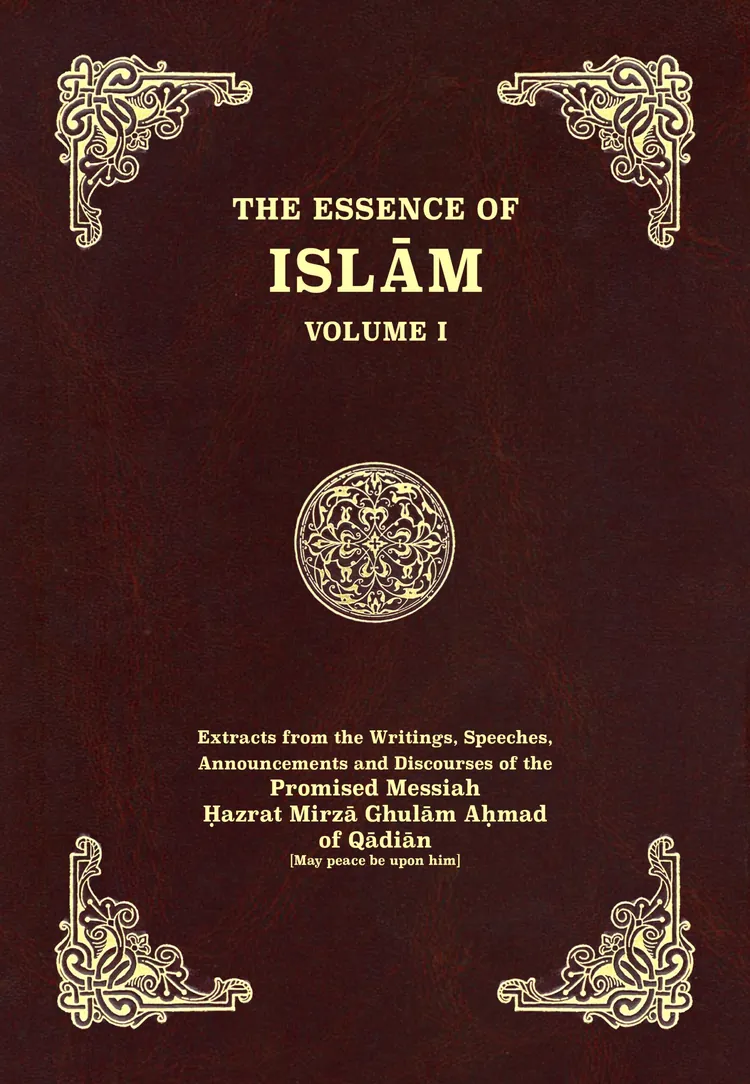
Introduction
In this discourse from Essence of Islam (Volume 4), Hazrat Mirza Ghulam Ahmad (AS), the Promised Messiah and Mahdi, expounds upon Family History, presenting profound spiritual insights and scriptural verities.
Book Series: Essence of Islam (Volume 4)
Author: Hazrat Mirza Ghulam Ahmad of Qadian (AS)
Section: Part 2: Family and Personal Background
Navigation: Book Table of Contents | « Previous: Genealogy | Next: Early Life »
FAMILY AND PERSONAL BACKGROUND Genealogy My genealogy runs as follows: My name is Ghulam Ahmad, son of Mirza Ghulam Murtada Sahib, son of Mirza ‘Ata Muhammad Sahib, son of Mirza Gul Muhammad Sahib, son of Mirza Faid Muhammad Sahib, son of Mirza Muhammad Qa’im Sahib, son of Mirza Muhammad Aslam Sahib, son of Mirza Muhammad Dilawar Sahib, son of Mirza Alah-Din Sahib, son of Mirza Ja‘far Beg Sahib, son of Mirza Muhammad Beg Sahib, son of Mirza ‘Abdul Baqi Sahib, son of Mirza Muhammad Sultan Sahib, son of Mirza Hadi Beg Sahib, who is our common ancestor.
[Kitab-ul-Bariyyah, Ruhani Khaza’in, vol. 13, p. 172, sub-footnote]
[Essence of Islam, Vol. 4, p. 1]
mad. As stated elsewhere, our family is Mughal Barlas and it appears from my ancestral documents, which are preserved to this day, that they arrived in this country from Samarqand and that they were accompanied by about two hundred followers and servants and members of the family.
Our ancestor arrived here in the capacity of a respected chieftain and settled down in this place, which was at that time an uninhabited wasteland, situated approximately 50 kose2 North-East of Lahore. He established at this place a town, which he called Islampur and which subsequently became known as Islampur Qadi Majhi. In the course of time people forgot the word Islampur, and Majhi was also dropped and the name remained simply as Qadi, which later became Qadi and was finally converted to Qadian. The reason why this place was called Qadi Majhi was that this tract of land, which was about 60 kose 3 in length, was known as Majha probably because buffaloes abounded here, and buffalo is majh in Hindi. As our ancestors were not only the landlords of the whole of this tract but were also invested with ruling powers over this area, they became known as Qadi. I am not aware why our ancestors migrated to this country from Samarqand, but ancient documents indicate that in their county of origin they were alsoFamily and Personal Background respected chieftains and rulers and that they had to leave their country on account of some tribal rivalry and conflict. On their arrival here, the reigning monarchs granted them several villages by way of estate and they established a permanent state in this neighbourhood. In the early days of Sikh rule, my great grandfather Mirza Gul Muhammad was a well-known chieftain in this area and his estate comprised eighty-five villages. In consequence of continuous raids by the Sikhs, he lost several of his villages and yet such was his generosity that, as a gesture of sympathy, he gifted several of his remaining villages to some Muslim landlords who had been evicted from their land, and these remain in their possession till this day. In those disturbed times he was an independent chieftain and about five hundred people were entertained at his table. About one hundred scholars, divines and Huffaz4 stayed with him and were paid sufficient stipends. In his company the talk mostly revolved around religious subjects. All his dependents and relatives were regular in their worship of God. Even the maidservants who ground corn were regular in their five daily prayers and Tahajjud. The respectable Muslims of the neighbourhood, most of whom were Afghans, referred to Qadian, which was then called Islampur, as Mecca, because in those disturbed times this blessed town was a
4 Huffaz: People who have committed the Holy Qur’an to memory. [Publisher] place of refuge for every Muslim. Most other places were full of disbelief, disobedience and tyranny, while Qadian was well-known for its adherence to Islam, piety, purity and justice. I have myself heard from those who had lived close to that time that in those days Qadian was like a garden in which flourished hundreds of supporters of the faith, divines, scholars and brave and respectable men. There were many tales current in this neighbourhood that Mirza Gul Muhammad Sahib, the late, was an outstanding personality among the righteous people from whom proceeded many astonishing acts which bordered on the miraculous. Many seekers after God, scholars and pious men had come to Qadian to be among his associates. It is surprising that some of his near miraculous actions are so well-known that they were vouched for by a large number of irreligious people. In short, in addition to this position as chieftain, he had great reputation for integrity, righteousness, manly courage, high resolve, support of the faith, and sympathy for the Muslims. All his associates were pious people of good conduct, jealous for the faith, averse to disobedience and evil, and possessing courageous and commanding personalities. I have often heard my father relate that on one occasion a Minister of the Mughal Government—whose title was Ghiath-ud-Daulah—came to Qadian. Having observed the statesmanship, intelligence, courage, high resolve, perseverance and wisdom of Family and Personal Background Mirza Gul Muhammad Sahib, and having witnessed his righteousness and piety and the decorum of his audience, and finding him inspired by the spirit of support for Islam and help for the faith, and seeing that those who were associated with him were pious and courageous people and carried themselves with dignity, he was much overcome with emotion. He said that if he had known that in this backward tract there lived a member of the Mughal family who was well equipped with all the royal qualities, he would have endeavoured that in these times, when the royal family was afflicted with indolence, inability and corruption, such a one should have been seated on the throne at Delhi to fully safeguard the Islamic Kingdom. It might be of interest to mention that my great grandfather, the said Mirza Gul Muhammad, died of hiccups and some other complications. When his illness overpowered him, his physicians became unanimous in their opinion that if he were to use liquor for a few days, it might prove helpful in his treatment, but no one had the courage to mention this to him. Finally some of them indicated this to him indirectly. He replied that if God Almighty desired to heal him He could bring about the healing through any of several medicines and that he was not willing to seek his recovery through the use of such a vile thing as liquor. He added that he was quite reconciled to the Divine decree. He finally died after a few days of the same disorder. His death had been decreed but he left behind the pious memory that he preferred death to the use of liquor. People have recourse to every kind of device in order to escape death but he preferred death to disobedience of God. Sad indeed is the plight of some Nawabs and some wealthy and affluent people who, during their brief span of life, set at naught God and His commandments, sever all relationships with Him and disobey Him openly and use liquor like water. Thus they not only lead sinful lives but also cut down their days on earth and die quickly in consequence of various fearful disorders and leave behind an ill example for coming generations. In short, when my great grandfather died he was succeeded by his talented son, my grandfather Mirza ‘Ata Muhammad. During his time, in God’s wisdom, the Sikhs overcame him after a struggle. My late grandfather had recourse to various devices for the safeguarding of his estate but as the Divine decree was not favourable he failed of his purpose and none of his projects were fulfilled and the Sikhs gradually deprived him of all his estate, leaving him in occupation of Qadian alone. Qadian at that time was like a citadel with four towers, which were manned by soldiers and a few cannons. It was surrounded by a wall twenty-two feet high and wide enough for three carts being driven along it side by side. It came to pass that a party of Sikhs known as Ram Garhias obtained entrance into Qadian by permission and then treacherously took possession of it. At that time our family Family and Personal Background faced ruin. They were taken captives like the Israelites, and all their belongings and properties were looted. Several mosques and fine houses were demolished and gardens were cut down out of ignorance and bigotry. Some of the mosques were turned into Dharamsalas5. One of these is still in their possession. A library belonging to our family was burnt down. It contained five hundred manualscript copies of the Holy Qur’an, which were disrespectfully burnt. In the end, upon second thoughts, the Sikhs directed our family to depart from Qadian and all men and women were seated in carts and expelled, whereafter they took refuge in one of the Punjab states. After a short while my grandfather was poisoned by his enemies. Then, during the latter part of Ranjit Singh’s rule, my father Mirza Ghulam Murtada returned to Qadian and five of the villages, which had belonged to his father, were restored to him. In the meantime, Ranjit Singh had suppressed the smaller states and had consolidated them into a large state for himself. He had also captured all our villages and his rule now extended from Lahore to Peshawar and down to Ludhiana. Thus, after having been dispossessed of our estate, the remaining villages were also taken over by Ranjit Singh and we were left with only five of them. Nevertheless, as head of an ancient family, my father Mirza Ghulam Murtada was a well-known Chieftain in this neighbourhood…..Sir Lepel Griffin in his book 5 Charitable rest houses. Chiefs of Punjab has made mention of my father. He was very popular with the officials of Government and, as a gesture of approbation, the Deputy Commissioner and Commissioner often came to visit him. This is a brief account of my family.
[Essence of Islam, Vol. 4]
[Essence of Islam, Vol. 4, p. 1]
Book Series: Essence of Islam (Volume 4)
Author: Hazrat Mirza Ghulam Ahmad of Qadian (AS)
Section: Part 2: Family and Personal Background
Navigation: Book Table of Contents | « Previous: Genealogy | Next: Early Life »