
Meaning of Taubah (Repentance) — Essence of Islam Vol. 2
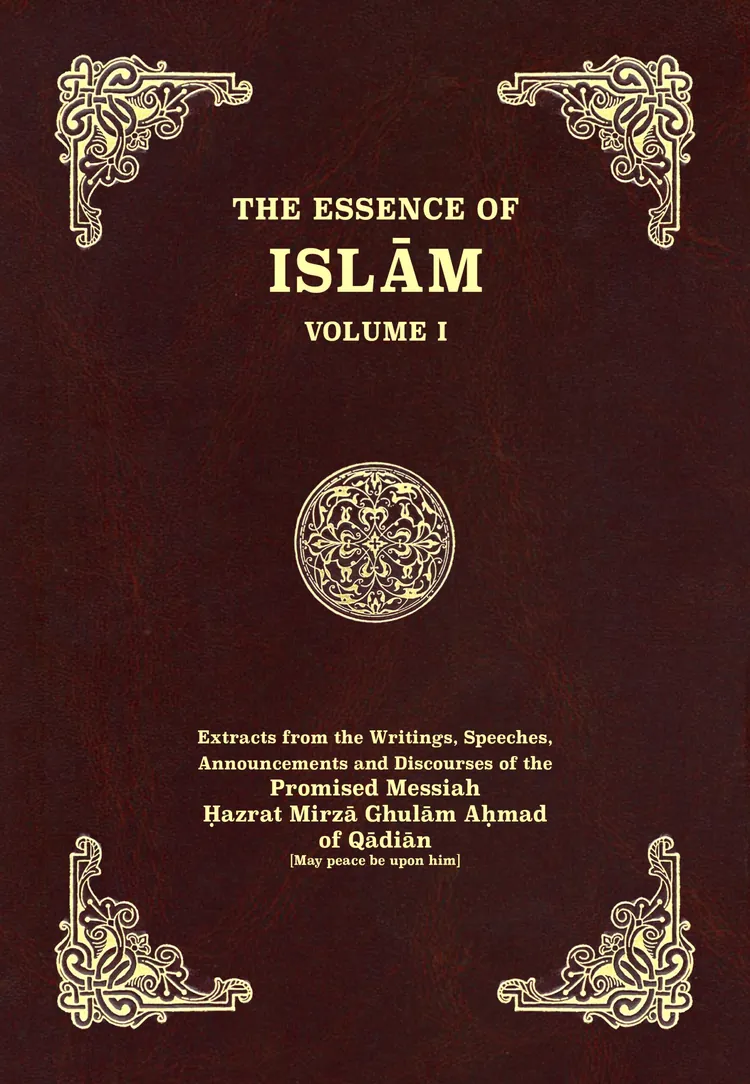
Introduction
In this discourse from Essence of Islam (Volume 2), Hazrat Mirza Ghulam Ahmad (AS), the Promised Messiah and Mahdi, expounds upon Meaning of Taubah (Repentance), presenting profound spiritual insights and scriptural verities.
Book Series: Essence of Islam (Volume 2)
Author: Hazrat Mirza Ghulam Ahmad of Qadian (AS)
Section: Part 6: Repentance and Seeking Forgiveness
Navigation: Book Table of Contents | « Previous: Humble Prayer | Next: Repentance Washes Out the Stains of Sin »
235 REPENTANCE AND SEEKING FORGIVENESS It is obvious that man is very weak by nature and has been charged with hundreds of Divine commandments. On account of his weakness, he falls short in carrying out some Divine commandments and sometimes he is overcome by the desires of the self that incite to evil. On account of his weak nature, he deserves that at the time of any slipping, if he should repent and seek forgiveness, God’s mercy should save him from being ruined. It is a certainty that if God had not been the Acceptor of repentance, man would not have been charged with these hundreds of commandments. This proves conclusively that God turns towards man with mercy and is Most Forgiving. Taubah (Repentance) means that a person should discard a vice with the resolve that thereafter, even if he is thrown into the fire, he would not commit that vice. When man turns towards God Almighty with such sincerity and firm resolve, then God, who is Benevolent and Merciful, forgives him that particular sin. It is one of the high Divine attributes that God accepts repentance and saves a sinner from ruin.
[Chashma-e-Ma‘rifat, Ruhani Khaza’in, vol. 23, pp. 189-190]
If man had not the hope of his repentance being accepted, he would not be able to refrain from sinning. The Chris-
[Essence of Islam, Vol. 2, p. 235]
To reject repentance and forgiveness is to shut the door of human progress. It is obvious to everyone that man is not perfect in himself, but in fact he stands in need of perfection. As after his birth he gradually widens his knowledge and is not born learned and well informed, in the same way, when after his birth he begins to be sensible of his surroundings, his moral condition is at a very low ebb. Observation of the condition of small children would show that most children are inclined to beat others on the slightest provocation and many of them are given to telling lies and using foul language with other children. Some steal and carry tales and are envious and miserly. When they grow up, they fall into the grip of the self that incites to vice and are guilty of diverse types of evil and wickedness. Thus for most people the first stage of life is impure, but when a fortunate person emerges from the fierce flood of youth, he turns towards God and withdraws from undesirable activities through sincere repentance and occupies himself with purifying the garment of his nature. These are stages of human life which a person has commonly to traverse. This shows that were it true that repentance is
[Chashma-e-Ma‘rifat, Ruhani Khaza’in, vol. 23, pp. 192-193]
[Essence of Islam, Vol. 2, p. 236]
Book Series: Essence of Islam (Volume 2)
Author: Hazrat Mirza Ghulam Ahmad of Qadian (AS)
Section: Part 6: Repentance and Seeking Forgiveness
Navigation: Book Table of Contents | « Previous: Humble Prayer | Next: Repentance Washes Out the Stains of Sin »