
Meanings and Significance of the Seal of Prophethood — Essence of Islam Vol. 3
Introduction
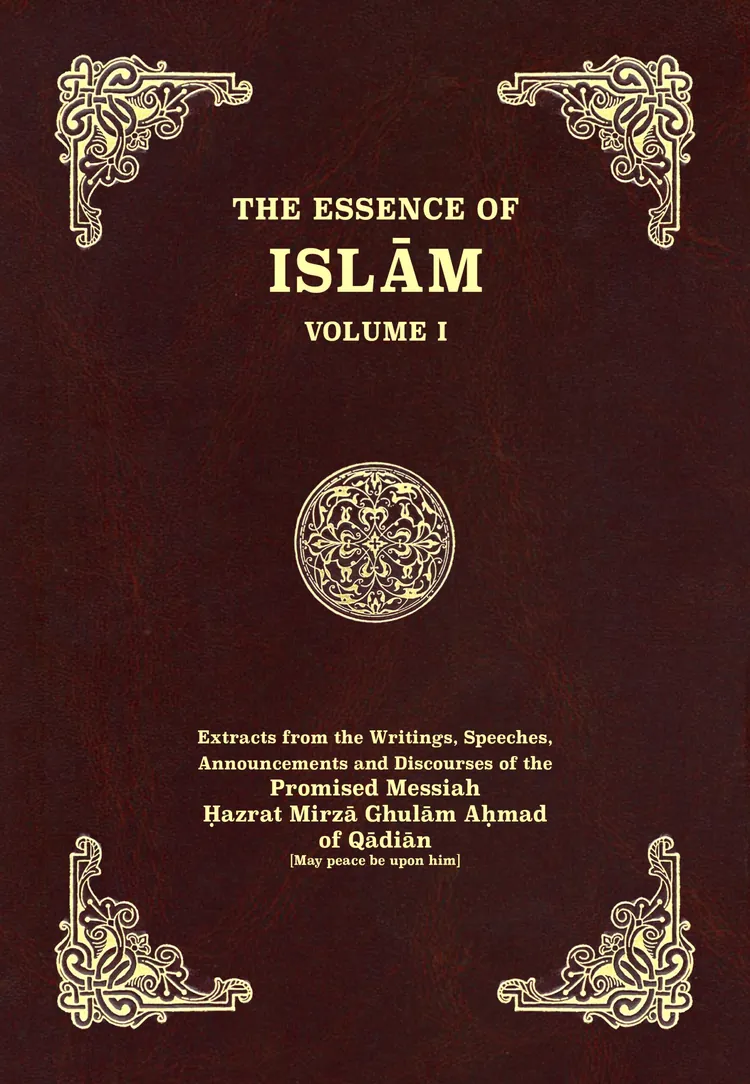
In this discourse from Essence of Islam (Volume 3), Hazrat Mirza Ghulam Ahmad (AS), the Promised Messiah and Mahdi, expounds upon Meanings and Significance of the Seal of Prophethood, presenting profound spiritual insights and scriptural verities.
Book Series: Essence of Islam (Volume 3)
Author: Hazrat Mirza Ghulam Ahmad of Qadian (AS)
Section: Part 5: Prophethood in Islam
Navigation: Book Table of Contents | « Previous: Prophethood in Islam | Next: Excellence of the Holy Prophet (sa) »
5 PROPHETHOOD IN ISLAM In Islam, the door to Prophethood which claims to be independent (of the Holy Prophetsa) is closed.
[Ayyam-us-Sulh, Ruhani Khaza’in, vol. 14, p. 308]
[Essence of Islam, Vol. 3, p. 125]
It should be clearly understood that the door of lawbearing Prophethood is firmly closed after the Holy Prophet (peace and blessings of Allah be upon him.) There can be no book after the Holy Qur’an which comprises new commandments or abrogates those contained in it or suspends obedience to it. The authority of the Holy Qur’an will last to the Day of Judgment.
[Al-Wasiyyat, Ruhani Khaza’in, vol. 20, p. 311, footnote]
[Essence of Islam, Vol. 3, p. 125]
It has been revealed to me that the door of independent Prophethood is firmly closed after the Seal of the Prophets (peace and blessings of Allah be upon him.) Now there can arise no independent Prophet, neither old nor new. Our misguided opponents do not consider this door completely closed. According to them there is a window open for the return of the Israelite Prophet, the Messiah.
[Siraj-e-Munir, Ruhani Khaza’in, vol. 12, pp. 5-6]
[Essence of Islam, Vol. 3, p. 125]
A Prophet is one who receives revelation from God and is honoured with converse with Him. It is not necessary that he should be the bearer of a new law or should not be the follower of a law-bearing Prophet. Thus no harm is done if a follower of the Holy Prophetsa is raised as such a Prophet, particularly when he receives all grace from the Holy Prophet himself (peace and blessings of Allah be upon him.) What is most harmful is to believe that the followers of the Holy Prophet (peace and blessings of Allah be upon him) are debarred from enjoying converse with God until the Day of Judgement. That religion does not deserve to be called a religion nor is that Prophet worthy of being called a Prophet, whose followers cannot come near enough to God to be honoured with His word. Accursed and detestable is the religion which teaches that human progress depends only on a few principles which are transmitted from generation to generation, that all revelation is a matter of the past and there can be no further revelation, and that hearing the voice of the Ever-Living and All-Powerful God is to be wholly despaired of.
[Brahin-e-Ahmadiyyah, part V, Ruhani Khaza’in, vol. 21, p. 306]
[Essence of Islam, Vol. 3, p. 125]
In Arabic and Hebrew, the word Nabi [Prophet] means one who makes prophecies on the basis of revelation received from God. As the Holy Qur’an does not close the door of Prophethood whereby a person through obedience to the grace of the Holy Prophet (peace and blessings of Allah be upon him) may be granted converse with God and may be informed of hidden matters through Divine revelation, then what is there to stop the appearance of such a Prophet among the Muslims? We do not believe that such Prophethood is barred. Only that Prophethood is barred which is accompanied by the commandments of a new Shariah, or claims to be outside the following of the Holy Prophet (peace and blessings of Allah be upon him.) But a claim to Prophethood by one whom Divine revelation describes as a follower of the Holy Prophetsa and who is also designated as a Prophet, Prophethood in Islam 127 is not contrary to the Holy Qur’an, inasmuch as such Prophethood is a reflection of the Prophethood of the Holy Prophet (peace and blessings of Allah be upon him) and is not independent Prophethood.
[Brahin-e-Ahmadiyyah, part V, Ruhani Khaza’in, vol. 21, pp. 351-352]
[Essence of Islam, Vol. 3, p. 126]
Book Series: Essence of Islam (Volume 3)
Author: Hazrat Mirza Ghulam Ahmad of Qadian (AS)
Section: Part 5: Prophethood in Islam
Navigation: Book Table of Contents | « Previous: Prophethood in Islam | Next: Excellence of the Holy Prophet (sa) »