
Promised Messiah From Among the Muslims — Essence of Islam Vol. 4
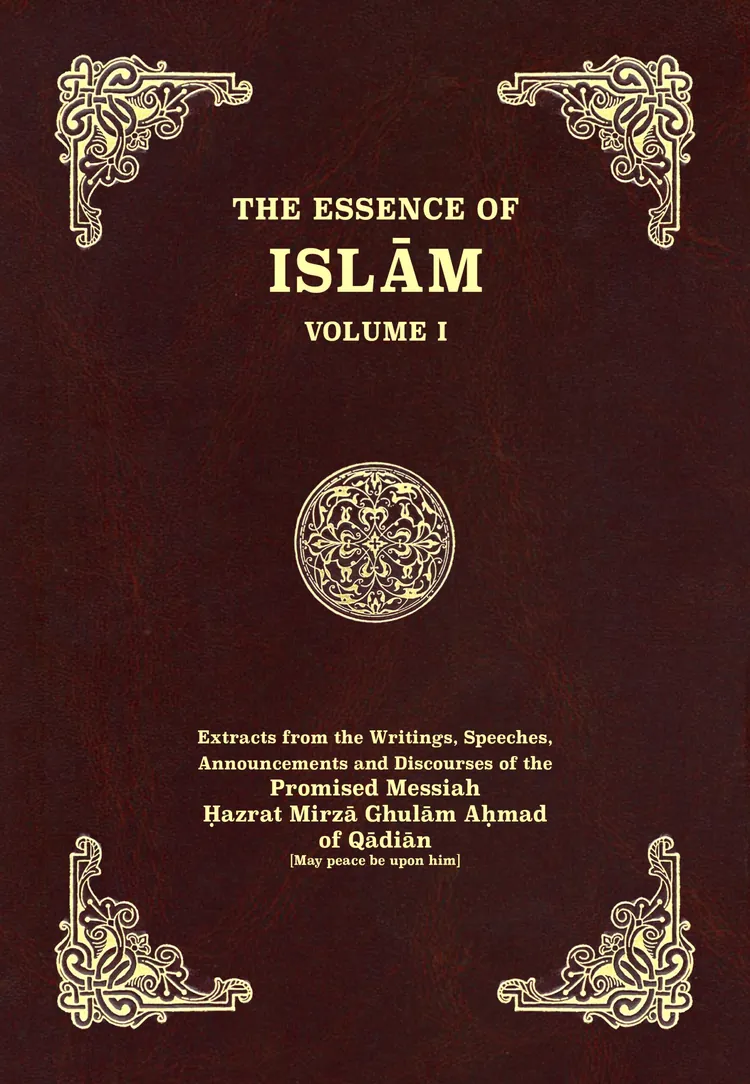
Introduction
In this discourse from Essence of Islam (Volume 4), Hazrat Mirza Ghulam Ahmad (AS), the Promised Messiah and Mahdi, expounds upon Promised Messiah From Among the Muslims, presenting profound spiritual insights and scriptural verities.
Book Series: Essence of Islam (Volume 4)
Author: Hazrat Mirza Ghulam Ahmad of Qadian (AS)
Section: Part 5: Propagation, Establishment of a Holy Jama’at, and Instructions
Navigation: Book Table of Contents | « Previous: Appointment of the Promised Messiah (as) For Rejuvenation of Islam | Next: Other Similarities Between the Islamic and Mosaic Dispensations »
Propagation, Establishment of a Holy Jama‘at, and Instructions I have already proved the death of the Messiahas and his spiritual exaltation….Now, after the death of the Messiahas, the next question is, what are the authorities contained in the Qur’an and Ahadith and other sources from which it is established that the Promised Messiah will appear from among the Ummah? I will set out these authorities below, please read them with care. Hopefully, God the Compassionate will guide you. One of the arguments which prove that the Messiah who was promised to appear in this Ummah would be from among the Muslims is this Hadith set out both in Bukhari and Muslim and It means that he will be your Imam from among you. Since this Hadith relates to Jesusas and it is he who has been described in this Hadith as Hakam and ‘Adal [Arbiter and Judge], it follows, therefore, that the word Imam also refers to him. It is true that the words ‘from among you’ were addressed to the Companions of the Holy Prophetsa, but we know that none of them claimed to be the Promised Messiah. This, therefore, shows that the words ‘from among you’ are meant for someone who, in the knowledge of God Almighty, would be a substitute for the Companions and is the one referred to in the verse: 95 95 And among others from among them who have not yet joined This verse shows that he will be instructed through the spiritual power of the Holy Prophetsa, and will, in this sense, be one of the Companions. This verse is further explained by the Hadith: 96 Here the quality which was particularized in the Promised Messiah and Mahdi has been attributed to this man from Persia. This quality is to replenish the earth with justice after it has been filled with wrongdoing and has become empty of faith and the belief in the Unity of God. Thus this man is the Promised Messiah and Mahdi; and I am he.
[Tohfah Golarhviah, Ruhani Khaza’in, vol. 17, pp. 114-115]
Just as the prophesied eclipse of the sun and the moon in the month of Ramadan has not occurred during the time of any other person claiming to be Mahdi, likewise, during the thirteen hundred years that have elapsed since the time of the Holy Prophetsa, no one has claimed, on the basis of Divine revelation, to be ‘the Man of Persia’ about whom the Hadith says that he will bring faith down from heaven.
[Essence of Islam, Vol. 4, p. 179]
One of the authorities that show that the Promised Messiah will appear from among the Muslims, is this verse of the Holy Qur’an:
وَءَاخَرِينَ مِنۡهُمۡ لَمَّا يَلۡحَقُواْ بِهِمۡ ۚ وَهُوَ ٱلۡعَزِيزُ ٱلۡحَكِيمُ
“And among others from among them who have not yet joined them. He is the Mighty, the Wise.” (Surah them.—Al-Jumu‘ah, 62:4)
them.—Al-Jumu‘ah, 62:4 [Publisher] 96 Had faith ascended to the Pleiades, it would be brought down by a man from among the Persians. [Publisher] Propagation, Establishment of a Holy Jama‘at, and Instructions This means: [O Muslims] You are the best of people who have been raised to benefit mankind and to repel the mischief of all Dajjals and of the Antichrist… Every religious community is called upon to perform a particular service and has to contend against a particular enemy. It has been decreed that the Muslims would have to fight against the Antichrist. In a Hadith related by Nafe‘ bin ‘Utbah, which is set out in Muslim, it is stated that the Muslims will fight the Antichrist and will be victorious over him. The Companions of the Holy Prophetsa did not fight the Antichrist, but, according to the connotation of the verse ‘And from amongst others…’ the Promised Messiah and his Jama‘at were declared Companions of the Holy Prophetsa. It is also worth observing that in this Hadith, the Holy Prophetsa specified that his Companions are those who would fight the Antichrist and he did not say that the Hebrew Messiah would fight him. The word ‘descent’ is used for respect and honour and indicates in this context that as in that age of turmoil, faith will ascend to the Pleiades and all spiritual leadership, learning, and instruction will fall into decline, the God of heaven will send someone whom He will have trained Himself without the intervention of earthly means, just as rain descends from heaven without the intervention of any human agency.
Another authority which indicates that the Promised Messiah will appear from among this same Ummah of Muhammadsa:
وَعَدَ ٱللَّهُ ٱلَّذِينَ ءَامَنُواْ مِنكُمۡ وَعَمِلُواْ ٱلصَّـٰلِحَٰتِ لَيَسۡتَخۡلِفَنَّهُمۡ فِي ٱلۡأَرۡضِ كَمَا ٱسۡتَخۡلَفَ ٱلَّذِينَ مِن قَبۡلِهِمۡ وَلَيُمَكِّنَنَّ لَهُمۡ دِينَهُمُ ٱلَّذِي ٱرۡتَضَىٰ لَهُمۡ وَلَيُبَدِّلَنَّهُم مِّنۢ بَعۡدِ خَوۡفِهِمۡ أَمۡنٗا ۚ يَعۡبُدُونَنِي لَا يُشۡرِكُونَ بِي شَيۡـٔٗا ۚ وَمَن كَفَرَ بَعۡدَ ذَٰلِكَ فَأُوْلَـٰٓئِكَ هُمُ ٱلۡفَٰسِقُونَ
“Allah has promised to those among you who believe and do good works that He will surely make them Successors in the earth, as He made Successors from among those who were before them; and that He will surely establish for them their religion which He has chosen for them; and that He will surely give them in exchange security and peace after their fear: They will worship Me, and they will not associate anything with Me. Then whoso is ungrateful after that, they will be the rebellious.” (Surah Al-Nur 24:56, 24:56)
which means, Allah has promised those people who believe and act righteously that He will make them successors in the earth as He made those successors who were before them. The previous successors referred to in this verse are the successors from the people of Mosesas whom God had sent one after the other to establish and maintain the Law of Mosesas. No century was allowed to go by without the appearance of such a successor who came to revive the religion of Mosesas. The Holy Qur’an indicates that there were twelve such successors and that the thirteenth was Jesusas, who was the Promised Messiah under the Mosaic law. In view of the resemblance which is established by the use of the word kama [just as] in this verse, it is essential that there should be a resemblance between the successors of Muhammadsa and the successors of Mosesas. To prove and firmly establish this resemblance, the Holy Qur’an mentions twelve Mosaic successors, each of whom was from the people of Mosesas and the thirteenth was Jesusas, who was the Khatam-ul-Ańbiya’ among the people of Mosesas, but did not actually bePropagation, Establishment of a Holy Jama‘at, and Instructions long to them. Then, pointing out the resemblance between the successors of the Mosaic dispensation and the successors of the Islamic dispensation, God clearly indicated that at the end of the Islamic dispensation there would be a Messiah and twelve successors in between so that figure of ‘fourteen’ should also correspond. Similarly, the Promised Messiah of the Islamic dispensation appeared at the beginning of the fourteenth century, just as the Promised Messiah of the Mosaic dispensation had appeared in the fourteenth century of the Mosaic dispensation. Thus, the distance of the two Messiahs from the Founders of their respective religions is the same…. If the second Messiah who was to come was to be the same Jesusas, this would contradict the Holy Qur’an, inasmuch as the Qur’an declares the Successors of the two dispensations to be distinct personalities, as is evident from the word kama [just as]. This distinction provides a clear authority which cannot be rejected even if the whole world were to combine against it. If the same person who was the last Successor of the first dispensation was to come back, the distinction between the two dispensations would disappear and the import of the word kama would be falsified. Such a thing would be contradictory to the Holy Qur’an and is, therefore, false. 99 99 This is false, and everything that leads to a false conclusion is false. [Translator] It is worth remembering that in the verse: 100 the same kama has been used which is employed in the verse: 101
[Tohfah-e-Golarhviyyah, Ruhani Khaza’in vol. 17, pp. 120-127]
[Essence of Islam, Vol. 4, p. 180]
Other Similarities between the Islamic and Mosaic Dispensations According to the Holy Qur’an, the Islamic dispensation resembles the Mosaic dispensation in respect of every vice and virtue. At one place, the Holy Qur’an says concerning the Jews:
[Essence of Islam, Vol. 4]
[Essence of Islam, Vol. 4, p. 184]
Book Series: Essence of Islam (Volume 4)
Author: Hazrat Mirza Ghulam Ahmad of Qadian (AS)
Section: Part 5: Propagation, Establishment of a Holy Jama’at, and Instructions
Navigation: Book Table of Contents | « Previous: Appointment of the Promised Messiah (as) For Rejuvenation of Islam | Next: Other Similarities Between the Islamic and Mosaic Dispensations »