
Salat Purifies the Spirit and Fast Illuminates the Heart — Essence of Islam Vol. 2
Introduction
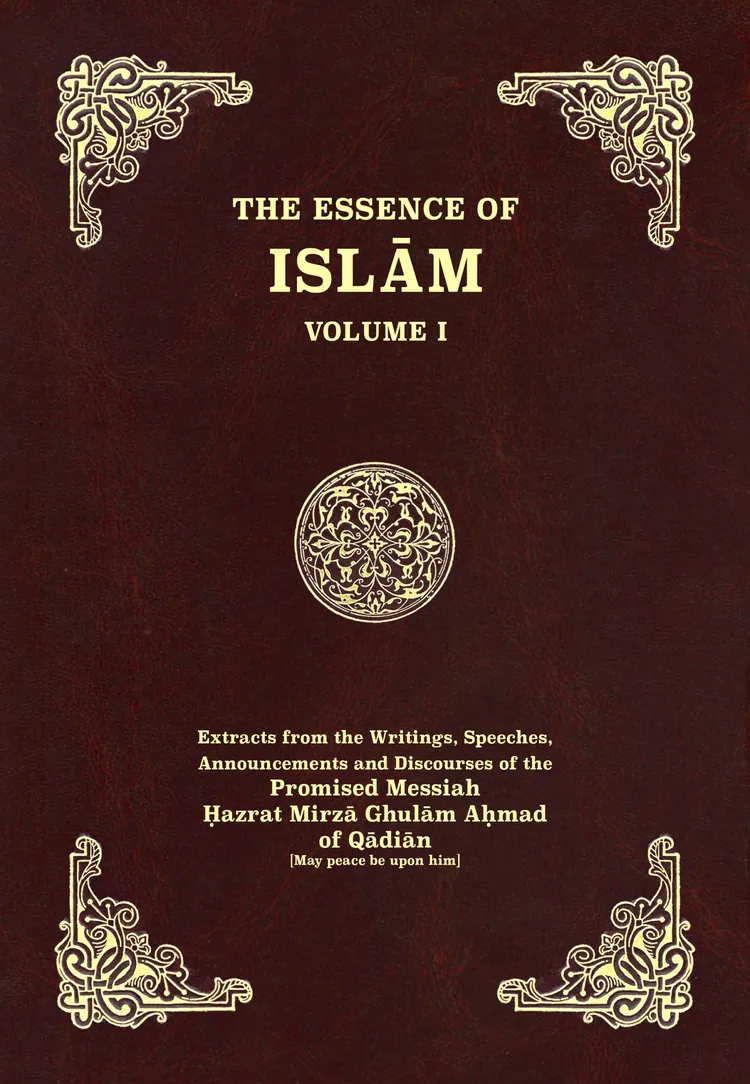
In this discourse from Essence of Islam (Volume 2), Hazrat Mirza Ghulam Ahmad (AS), the Promised Messiah and Mahdi, expounds upon Salat Purifies the Spirit and Fast Illuminates the Heart, presenting profound spiritual insights and scriptural verities.
Book Series: Essence of Islam (Volume 2)
Author: Hazrat Mirza Ghulam Ahmad of Qadian (AS)
Section: Part 8: The Pillars of Islam
Navigation: Book Table of Contents | « Previous: Salat Means Relationship Between Man’s Servitude and God’s Providence | Next: The Purpose of Fasting Is Purification »
Both fasting and Salat are forms of worship. The fast affects powerfully the body and Salat affects powerfully the soul. Salat generates a condition of burning and melting of the heart, and is, therefore, a higher form of worship than fasting. The latter fosters the capacity for visions.
[Malfuzat, vol. VII, p. 379]
[Essence of Islam, Vol. 2, p. 313]
112
This verse indicates the greatness of the month of Ramadan. The Sufis have recorded that this is a good month for the illumination of the heart. One who observes the fast has frequent experience of visions in this month. The Salat purifies the spirit and the fast illumines the heart. The purification of the spirit means that one may be delivered from the passions of the self that incites to evil; and the illumination of the heart means that the gates of vision may be opened so that one may be able to behold God.
[Malfuzat, vol. IV, pp. 256-257]
[Essence of Islam, Vol. 2, p. 313]
On one occasion I began to reflect on the purpose of the prescribed expiation of missing a fast and I conceived that the expiation is prescribed so that one may be bestowed the capacity and the strength to observe the fast. God Almighty alone can bestow such strength and everything should be sought from God Almighty. He is the All-Powerful; if He so wills He can bestow the strength for observing the fast on one who is afflicted 112 ‘The month of Ramadan is that in which the Qur’an was sent down.’—Al-Baqarah, 2:186 [Publisher] with tuberculosis. The purpose of the prescribed expiation is that one may be bestowed the strength for the observation of the fast, and this can be achieved only through the grace of God Almighty. One should supplicate: Lord! this is Thy blessed month and I am being deprived of its blessings. I know not whether I shall be alive next year, or would find the opportunity of observing the fasts that I am missing. Do Thou bestow upon me, by Thy grace, the strength that should enable me to observe the fast. I am sure that one with such a heart would be bestowed the needed strength by God Almighty. If God Almighty so wished He would not have prescribed limitations for the Muslims as He had prescribed for earlier peoples; but the purpose of the limitations is the promotion of the welfare of the people concerned. According to me the principle is that when a person supplicate God Almighty with perfect sincerity that he should not be deprived of the blessings of the month of Ramadan, he is not so deprived, and if such a one should become ill during the month of Ramadan his illness becomes a source of mercy for him, inasmuch as the value of every action is determined by the motive that inspires it. It behoves a believer that he should prove himself brave in the cause of God Almighty.
[Malfuzat, vol. IV, pp. 258-260]
He who is heartily determined that he would observe the fast but is held back from doing so on account of illness while his heart yearns after the observation of the fast would not be deprived of the bounty resulting from the observation of the fast and angels would observe the fast in his place. This is a subtle matter. If a person finds the observation of the fast difficult on account of the slothfulness of his spirit and imagines that he is not in good health, and that if he misses a meal he would suffer from various types of disorders, such a one, who imagines that a Divine blessing would sit heavy on him, would not deserve any spiritual merit. On the other hand, a person who feels happy at the approach of the month of Ramadan and is eager to observe the fast, but is held back by illness from doing so, would not be deprived of the blessings of Ramadan. Many people merely seek excuses and imagine that as they can deceive their fellow beings they can also deceive God. Such people make their own interpretations and deem them correct, but they are not correct in the estimation of God Almighty. The field of such interpretations is vast and a person given to them might become accustomed to the performance of the Salat throughout his life in a sitting posture and may abstain altogether from observing the fast. But God is well aware of the motive and design of a person whose conduct is inspired by sincerity and devotion. God Almighty knows that his heart is eager and He bestows plentifully upon him, for the eagerness of the heart is valuable in the estimation of God. Those who seek excuses rely on their interpretations, but such interpretations have no value in the estimation of God Almighty. On one occasion when I continued observation of the fast for six months I met a company of the Prophets in a vision who admonished me against imposing so much hardship on myself and directed me to desist. Thus when a person imposes hardship upon himself for the sake of God, He takes pity on him like the parents of a child and directs him to desist.
[Essence of Islam, Vol. 2, p. 313]
Book Series: Essence of Islam (Volume 2)
Author: Hazrat Mirza Ghulam Ahmad of Qadian (AS)
Section: Part 8: The Pillars of Islam
Navigation: Book Table of Contents | « Previous: Salat Means Relationship Between Man’s Servitude and God’s Providence | Next: The Purpose of Fasting Is Purification »