
Stages of Spiritual Fulfilment — Essence of Islam Vol. 3
Introduction
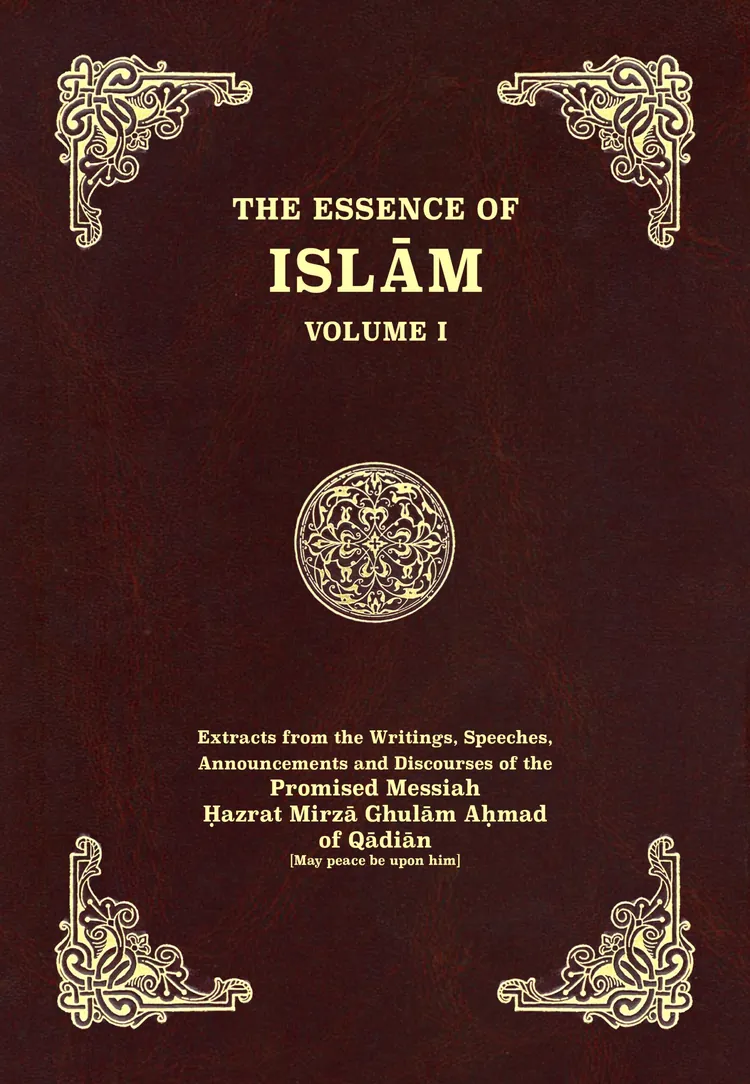
In this discourse from Essence of Islam (Volume 3), Hazrat Mirza Ghulam Ahmad (AS), the Promised Messiah and Mahdi, expounds upon Stages of Spiritual Fulfilment, presenting profound spiritual insights and scriptural verities.
Book Series: Essence of Islam (Volume 3)
Author: Hazrat Mirza Ghulam Ahmad of Qadian (AS)
Section: Part 2: Faith, Certainty and Insight
Navigation: Book Table of Contents | « Previous: Personal Merit and Relationship With God | Next: Excellences of the Men of God »
appearance and qualities of fire, in the same way, a seeker who has arrived at this stage is invested reflectively with Divine attributes. He surrenders himself so completely to the pleasure of God that he speaks under the direction of God, sees under the direction of God, hears under the direction of God, and moves under the direction of God, as if there is only God inside his mantle. His humanity is completely subordinated to Divine manifestations. This subject is delicate and is above common understanding; I shall, therefore, not explore it further.
[Haqiqat-ul-Wahi, Ruhani Khaza’in, vol. 22, pp. 22-25]
[Essence of Islam, Vol. 3, p. 78]
The word Aflaha is repeated six times in these verses66. In the first verse its use is explicit as is said: 67
In the other verses it is expressed through the conjunctive. In the lexicon the meaning of Aflaha is i.e., one was turned towards his object of success and made to move towards it. According to this meaning, the first move of a believer towards achieving his objective is humility in his prayer, an act that involves the abandonment of pride and arrogance. The objective attained thereby is that the self adopts the habit of humbleness and becomes ready and attuned to establishing a relationship with God.
The second step towards fulfilment is the abandonment 66 The reference is to the opening verses of Surah Al-Mu’minun, the twenty-third chapter of the Holy Qur’an. [Publisher]
67 ‘Surely, success does come to the believers, who are humble in their Prayers.’—Al-Mu’minun, 23:2-3 [Publisher] Faith, Certainty and Insight 79 of vain thinking and pursuits, for until a believer acquires the strength to abandon vain pursuits for the sake of God, which is not a difficult matter, it is unreasonable to expect that he will be able to turn away from such pursuits from which he derives some benefit or pleasure, and which are difficult to abandon. This shows that after the abandonment of pride the next step is the giving up of vain pursuits in consequence of which some relationship is established with God Almighty and, as a result, faith becomes stronger than before. This relationship is feeble because the relationship with vain pursuits is also feeble and by discarding a weak relationship one is rewarded with a relationship which is also weak.
The third step towards spiritual fulfilment is to spend one’s wealth in the cause of Allah, which is a greater sacrifice than turning away from vain pursuits, as wealth is earned with effort and is something useful, and is also a source of prosperity and comfort. This sacrifice requires stronger faith than the giving up of vain pursuits. Consequently, faith is strengthened further and the relationship with God is likewise fostered. This purifies the self because the sacrifice of wealth for the sake of God is not possible without such purification. The fourth step is the restraint of passions against unlawful indulgence, which is a stronger attachment than attachment to wealth, for wealth is spent in the pursuit of one’s passions. To control passion for the sake of God is a greater sacrifice than the sacrifice of wealth. Consequently, the abandonment of the pursuit of passions strengthens relationship with God, for whatever a person gives up for the sake of God, he is granted something better in its place. 68 The fifth step is to discard the ego altogether in the cause of God. This means to render back to God that which has been committed to one as a trust. At this stage a believer is required to modify his relationship to everything that is bestowed upon him as if all of it were a trust to be devoted to the cause of God. This is the meaning of the verse: 69A person’s life and wealth and all his sources of comfort are trusts committed to him by God; rendering them back is obligatory on the trustee. The sacrifice of the ego, therefore, means that the trust should be rendered back to God Almighty, and also that one’s covenant of faith with God should be duly fulfilled and the obligations that one owes to his fellow beings should be fully discharged as a true sacrifice, inasmuch as the complete fulfilment of all aspects of righteousness also amounts to a type of death. In this context fulfilment means that when a believer spends his life in the cause of God and carries into effect all aspects of righteousness, Divine lights envelop his being and invest him with spiritual beauty, as the bones are rendered beautiful by being clothed in flesh…. Both 68 His grace does not forsake the seekers;
In His path no one suffers loss. Whoever seeks this path, finds it;
Bright becomes the face that does not turn away from Him.
[Publisher] 69 ‘And who are watchful of their trusts and their covenants.’—AlMu’minun, 23:9 [Publisher] Faith, Certainty and Insight 81 these states have been described by God Almighty as garments. Righteousness too has been described as a garment, as Allah says:يَٰبَنِيٓ ءَادَمَ قَدۡ أَنزَلۡنَا عَلَيۡكُمۡ لِبَاسٗا يُوَٰرِي سَوۡءَٰتِكُمۡ وَرِيشٗا ۖ وَلِبَاسُ ٱلتَّقۡوَىٰ ذَٰلِكَ خَيۡرٞ ۚ ذَٰلِكَ مِنۡ ءَايَٰتِ ٱللَّهِ لَعَلَّهُمۡ يَذَّكَّرُونَ
“O children of Adam! We have indeed sent down to you raiment to cover your shame, and to be an elegant dress; but the raiment of righteousness — that is the best. That is one of the Signs of Allah, that they may remember.” (Surah ‘Raiment of Righteousness.’—Al-A‘raf 7:27, 7:27)
The flesh with which the bones are clothed has also been described as a garment, as Allah says:
ثُمَّ خَلَقۡنَا ٱلنُّطۡفَةَ عَلَقَةٗ فَخَلَقۡنَا ٱلۡعَلَقَةَ مُضۡغَةٗ فَخَلَقۡنَا ٱلۡمُضۡغَةَ عِظَٰمٗا فَكَسَوۡنَا ٱلۡعِظَٰمَ لَحۡمٗا ثُمَّ أَنشَأۡنَٰهُ خَلۡقًا ءَاخَرَ ۚ فَتَبَارَكَ ٱللَّهُ أَحۡسَنُ ٱلۡخَٰلِقِينَ
“Then We fashioned the sperm into a clot; then We fashioned the clot into a shapeless lump; then We fashioned bones out of this shapeless lump; then We clothed the bones with flesh; then We developed it into another creation. So blessed be Allah, the Best of creators.” (Surah ‘Then We clothed the bones with flesh.’—Al-Mu’minun.—23:15, 23:15)
…. It should be remembered that the fifth stage is the final stage of the spiritual journey. When that stage reaches perfection, it is followed by the sixth stage, which is a pure bounty, and is bestowed upon the believer without any further effort or toil. Effort has nothing to do with it. In other words, just as the believer forsakes his self for the sake of God, and is granted a new soul….; in the same way, a believer who dedicates his life to the cause of God out of personal love for God, is honoured with the spirit of God’s personal love which is accompanied by the Holy Spirit. God’s personal love is a spirit and the Holy Spirit is not something apart from it; there is no separation between God’s love and the Holy Spirit. That is why we have mostly mentioned God’s personal love without mentioning the Holy Spirit, inasmuch as the two are essential to each other. When this spirit descends upon a believer, worship ceases to be a burden, and he is invested with such strength and pleasure that it prompts him to worship and remember God out of the eagerness of love and not through conscious effort. Such a believer continuously attends upon
71 ‘Then We clothed the bones with flesh.’—Al-Mu’minun.—23:15 [Publisher] the threshold of God, like the angel Gabriel, and is granted permanent nearness of the Lord of Honour, as God Almighty has said:
وَٱلَّذِينَ هُمۡ عَلَىٰ صَلَوَٰتِهِمۡ يُحَافِظُونَ
“And who are strict in the observance of their Prayers.” (Surah Al-Mu’minun, 23:10)
That is: ‘The perfect believers are those who are ever present before God and themselves guard their prayers.’ At that stage a believer deems his prayer essential for nurturing his spiritual life without which he cannot survive. This stage cannot be achieved without the spirit which descends from God Almighty upon a believer. When a believer discards his life for the sake of God Almighty he deserves to be given a new life.
All this shows that according to sane reason, these are the six stages which have to be traversed by a believer who seeks the perfection of his spiritual being, and even cursory reflection would show that a believer must pass through six conditions during the course of his spiritual journey. The reason for this is that until a person succeeds in establishing a perfect relationship with God, his imperfect ego loves five vicious conditions, and the discarding of the love of each condition requires a motive which should enable him to overcome that love so that a new love may take its place. The first condition which a person loves is one of heedlessness in which he is at a distance from God Almighty. His ego is in a sort of disbelief, and he is drawn towards arrogance and hard-heartedness and does not at all partake of humility and meekness and lowliness. He loves this condition and regards it as the best for himself.Faith, Certainty and Insight 83 When Divine favour designs his reform, some event or calamity impresses the grandeur and fear and power of God Almighty upon his heart, in consequence of which he becomes humble and his love of pride, arrogance and heedlessness is altogether wiped out. It is often observed that when the whip of Divine terror strikes in a fearful manner, it bends down the necks of even daring evildoers; it awakens them from the slumber of heedlessness and makes them humble and meek. This is the first stage of turning to God available to a fortunate one through observing Divine grandeur and awe or through some other means. Although he loved his heedless and unrestrained life, he has to give it up as it yields to a stronger and opposite influence. The second condition is that though such a believer does turn towards God Almighty in some measure, this change is still affected by the impurity of vain talk, actions and pursuits that he loves. He sometimes experiences humility in prayer but vain pursuits and associations and indulgences continue to preoccupy him. In a sense he oscillates between two states. 73
Thereafter, if Divine favour wishes to save him from ruin, another greater manifestation of Divine grandeur, awe and power descends upon his heart which strengthens his faith and consumes all his vain thoughts and tendencies. It generates in his heart such love for the Lord of Honour as overcomes his love for vain pursuits 73 The preachers who put up a great show on the pulpit; Indulge in different kinds of activity in privacy. [Publisher] and preoccupations and displaces them with the result that his heart becomes disgusted with such deeds. A third evil condition which still afflicts the believer and which is dearer to him than the second, is his natural love of wealth, which he considers the support and comfort of his life and which he conceives as having been achieved through his own effort and striving. For this reason, he finds it very difficult and bitter to part from his wealth in the cause of God.
When Divine favour desires to rescue him from this tremendous involvement, he is given knowledge of the providence of God and the seed of trust in God is sown in his heart. This is supplemented by the awe of the Divine, and these two manifestations of beauty and glory take possession of his heart; in consequence the love of wealth departs from his heart and the seed of the love of the Bestower of wealth is sown in its place. Thereby his faith is further strengthened beyond the degree of faith which he enjoyed in the previous stages, inasmuch as at this stage he not only discards all things vain, but also gives up the wealth on which he thinks his present life depends. If his faith had not been strengthened with the support of trust in God, and his eyes had not been directed towards the True Providence, he could not have been cured of the malady of miserliness. Thus this power of faith not only rescues him from indulgence in all vanity, but also creates a strong faith in the providence of God and illumines the heart with the light of trust in God. He can now spend his wealth, of which he had been enamoured, very easily and cheerfully in the cause of God, and the weakness which results from the despair of miserliness is totally replaced by eager hope in God Almighty; and the love of wealth is overcome by the love Faith, Certainty and Insight 85 of the Bestower of wealth. This is followed by the fourth condition which is so dearly loved by Nafs-e-Ammarah [the self that incites to evil] and which is much worse than the third condition in which only wealth had to be discarded. In this condition, the unlawful passions of the ego have to be eschewed. The sacrifice of wealth is naturally easier for a person than the discarding of his carnal passions. Therefore this condition is more terrible and dangerous than the previous one. Witness the verse: 74This means that carnal passion is so fierce an urge that its restraint needs a strong sign. Thus it is obvious that the power of faith in the fourth stage is much stronger than it is in the third stage, and the manifestation of Divine grandeur, awe and power is also greater. At this stage it is also necessary that the prohibited pleasure should be substituted by a spiritual pleasure. As strong faith in the providence of God Almighty is needed to cure miserliness, and a strong feeling of trust is required when the pocket is empty so that miserliness may be repelled and hope may be fixed on the opening of hidden sources, in the same way, for deliverance from carnal passions and the extinguishing of the fire of lust, it is necessary to have strong faith in the fire which affects both body and soul with severe torment. Also needed is a taste of the spiritual delight which renders these murky pleasures unattractive and dispensable. 74 ‘And she made up her mind with regard to him, and he made up his mind with regard to her. If he had not seen a manifest sign of his Lord, he could not have shown such determination.’—Yusuf, 12:25 [Publisher] A person who is in the grip of carnal passion is, as it were, caught in the mouth of a most poisonous serpent. Thus, as the malady of miserliness is graver than the malady of indulgence in vain pursuits, in the same way being caught in the grip of carnal passions is graver than the malady of miserliness, and is a severer calamity than all other calamities, and needs the special mercy of God Almighty to be delivered from it. When God Almighty designs to deliver someone from this calamity, He visits him with such a manifestation of His grandeur, awe and power, as grinds down all carnal passions and invests his heart with eagerness for His own love along with a manifestation of beauty. Just as a suckling baby, on being weaned, passes a restless night or two, and soon forgets its mother’s milk and turns away from suckling even if the mother presents her breast to him, in the same way, a righteous one is disgusted with carnal passions when he is weaned away from the milk of desire and is granted spiritual nourishment in its place. This is followed by the fifth condition, the disorders of which are dearly loved by the self that incites to evil. At this stage only one struggle is left and the time approaches near when the angels of God would conquer the whole territory of the ego and would bring it under their complete control, and, disrupting the whole system of the ego, would ruin the territory of carnal faculties and humiliate its chieftains and destroy their kingdom. For that is what happens when a kingdom is destroyed, as it is said: 75 75 ‘Surely, kings, when they enter a country, despoil it, and turn the Faith, Certainty and Insight 87 This is the last trial for a believer and is the last struggle with which all stages of his journey come to an end. His progress, through his effort and striving, arrives at its climax and human effort completes its operation up to its last limit. Thereafter, there is only bounty and grace, which is described as a new creation. This fifth condition is even more difficult than the fourth. In the fourth condition the believer has to discard unlawful passions but in the fifth condition he has to surrender his self altogether and to restore it to God Almighty as a trust which had been committed to his care. Devoting himself wholly to the work of God, he should make his ego serve on His behalf, be determined to spend it in the cause of Allah, and strive to negate his self altogether, for, as long as the self persists, sinful tendencies also continue—a condition which is inconsistent with righteousness. Besides, so long as the self persists, it is not possible for man to tread along the finer paths of righteousness or to discharge fully the trusts and covenants of God and His creatures. But as miserliness cannot be discarded without trust in God and faith in His providence, and deliverance cannot be achieved from illicit passions without the supremacy of Divine awe and grandeur and the substitution of spiritual delights, in the same way this grand rank where the self is discarded and all trust restored to God Almighty, cannot be attained until a fierce wind of the love of God begins to blow and renders a person madly devoted to the cause of Allah. These are, in truth, the pre-occupations of those who are inebriated with the love of God. These are not the pursuits of the worldly wise. highest of its people into the lowest. And thus will they do.’— Al-Naml, 27:35 [Publisher] 76
Almighty Allah points towards this, saying:
إِنَّا عَرَضۡنَا ٱلۡأَمَانَةَ عَلَى ٱلسَّمَٰوَٰتِ وَٱلۡأَرۡضِ وَٱلۡجِبَالِ فَأَبَيۡنَ أَن يَحۡمِلۡنَهَا وَأَشۡفَقۡنَ مِنۡهَا وَحَمَلَهَا ٱلۡإِنسَٰنُ ۖ إِنَّهُۥ كَانَ ظَلُومٗا جَهُولٗا
“Verily, We offered the Trust to the heavens and the earth and the mountains, but they refused to bear it and were afraid of it. But man bore it. Indeed, he is capable of being unjust to, and neglectful of, himself.” (Surah Al-Ahzab, 33:73)
‘We presented Our trust, which must be rendered back to Us, to all those who dwell in the earth and in heaven but all of them refused to accept it, out of apprehension lest a default should ensue, but man accepted this trust as he was zalum [firm] and jahul [oblivious of consequences.]’
The two terms (zalum and jahul) are used for man as a compliment and not in a derogatory sense. They signify that man had been endowed with the capacity of being harsh upon his own self for the sake of God and could incline towards Him and be oblivious of his own being. Therefore, he accepted the responsibility of treating his entire being as a trust to be expended in His cause.
The requirement laid down for the fifth stage in the verse is:وَٱلَّذِينَ هُمۡ لِأَمَٰنَٰتِهِمۡ وَعَهۡدِهِمۡ رَٰعُونَ
“And who are watchful of their trusts and their covenants,” (Surah Al-Mu’minun, 23:9)
This means that: ‘The believers are those who are watchful of their trusts and covenants.’ That is to say, in discharging their trusts and covenants they spare no effort in exercising righteousness and watchfulness. This is an indication that man and all his faculties, the 76 The heavens could not bear the burden of the trust; It fell to my lot to carry it, for I cared not of the consequences. [Publisher]
Faith, Certainty and Insight 89 vision of his eyes, the hearing of his ears, the speech of his tongue, and the strength of his hands and feet are all but a trust committed to him by God Almighty, and He can take them back whenever He so wills. Being watchful of these trusts means devoting all the faculties of the spirit and the body to the service of God Almighty while observing all the requirements of righteousness as if they all belong not to man but to God and their movement and operation is not directed by his will but by the will of God. One should have no design of one’s own, and only God’s will should work through all his faculties. His self in the hands of God should be like a corpse in the hands of the living. His own will should be excluded and the complete control of God Almighty should be established over his being, so much so, that by Him should he see, and by Him should he hear, and by Him should he speak, and by Him should he move or remain passive. The minutest impurities of the ego, which cannot be observed even through a microscope, should be removed, leaving only the pure spirit. In short, the guardianship of God should envelop him and should isolate him from his own being. He should cease to direct his being and all direction should come from God. His personal desires should be wiped out and should be replaced by Divine designs. The previous governance of his being should be totally displaced by another. The habitation of the ego should be destroyed and the camp of the Divine should be established in its place. Divine awe and power should uproot all the plants that were watered from the foul spring of the ego, and replant them in the pure soil of the pleasure of God. All his desires and designs should be subordinated to God, and all the structures of the self that incites to evil should be demolished and laid in the dust, and a palace of purity and holiness should be erected in the heart which should become the habitation of the Lord of Honour. Only then could it be said that a person has restored those trusts that the Bountiful has committed to him, and has fulfilled the purpose of the verse: 79
At this stage a framework is prepared and the spirit of Divine manifestation, which means the personal love of the Divine, enters into the believer together with the Holy Spirit and bestows a new life and a new power upon him. All this happens under the influence of the spirit which, at this stage, establishes a relationship with the believer but does not yet take up its abode in his heart. This is followed by the sixth spiritual stage in which the personal love of the believer reaches its climax and draws to itself the personal love of Allah the Exalted. Thereupon the personal love of God Almighty enters into the believer and envelops him, in consequence of which he is granted a new and extraordinary power. That power generates such life in his faith as a soul creates in the lifeless body. All faculties are illumined by it, and the believer is so inspired by the Holy Spirit, that he is given access to matters and to knowledge that are above normal human conception. At this stage the believer, having traversed all stages of the progress of faith, is designated in heaven as the vicegerent of God, on account of the excellences with which he is invested and which partake of Divine qualities.
[Brahin-e-Ahmadiyyah, part V, Ruhani Khaza’in, vol. 21, pp. 230-243]
When a person stands before a mirror, all his features are 79 Ibid. Faith, Certainty and Insight 91 reflected in it; similarly, a believer who completely discards his ego so that no part of his own being survives, becomes like a mirror and all the features and qualities of the Divine are reflected in him. It can be said that the mirror, which reflects all the features of the one standing before it, becomes his vicegerent; in the same way a believer, by reflecting Divine qualities, becomes a vicegerent of God and reflects Divine features. As God is Hidden beyond hidden and is transcendent in His Being, in the same way, a perfect believer becomes hidden and transcendent in his being. The world cannot appreciate his reality as he is placed far away from the sphere of the world. It is a wonderful thing that after this holy change in the perfect believer, when he loses his self altogether for the sake of God and emerges in a new garment of holiness, God, Who is Unchangeable and Ever-Living and Self-Subsisting, too appears to him in a new guise. This does not mean that any change takes place in the eternal attributes of the Divine. He is eternally unchangeable, but there is a new Divine manifestation for the perfect believer.
When the believer brings about a change in himself, a change manifests itself in the Divine, the nature of which we cannot fathom. This happens in such a manner that God’s unchangeable Being is not affected by the dust of events. He remains unchangeable as ever.
It is a change of the type as has been mentioned, that when a believer moves towards God Almighty, the Almighty moves much more swiftly towards him, though it is obvious that as the Divine is not subject to change, He is also not subject to movement. All these expressions are metaphorical and the need for their use arises because experience testifies that as a believer assumes a new being by discarding his ego in the cause of God, God also assumes a new aspect vis-à-vis the believer, and deals with him in an exclusive manner. God reveals to him of His kingdom and mysteries that which He does not reveal to others, and displays for his sake that which He does not display for the sake of others. He helps and succours him in a manner that causes people to marvel. He manifests extraordinary happenings for such a person, and works miracles in his support and establishes his supremacy from every point of view. He invests him with a strange kind of magnetism, whereby a whole world is drawn to him and only those remain unaffected who are eternally unfortunate. All this shows that when a true believer carries out a holy change in himself, God Almighty also appears to him with a new kind of manifestation. This is proof that God has created man for Himself, and when man turns towards God Almighty, from that very moment God turns towards him and becomes his Guardian, his Providence, his Supporter, and his Helper. If the whole world were to be on one side and a true believer on the other, it is the believer who would stand supreme, because God is true in His love and always fulfils His promises. He does not let one who becomes His to be destroyed. Such a believer when thrown into the fire finds himself in a garden; and when pushed into a whirlpool emerges in a beautiful orchard. His enemies design stratagems against him to destroy him, but God frustrates all their plans and projects, for He is with him at every step. In the end, those who seek to humiliate him die in disgrace and end in failure, but he who becomes God’s with his whole heart and soul and determination, never dies without realizing his desires. His life is blessed and is prolonged till he achieves Faith, Certainty and Insight 93 his purpose. All blessings are by virtue of sincerity and all sincerity is in seeking the pleasure of God, and all seeking of God’s pleasure ensues from discarding one’s own pleasure. This is the death which is followed by life. Blessed is he who partakes of this life.
[Essence of Islam, Vol. 3, p. 78]
Book Series: Essence of Islam (Volume 3)
Author: Hazrat Mirza Ghulam Ahmad of Qadian (AS)
Section: Part 2: Faith, Certainty and Insight
Navigation: Book Table of Contents | « Previous: Personal Merit and Relationship With God | Next: Excellences of the Men of God »