
The Connotation of Some Arabic Words — Essence of Islam Vol. 2
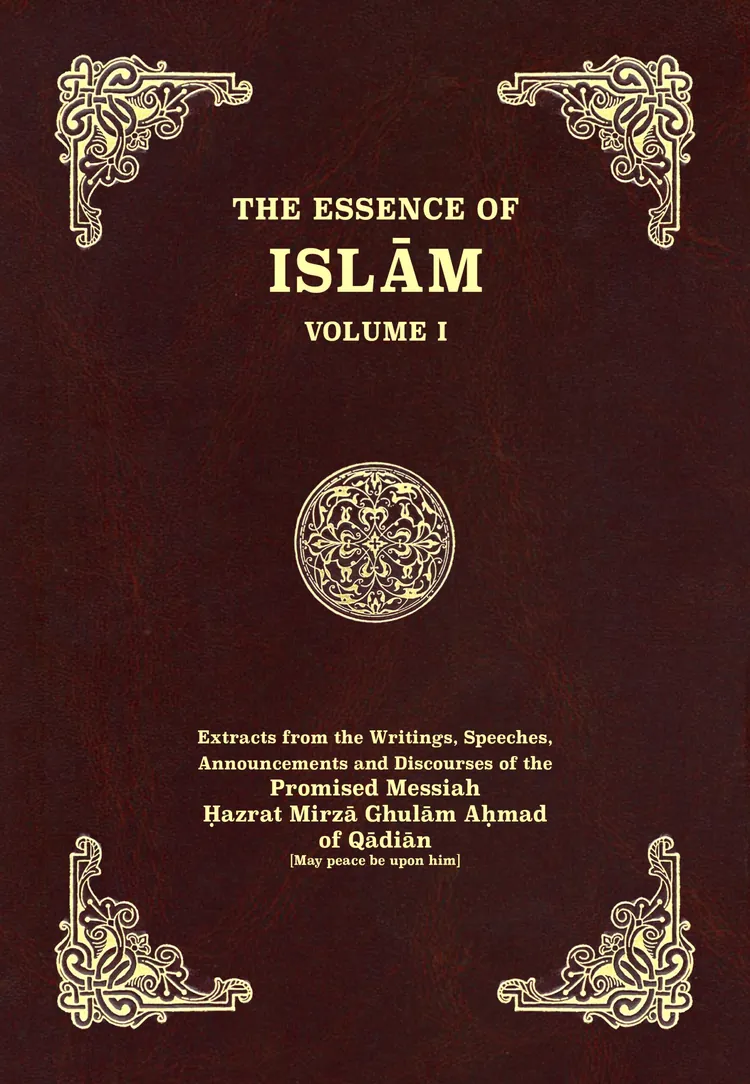
Introduction
In this discourse from Essence of Islam (Volume 2), Hazrat Mirza Ghulam Ahmad (AS), the Promised Messiah and Mahdi, expounds upon The Connotation of Some Arabic Words, presenting profound spiritual insights and scriptural verities.
Book Series: Essence of Islam (Volume 2)
Author: Hazrat Mirza Ghulam Ahmad of Qadian (AS)
Section: Part 1: Arabic, the Mother of Tongues
Navigation: Book Table of Contents | « Previous: Two Aspects of the Mercy of God | Next: The Word ‘Father’ Is Derogatory to God »
illustrated how the Arabic elementary words can be manipulated, how they serve the subjects of Divinity, and how subtle are their mutual distinctions…. Now we proceed to set forth some of the connotations of another Arabic word which we have selected from the Holy Qur’an and which is Rabb. This word occurs in the very first verse of the first chapter of the Holy Qur’an where Allah, the Glorious, says: 6
Lisan-ul-‘Arab and Taj-ul-‘Urus, which are the two most reliable Arabic lexicons, have set forth that the word Rabb comprises seven connotations: Master or Owner (Malik); Master or Chief (Sayyed); Regulator (Mudabbir); One who nurtures (Murabbi); One who safeguards (Qayyim); Bestower (Mun‘im) and; Perfector (Mutammim). Of these seven, three refer to the personal grandeur of the Almighty. Of these, one is Malik. In Arabic lexicon, Malik connotes that He owns the universe and can use it as He likes. His ownership of it is not shared by any other. This word in its true meaning cannot be applied to anyone except God Almighty, inasmuch as full control and complete power of disposal and perfect rights cannot be attributed to anyone except God Almighty. Sayyed, according to Arabic lexicon, is one who has subordinate to him a large number who should serve him out of sincere eagerness and natural obedience. The distinction between a sovereign and Sayyed is, that a 6 ‘All praise belongs to Allah, Lord of all the worlds.’—Al-Fatihah, 1:2 [Publisher]
وَمَا خَلَقۡتُ ٱلۡجِنَّ وَٱلۡإِنسَ إِلَّا لِيَعۡبُدُونِ
“And I have not created the Jinn and the men but that they may worship Me.” (Surah Al-Dhariyat, 51:57)
Meaning that: I alone am the Purpose of the creation of Jinn and men and all their faculties, which have all been created so that I should be recognized and worshipped. This verse indicates that man, by his very creation, has been invested with the search and recognition and obedience of God. Had man not been invested with these, there would have been no pursuit of passion, no idol worship, and no worship of men in the world, inasmuch as every error results from pursuit of the discovery of truth. Thus God alone is the true Sayyed. Another of these attributes is Mudabbir. This means the keeping in mind, with reference to every enterprise, the whole system of events in the past, and of consequences in the future, and the putting of everything in its proper place having regard to that system, and not to embark upon anything outside it. This attribute also cannot be applied to anyone beside God Almighty, inasmuch as perfect planning demands knowledge of the hidden, and that belongs to God Almighty alone. The remaining four names—Murabbi, Qayyim, Mun‘im and Mutammim—indicate those bounties of God Almighty which are bestowed upon men on account of His Perfect Mastership, Leadership, and Planning. Murabbi means he who nurtures, and perfect nurture means that all aspects of man, like his body, soul, faculties and capacities, should be nurtured and the system of nourishment should extend to the climax of man’s physical and spiritual progress. The manifestation of the point at which the name of humanness or its elements begin, and its features
begin to move from nothingness towards existence, is also nurture. This shows that in Arabic idiom Rububiyyat has very wide connotations, and that it covers the whole expanse from the point of nothingness to the climax of perfection. The name ‘Creator’ (Khaliq) and the like are derivatives of Rabb. Qayyim means one who safeguards the system. Mun‘im means one who bestows all bounties, which man or any other creature can receive, according to its capacity, and is desirous of obtaining, so that it might arrive at its climax, as Allah, the Glorious says:
قَالَ رَبُّنَا ٱلَّذِيٓ أَعۡطَىٰ كُلَّ شَيۡءٍ خَلۡقَهُۥ ثُمَّ هَدَىٰ
“He said, ‘Our Lord is He Who gave unto everything its proper form and then guided it to its proper function.’” (Surah Ta Ha, 20:51)
Our Lord, Who invested all things with appropriate form and then guided them to the realization of their requisite goals. Mutammim means that the system of beneficence should not be left deficient in any respect, and should be carried to its climax in all its aspects.
Thus the term Rabb, which has been used in the Holy Qur’an comprises all the diverse connotations that we have set out briefly above. We have to record with great sorrow that an ignorant European Christian writer has set out in one of his books that Christianity possesses this superiority over Islam, that it has named God Almighty ‘Father’, which is a very dear and lovely name, and that this name has not been applied to God in the Qur’an. We are surprised that this critic has not considered what honour and greatness the lexicons have attributed to the expression ‘Father’, forevery word acquires true honour and greatness from the position assigned to it by a lexicon, and no one is entitled to bestow such honour upon a word as the lexicon does not bestow. That is why even the Word of God does not disregard the lexicon, and according to all sensible people, in order to determine the honour and greatness of a word, recourse must first be had to the lexicon, in order to ascertain what robe of honour it has bestowed upon that word. Keeping this criterion in mind, we find that all that the lexicon discloses is that when a person is in fact born of the seed of another, and he who drops the seed has no further connection with his birth, it is said that that other is his Abb (father). If it should be desired to indicate that Almighty God is Himself the Conscious Creator of a person, and Himself leads him towards perfection, and out of His great mercy bestows appropriate bounties on him, and is Himself his Guardian and Supporter, the lexicon does not permit that these connotations may be expressed by the employment of the word ‘Father’; the lexicon provides another term for the expression of this concept, and that word is Rabb, the true meaning of which we have just set out on the authority of the lexicon. We are not at all entitled to invent our own lexicon, and must follow the division of words established by God from the beginning.
[Essence of Islam, Vol. 2]
[Essence of Islam, Vol. 2, p. 21]
Book Series: Essence of Islam (Volume 2)
Author: Hazrat Mirza Ghulam Ahmad of Qadian (AS)
Section: Part 1: Arabic, the Mother of Tongues
Navigation: Book Table of Contents | « Previous: Two Aspects of the Mercy of God | Next: The Word ‘Father’ Is Derogatory to God »