
The Curse of Sin Cannot Be Transferred — Essence of Islam Vol. 2
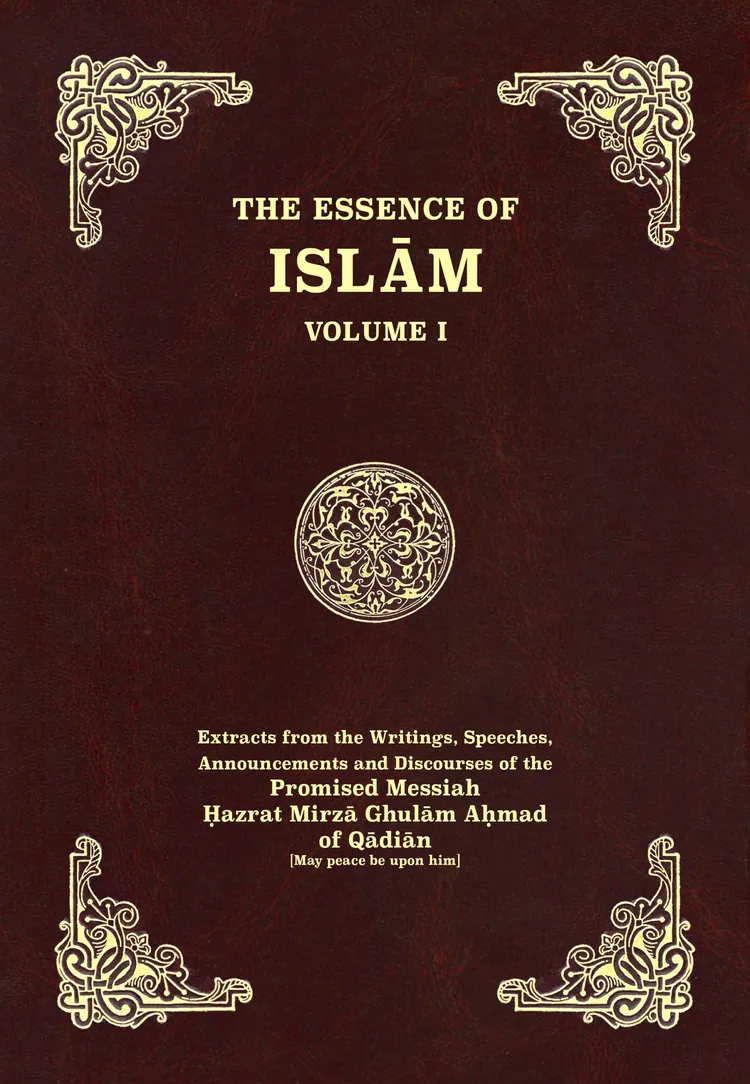
Introduction
In this discourse from Essence of Islam (Volume 2), Hazrat Mirza Ghulam Ahmad (AS), the Promised Messiah and Mahdi, expounds upon The Curse of Sin Cannot Be Transferred, presenting profound spiritual insights and scriptural verities.
Book Series: Essence of Islam (Volume 2)
Author: Hazrat Mirza Ghulam Ahmad of Qadian (AS)
Section: Part 7: Salvation
Navigation: Book Table of Contents | « Previous: Repentance, Istighfar, and Intercession as Means of Salvation | Next: No Contradiction Between Divine Justice and Mercy »
I pointed out that the doctrine of atonement is also untenable, for its purpose would be either that in consequence of it sin should be abolished altogether, or that every type of sin, whether relating to the rights of God or the rights of people, should be continuously forgiven. The first supposition is entirely false. We observe that the men and women of Europe have not been able to abstain from sin after the atonement and that the people of Europe are guilty of all manner of sins. Alright, leave that aside, and consider the case of ‘prophets’98 whose faith was stronger than that of others, even they could not escape sin, and the disciples of Jesus too were involved in sin. Thus there is no doubt that the atonement is not a dam that can bank up the flood of sin. As regards the second supposition, that those who believe in the atonement would be exempted from all punishment for sin, and that whether they commit theft or robbery or murder or misconduct of every description God will not call them to account; this also is untrue as it would cancel God’s eternal commandments and destroy the purity of the law.
[Kitab-ul-Bariyyah, Ruhani Khaza’in, vol. 13, pp. 59-60]
[Essence of Islam, Vol. 2, p. 281]
The Christians should have shown what provision the Gospel has made for that certainty with regard to the existence of God which bestows upon man the insight of the fear of God and burns up the fuel of sin. How can sin be discarded through useless means? These people do not realize that it is altogether unrealistic and wholly ficti- 98 The word ‘prophet’ has been used here in the biblical sense and not as an Islamic term. [Translator] tious that the sins of the whole world were cast upon one person and that the curse of the sinners was taken from them and was imposed on the heart of Jesus. This would mean that thereafter, with the exception of Jesus, everyone had acquired a pure life and the understanding of God and that Jesus alone was burdened with a curse which was a collection of millions of curses. But when we see that every person has his sins with him and that everyone feels the passion that nature has bestowed on him, whether he accepts Jesus or not, it shows that the accursed ones have not been separated from their cursed lives and that their curse has not fallen upon Jesus. As a curse is firmly fixed to its subject, how could it then have been transferred to Jesus? It is the height of injustice that the curse of every wicked and accursed one, who believes in Jesus, should fall on Jesus and that the person himself should become free from blame and pure. If this unending chain of curses, which will extend to the Judgement Day, will continue to be heaped upon poor Jesus afresh, when will he be freed from curses?…. This would mean that Jesus would never see the day again when he should dwell under the shade of the love of God and the light of His understanding. All that this doctrine would achieve would be that a holy one of God might be subjected to unending foulness.
[Kitab-ul-Bariyyah, Ruhani Khaza’in, vol. 13, pp. 63-64]
[Essence of Islam, Vol. 2, p. 281]
No Contradiction Between Divine Justice and Mercy The Christian doctrine that Divine justice would not be fulfilled without atonement is utterly absurd. They believe that in his human aspect Jesus was sinless and yet their God burdened him without cause with the curse of
[Essence of Islam, Vol. 2]
[Essence of Islam, Vol. 2, p. 282]
Book Series: Essence of Islam (Volume 2)
Author: Hazrat Mirza Ghulam Ahmad of Qadian (AS)
Section: Part 7: Salvation
Navigation: Book Table of Contents | « Previous: Repentance, Istighfar, and Intercession as Means of Salvation | Next: No Contradiction Between Divine Justice and Mercy »