
Blessings of Divine Recognition — Essence of Islam Vol. 3
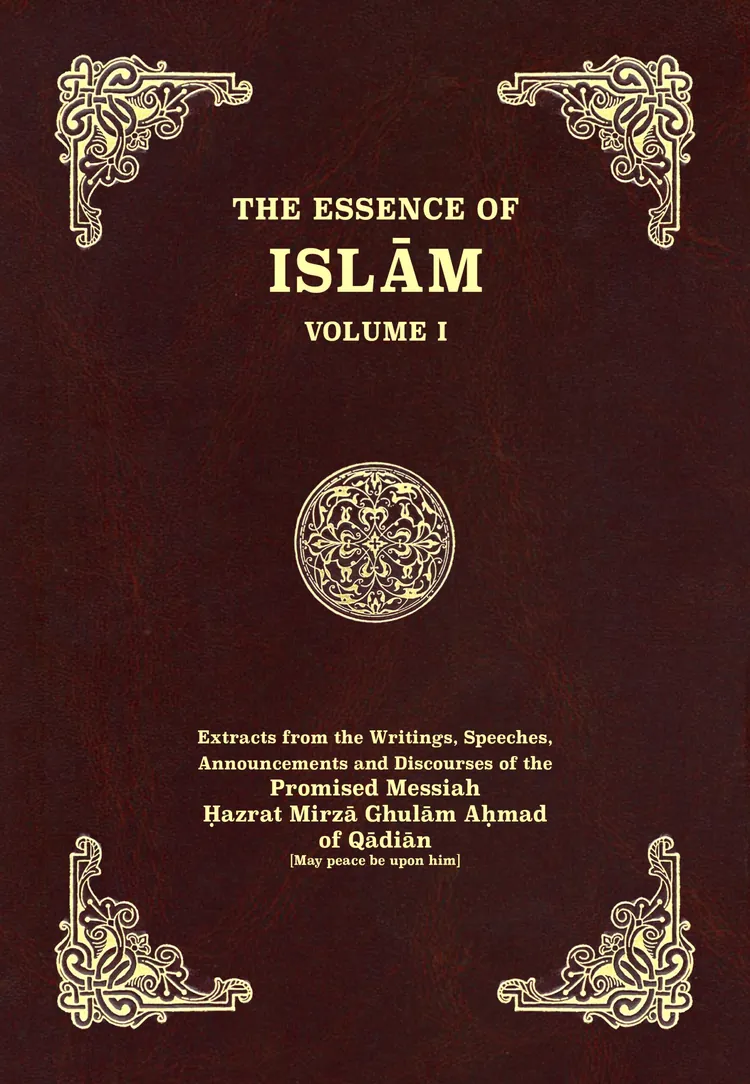
Introduction
In this discourse from Essence of Islam (Volume 3), Hazrat Mirza Ghulam Ahmad (AS), the Promised Messiah and Mahdi, expounds upon Blessings of Divine Recognition, presenting profound spiritual insights and scriptural verities.
Book Series: Essence of Islam (Volume 3)
Author: Hazrat Mirza Ghulam Ahmad of Qadian (AS)
Section: Part 2: Faith, Certainty and Insight
Navigation: Book Table of Contents | « Previous: Progressive Stages of Faith | Next: Three Categories of the Faithful »
that of the earth. Recognition of God renders a person insane in the eyes of the world, but sane and wise in the estimation of God. This drink possesses a sweetness which renders the whole body sweet; it is a delicious milk, which relieves him who drinks it of all desire for other bounties. It can be achieved only through such prayers as are offered at the risk of one’s life. It is not acquired through the sacrifice of another’s blood but through true sacrifice of the ego. How difficult is this task. Ah! how difficult!
[Ayyam-us-Sulh, Ruhani Khaza’in, vol. 14, pp. 244-246]
[Essence of Islam, Vol. 3, p. 54]
Those who truly seek God know well that comprehension of God can be achieved only through God Himself, and God alone can bestow full recognition of Himself. This is not a matter of man’s own choice. By no contrivance can man discard sin and achieve nearness to God unless he is granted full comprehension. No atonement can be of help, nor is there any way of being purified from sin, except through that perfect comprehension which generates perfect love and perfect fear. These two alone provide a barrier against sin. When the fire of the love and fear of Allah is set ablaze, it reduces all causes of sin to ashes. This holy fire and the foul fires of sin can never coexist. Man cannot desist from evil, nor can he advance in love, until he is blessed with full comprehension, and that does not happen until God Almighty sends down living blessings and miracles.
[Brahin-e-Ahmadiyyah, part V, Ruhani Khaza’in, vol. 21, p.7]
[Essence of Islam, Vol. 3, p. 54]
Humbleness is like a seed for faith. By discarding all that is vain, faith begins to sprout. When one spends one’s wealth in the cause of Allah, the plant of faith brings Faith, Certainty and Insight 55 forth shoots which strengthen it to a degree. By exercising control over carnal passions, these branches acquire strength and firmness. By safeguarding all branches of one’s trusts and covenants, the tree of faith is enabled to stand firm on its trunk. Then, at the time of bringing forth fruit, the grace of a new capacity is bestowed on it, without which it can bring forth neither fruit nor flowers.
[Brahin-e-Ahmadiyyah, part V, Ruhani Khaza’in, vol. 21, p. 209, footnote]
[Essence of Islam, Vol. 3, p. 54]
Remember, it is never possible to get rid of sin without the certainty of faith. Without certainty, it is not possible to live the life of angels; without it, it is not possible to discard debauchery; without it, it is not possible to undergo a holy change and to be drawn towards God in an extraordinary manner; without it, it is not possible to leave the earth and climb to heaven; without it, it is not possible to have perfect fear of God; without it, it is not possible to tread along the delicate paths of righteousness and to purify one’s conduct of all traces of ostentations. Similarly, it is not possible without this certainty to reject worldly riches and honour, and be heedless of the favour of kings and to believe in God alone as one’s treasure.
[Nuzul-ul-Masih, Ruhani Khaza’in, vol. 18, pp.469-470]
[Essence of Islam, Vol. 3, p. 55]
Book Series: Essence of Islam (Volume 3)
Author: Hazrat Mirza Ghulam Ahmad of Qadian (AS)
Section: Part 2: Faith, Certainty and Insight
Navigation: Book Table of Contents | « Previous: Progressive Stages of Faith | Next: Three Categories of the Faithful »