
Three Categories of the Faithful — Essence of Islam Vol. 3
Introduction
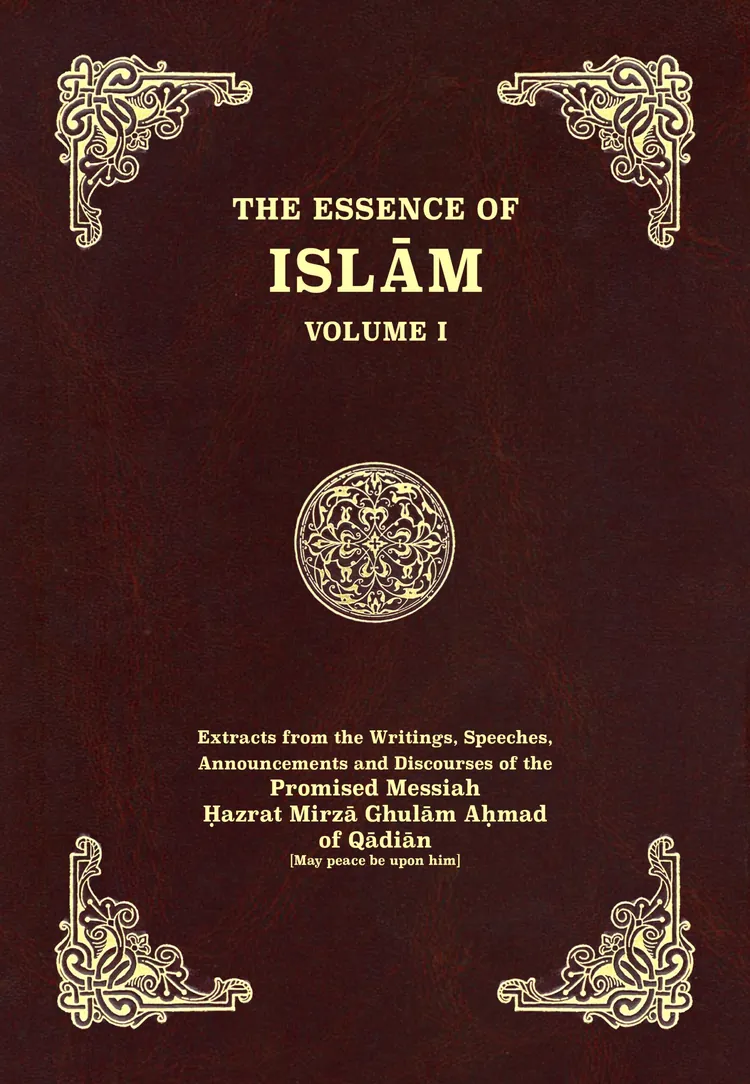
In this discourse from Essence of Islam (Volume 3), Hazrat Mirza Ghulam Ahmad (AS), the Promised Messiah and Mahdi, expounds upon Three Categories of the Faithful, presenting profound spiritual insights and scriptural verities.
Book Series: Essence of Islam (Volume 3)
Author: Hazrat Mirza Ghulam Ahmad of Qadian (AS)
Section: Part 2: Faith, Certainty and Insight
Navigation: Book Table of Contents | « Previous: Blessings of Divine Recognition | Next: The Soul at Rest »
Faith, Certainty and Insight 55 forth shoots which strengthen it to a degree. By exercising control over carnal passions, these branches acquire strength and firmness. By safeguarding all branches of one’s trusts and covenants, the tree of faith is enabled to stand firm on its trunk. Then, at the time of bringing forth fruit, the grace of a new capacity is bestowed on it, without which it can bring forth neither fruit nor flowers.
[Brahin-e-Ahmadiyyah, part V, Ruhani Khaza’in, vol. 21, p. 209, footnote]
[Essence of Islam, Vol. 3, p. 55]
Remember, it is never possible to get rid of sin without the certainty of faith. Without certainty, it is not possible to live the life of angels; without it, it is not possible to discard debauchery; without it, it is not possible to undergo a holy change and to be drawn towards God in an extraordinary manner; without it, it is not possible to leave the earth and climb to heaven; without it, it is not possible to have perfect fear of God; without it, it is not possible to tread along the delicate paths of righteousness and to purify one’s conduct of all traces of ostentations. Similarly, it is not possible without this certainty to reject worldly riches and honour, and be heedless of the favour of kings and to believe in God alone as one’s treasure.
[Nuzul-ul-Masih, Ruhani Khaza’in, vol. 18, pp.469-470]
[Essence of Islam, Vol. 3, p. 55]
Those who submit to God are, in fact, of three types. First, those who, on account of the obstruction of worldly means, are not able to see God’s beneficence clearly, and are not inspired by that eagerness which is generated by an appreciation of the grandeur of Divine beneficence; nor are they moved by the love which is inspired by a concept of the greatness of the Benefactor’s favours. They casually acknowledge God Almighty as the Creator, but do not contemplate the details of Divine beneficence which would impress a true concept of the Divine Benefactor upon their minds, inasmuch as the dust of exaggerated regard for material means creates a veil which prevents them from observing the full countenance of the Creator of the means. They are thus unable to appreciate the full beauty of the Bountiful. Their defective comprehension is confused by their regard for the means, and, as they are not able to estimate duly the bounties of God, they do not pay as much attention to Him as would be generated in their minds by a proper appreciation of His favours. Thus, their comprehension is somewhat misty because they put their trust in their own efforts and in the means that are available to them. They also acknowledge formally their obligation towards God on account of His being the Creator and the Provider. As God Almighty does not require of anyone that which is beyond the limits of his intellectual capacity, He only requires of them an expression of gratitude for His favours. In the verse:
۞إِنَّ ٱللَّهَ يَأۡمُرُ بِٱلۡعَدۡلِ وَٱلۡإِحۡسَٰنِ وَإِيتَآيِٕ ذِي ٱلۡقُرۡبَىٰ وَيَنۡهَىٰ عَنِ ٱلۡفَحۡشَآءِ وَٱلۡمُنكَرِ وَٱلۡبَغۡيِ ۚ يَعِظُكُمۡ لَعَلَّكُمۡ تَذَكَّرُونَ
“Verily, Allah enjoins justice, and the doing of good to others; and giving like kindred; and forbids indecency, and manifest evil, and wrongful transgression. He admonished you that you may take heed.” (Surah ‘Verily, 16:91)
‘justice’ implies only this kind of obedience.
But above this there is another grade of comprehension which is reached when a person, disregarding the means, clearly observes God’s gracious and beneficent hand and emerges completely out of the veils of material means. At that stage, he realizes the futility and falsity of expressions like: ‘I obtained this success through proper irrigation of my fields;’ or ‘I obtained this success through my own efforts;’ or ‘I achieved my purpose through the favour of X;’ or ‘I was saved from ruin by the care of Y.’Faith, Certainty and Insight 57 Rather, he beholds only one Being and one Power and one Benefactor and one Hand. Then he views the favours of God Almighty clearly without the least obstruction resulting from associating means with the Benefactor. This view is so clear and certain that in his worship of the true Benefactor he does not contemplate Him as being absent but conceives Him as being present. Such worship is designated by the Holy Qur’an as Ihsan. The Holy Prophet (peace and blessings of Allah be upon him) has himself attributed this meaning to Ihsan, as reported in Bukhari and Muslim. There is yet another grade above this, which is: 45
It means that when a person continues to view Divine favours, without the association of material means, and worships God conceiving Him to be present and to be the direct Benefactor, he begins to have personal love for God.
The continuous contemplation of beneficence necessarily generates in the heart of the beneficiary love for the Benefactor, Whose unlimited favours surround him on all sides. In such a situation he does not worship the Benefactor merely out of an appreciation of His bounties, but out of personal love for Him like the love of an infant for its mother. At this stage he not only views God at the time of his worship but is also filled with delight like a true lovers. This is the grade which God Almighty has designated to be like beneficence between kindred, and this is the grade which is indicated in the verse:۞إِنَّ ٱللَّهَ يَأۡمُرُ بِٱلۡعَدۡلِ وَٱلۡإِحۡسَٰنِ وَإِيتَآيِٕ ذِي ٱلۡقُرۡبَىٰ وَيَنۡهَىٰ عَنِ ٱلۡفَحۡشَآءِ وَٱلۡمُنكَرِ وَٱلۡبَغۡيِ ۚ يَعِظُكُمۡ لَعَلَّكُمۡ تَذَكَّرُونَ
“Verily, Allah enjoins justice, and the doing of good to others; and giving like kindred; and forbids indecency, and manifest evil, and wrongful transgression. He admonished you that you may take heed.” (Surah ‘Giving like to the next of kin.’—Al-Nahl, 16:91)
which throws light on the verse: 47
Here God Almighty sets out the three grades of comprehension of the Divine. The third grade is that of personal love, at which all personal desires are consumed, and the heart becomes so filled with love as a crystal vial is filled with perfume. This grade is also referred to in the verse:
وَمِنَ ٱلنَّاسِ مَن يَشۡرِي نَفۡسَهُ ٱبۡتِغَآءَ مَرۡضَاتِ ٱللَّهِ ۚ وَٱللَّهُ رَءُوفُۢ بِٱلۡعِبَادِ
“And of men there is he who would sell himself to seek the pleasure of Allah; and Allah is Compassionate to His servants.” (Surah Al-Baqarah, 2:208)
This means that: ‘Of the believers there are some who sell their lives in return for the pleasure of Allah. These are the ones upon whom Allah is Most Compassionate.’ Again it is said:
بَلَىٰ ۚ مَنۡ أَسۡلَمَ وَجۡهَهُۥ لِلَّهِ وَهُوَ مُحۡسِنٞ فَلَهُۥٓ أَجۡرُهُۥ عِندَ رَبِّهِۦ وَلَا خَوۡفٌ عَلَيۡهِمۡ وَلَا هُمۡ يَحۡزَنُونَ
“Nay, whoever submits himself completely to Allah, and is the doer of good, shall have his reward with his Lord. No fear shall come upon such, neither shall they grieve.” (Surah Al-Baqarah, 2:113)
That is:‘The truly delivered are those who commit themselves wholly to God and, recalling His favours, worship Him as if they behold Him. Such have their reward with God and they have no fear, nor do they grieve.’ That is to say, God and His love become their whole purpose, and their reward is Divine favours. At another place it is said: 46 ‘Celebrate the praises of Allah as you celebrated the praises of your fathers, or even more than that.’—Al-Baqarah, 2:201 [Publisher] 47 ‘Verily, Allah enjoins justice, and the doing of good to others and giving like kindered.’—Al-Nahl, 16:91 [Publisher]
Faith, Certainty and Insight 59 50
That is: ‘Believers are those who, out of their love for God, feed the needy, the orphans and the captives saying: We feed you in order to win the pleasure of Allah; we do not desire anything in return or any expression of gratitude from you.’ These verses show clearly that the Holy Qur’an has described the highest grade of Divine worship and righteous action as that which is inspired by true love of God and sincere seeking of His pleasure. This excellent teaching, which is set out so clearly in the Holy Qur’an, is not explained with such clarity and detail in the Gospels. God Almighty has designated this religion as Islam, so as to indicate that man should worship God not out of selfish motives, but out of spontaneous eagerness.
[Nur-ul-Qur’an, No. II, Ruhani Khaza’in, vol. 9, pp. 437-441]
Islam means discarding all desires and submitting to Divine will. In this world, no religion other than Islam lays down such objectives. There is no doubt that for the demonstration of His mercy God has promised the believers diverse types of bounties; but He has instructed those believers who are eager to achieve the highest grade that they should worship Him out of spontaneous personal love.
[Essence of Islam, Vol. 3, p. 55]
Remember, the verse:
وَيُطۡعِمُونَ ٱلطَّعَامَ عَلَىٰ حُبِّهِۦ مِسۡكِينٗا وَيَتِيمٗا وَأَسِيرًا إِنَّمَا نُطۡعِمُكُمۡ لِوَجۡهِ ٱللَّهِ لَا نُرِيدُ مِنكُمۡ جَزَآءٗ وَلَا شُكُورًا
“And they feed, for love of Him, the poor, the orphan, and the prisoner, Saying, ‘We feed you for Allah’s pleasure only. We desire no reward nor thanks from you.” (Surah Al-Dahr, 76:9-10)
51 ‘Nay, whoever submits himself completely to Allah, and is the doer of good, shall have his reward with his Lord. No fear shall indicates the three grades of the perfection of good fortune, namely fana [extinction of the self], baqa [revival] and liqa’ [communion.] ‘Complete submission to Allah’ means to surrender to Him all human faculties and organs, and whatever belongs to oneself, and to dedicate everything to the cause of God. This condition is described as fana [extinction of the self.] When a person, conforming with the purpose of this verse, submits the whole of his being and his faculties to God Almighty, and dedicates himself to His cause, and wholly refrains from all personal moves and rests, then undoubtedly he experiences a type of death. The Sufis designate such death as fana. Then, the expression, ‘and acts righteously’, points to the stage of baqa [revival.] When a person, after complete surrender and abandonment of all personal desires and the cessation of all personal movement, begins to move in obedience to Divine direction, such revival is called baqa. Then follows the verse: 52
This signifies affirmation, acceptance and reward and negates fear and grief. This condition refers to liqa’ [communion.] For, when a person achieves such a high grade in his comprehension of the Divine, certainty, trust and love as to exclude all imagination and fancy and doubt concerning the reward of his sincerity and faith and loyalty, which becomes so certain and absolute and visible and perceptible as if he is already enjoying it, and come upon such, neither shall they grieve.’—Al-Baqarah, 2:113 [Publisher] 52 Ibid. Faith, Certainty and Insight 61 his belief in the Being of God Almighty becomes so certain as if he is beholding Him, and he loses sight of all fear and grief, past or present, which disappear altogether and every spiritual bounty appears present before him, that condition which is free from all constraint and is secure against every doubt and apprehension and is free from all anxiety of waiting, is designated liqa’ [communion.] This grade of liqa’ is clearly indicated by the word Muhsin, inasmuch as according to the interpretation of the Holy Prophet (peace and blessings of Allah be upon him) Ihsan is the condition in which a worshipper establishes such a relationship with God Almighty as if he is beholding Him. The grade of liqa’ is achieved perfectly when Divine reflection completely covers the humanity of the seeker as iron is covered by the fire in which it is heated, so much so, that the physical eye perceives nothing but the fire. This is the stage at which some seekers have stumbled and have conceived the symbolic relationship as the physical union of the two beings.
Some Sufis have designated the saints who have arrived at the stage of liqa’ or who have partaken of it to a degree, as children of God. On account of their having been completely covered by certain Divine attributes, just as a child has some resemblance to his father in respect of his form and features, in the same way, they too, in consequence of having adorned themselves reflectively with certain Divine attributes, acquire some resemblance to the beautiful attributes of God Almighty. Such titles are not commonly used in the idiom of the Shariah, but those invested with the quality of spiritual comprehension have derived them from the Holy Qur’an; as Allah the Exalted has said:فَإِذَا قَضَيۡتُم مَّنَٰسِكَكُمۡ فَٱذۡكُرُواْ ٱللَّهَ كَذِكۡرِكُمۡ ءَابَآءَكُمۡ أَوۡ أَشَدَّ ذِكۡرٗا ۗ فَمِنَ ٱلنَّاسِ مَن يَقُولُ رَبَّنَآ ءَاتِنَا فِي ٱلدُّنۡيَا وَمَا لَهُۥ فِي ٱلۡأٓخِرَةِ مِنۡ خَلَٰقٖ
“And when you have performed the acts of worship prescribed for you, celebrate the praises of Allah as you celebrated the praises of your fathers, or even more than that. And of men there are some who say, ‘Our Lord, grant us good things in this world;’ and such a one shall have no share in the Hereafter.” (Surah Al-Baqarah, 2:201)
That is: ‘Remember Allah with the eagerness with which you remember your fathers.’
It is obvious that if the metaphorical use of these expressions had been forbidden by Shariah, God Almighty would have safeguarded His Word against such use of the expressions as might have allowed others to use them. At this stage of liqa’ [communion], a person sometimes does bear some characteristics which appear to be beyond human capacity and have the colour of Divine power. For instance, our lord and master, the Chief of the Prophets, Hadrat Khatam-ul-Anbiya’ (peace and blessings of Allah be upon him) threw a handful of gravel at the enemy during the battle of Badr, not with any prayer but only with his spiritual power, and that handful of gravel exhibited Divine power and affected the hostile forces in such an extraordinary manner that not a single one was left who’s eyes were not affected by it… In the same way, another miracle of the Holy Prophet (peace and blessings of Allah be upon him), which relates to the splitting of the moon, was manifested by Divine power. It was not the consequence of any prayer. It was manifested by the mere pointing of his finger, which was charged with Divine power. There are many other miracles of the Holy Prophet (peace and blessings of Allah be upon him), which were not accompanied by any prayer but were manifested through his person as the symbol of Divine power….Faith, Certainty and Insight 63 My purpose in stating all this is that when a person arrives at the grade of liqa’, he manifests Divine powers on the occasions of the upsurge of this grade. Anyone who spends some time in the intimate company of such a person witnesses some of these manifestations, inasmuch as during the upsurge of this condition, such a one reflectively manifests Divine attributes, so much so that his mercy becomes the mercy of God, and his wrath becomes the wrath of God. Very often when he says, even without a prayer, that such and such should happen, it happens. If he looks upon anyone with anger such a person is afflicted with some calamity, and if he looks upon someone with compassion, that person becomes the object of Divine mercy. Just as the Divine command: ‘Be’, always produces the desired result, in the same way, when such a person says, ‘Be’, in the state of the upsurge of liqa’, it does not fail to produce the desired result. The reason for the manifestation of these extraordinary happenings is that such a person, on account of his strong relationship with God, takes on reflectively a Divine complexion and passes completely into the control of Divine manifestations, and the True Beloved takes him into His embrace and removes all intervening obstructions on account of his closeness to Him; and as He Himself is Blessed, He blesses that person’s words, deeds, movement, rest, food, dress, house, time, and all his belongings. In such a state everything that comes in contact with him is blessed even without prayer. Blessings that he observes, and whose fragrance he perceives, descend upon his house and upon the doors of his house. When he travels, God Almighty keeps him company with all His blessings, and when he comes home he brings with him an ocean of light. In short, he becomes a wonderful person whose true condition is known only to God Almighty. In this context, it should be clearly understood that once the condition of: 54
is fully established, which the Sufis designate as fana, and which the Holy Qur’an describes as steadfastness, the grade of baqa and liqa’ follow immediately upon it. In other words, when a person empties himself completely of his condition as a creature and altogether discards desire and design and arrives at the stage of perfect surrender, he immediately experiences the stage of baqa. But until the condition of fana is fully established, and leaning wholly towards God Almighty becomes a natural characteristic, the stage of baqa cannot be reached. That stage is reached only when obedience ceases to be an effort, and the green and waving branches of obedience sprout forth from the heart like a natural growth and all that is considered one’s own truly becomes God’s, and just as other people delight in indulgence, such a person’s whole delight centres on worship and remembrance of God, and the pleasures of God take the place of his personal desires. When this condition of baqa is fully established and saturates the being of the seeker, and becomes his permanent characteristic, and he witnesses a light descending from heaven which removes all obstructions, and a fine, sweet and delicious feeling of love which had not been perceived before is generated in the heart, and a coolness 54 ‘He who submits himself completely to Allah.’—Al-Baqarah, 2:113 [Publisher] Faith, Certainty and Insight 65 and a contentment and a peace and a delight are experienced like the experience of suddenly meeting and embracing a long separated friend, and the bright, delicious, blessed, comforting, eloquent, fragrant and gladdening words of God begin to descend at all times, whether sitting, standing, asleep or awake, like a cool, pleasant and fragrant breeze which comes across a garden of flowers and begins to blow in the morning and brings with it a delight and intoxication, and the seeker is so drawn towards God Almighty that he finds it impossible to live without a lover-like contemplation of Him, and not only is he ready to sacrifice his wealth, life, honour, children and all he has, but has already sacrificed all of it in his heart, and he feels such a strong pull the nature of which he is not able to determine; and he perceives a brilliant light illumining his inner self like the dawning of the day; and he observes streams of devotion, love and loyalty flowing mightily through himself and feels every moment as if God Almighty has descended upon his heart; when this condition is experienced in all its aspects it is then that a seeker should be happy and should express his gratitude to the True Beloved, for that is the ultimate stage which is called liqa’. At this stage, the seeker feels as if he has been washed in many holy waters, and has been created anew by casting out every trace of his ego, and the throne of the Lord of the worlds has been set inside him, and that God’s shining countenance with all its winning beauty has appeared before him.
[A’ina-e-Kamalat-e-Islam, Ruhani Khaza’in, vol. 5, pp. 63-72]
It should, however, be remembered that the last two stages, baqa and liqa’, are not achieved through one’s own effort but are Divine bounties. Effort is confined to the stage of fana and the journey of all righteous seekers terminates at that stage, and the circle of human excellences is thus completed. When the pure minded seeker traverses the stage of fana as it should be traversed, it is Divine practice that the breeze of Divine bounty immediately conveys him to the stage of baqa and liqa’. It is thus obvious that all the travails and labours of this journey are up to the stage of fana, and thereafter no scope is left for human effort, labour and striving. A bright flame of Divine love thereafter falls upon the pure love of the seeker after God, the Noble and Exalted. Through the union of the two, a bright and perfect reflection of the Holy Spirit is generated in the human heart. At the stage of liqa’ the light of the Holy Spirit is very bright and the extraordinary manifestations to which we have already referred proceed from the seeker because the light of the Holy Spirit always attends upon him and dwells within him. He is never separated from this light, nor does it ever depart from him. It issues from him with every breath, falls with his glance upon everything and manifests its illumination in his words. This light is called the Holy Spirit. But this is not the real Holy Spirit. The real Holy Spirit is in heaven. This Holy Spirit is a reflection which dwells permanently in the bosom, heart and brain of the holy person and does not leave him even for a moment.
[Essence of Islam, Vol. 3, p. 59]
Every true seeker naturally wishes to know what he should do to achieve this high stage of converse with the Divine. The answer is that this stage is a new existence at which one is given new faculties, new powers and a new life. This new existence cannot be achieved without the surrender of the previous existence. When the previous existence is wholly discarded through a true and real Faith, Certainty and Insight 67 sacrifice, which means the sacrifice of life, honour and wealth and all other trappings of the ego, this second existence immediately takes its place.
[A’ina-e-Kamalat-e-Islam, Ruhani Khaza’in, vol. 5, pp. 233-237]
The signs of the discarding of the previous existence are that previous characteristics and emotions are replaced by new characteristics and new emotions, and one’s nature undergoes a tremendous change. All states of existence, relating to morals, faith and worship, are so transformed that they appear to take on a new colour.
In short, one becomes a new person and God Almighty also appears anew. New delights, previously unknown, are experienced in gratitude, steadfastness and remembrance of God. One feels clearly that he has full trust in his Lord and cares the least for everything other than Him. The contemplation of the Being of God Almighty overwhelms the heart to such a degree that every being other than Him disappears altogether and all material means appear useless and contemptible. Devotion and loyalty surge up to such a degree that every calamity appears light, and even the experience of calamities and misfortunes is perceived as a delight. When all these signs are perceived, it should be realized that the previous existence has suffered a total death. Such a death invests a seeker with wonderful powers to exercise in the cause of God. He is given the power to perform all those heavy tasks which others only talk about but cannot perform, and to carry the burdens that others only estimate but cannot lift. He does all this, not of his own strength, but with the assistance of a great Divine power, which renders him firmer than the mountains, and bestows upon him a faithful heart. He is then able, for the glory of God Almighty, to do such things and manifest such devotion as is beyond the power of man. He cuts asunder from all besides Allah, and removes all intervening barriers and obstructions. He is tested and persecuted and encounters diverse types of trials and is afflicted with such calamities and misfortunes as would have destroyed mountains and darkened the sun and the moon; but he remains steadfast and endures all hardships cheerfully. Even if he is ground to dust by the mortar and pestle of calamities, no sound proceeds from him except: ‘I stand with God’. When a person arrives at this stage, he rises above the conditions of this world and is given, by way of reflection, all of the guidance and high status that were bestowed upon previous Prophets and Messengers, and he becomes their heir and their deputy.
[Essence of Islam, Vol. 3, p. 66]
Book Series: Essence of Islam (Volume 3)
Author: Hazrat Mirza Ghulam Ahmad of Qadian (AS)
Section: Part 2: Faith, Certainty and Insight
Navigation: Book Table of Contents | « Previous: Blessings of Divine Recognition | Next: The Soul at Rest »