
Evidence Regarding the Death of Jesus — Essence of Islam Vol. 3
Introduction
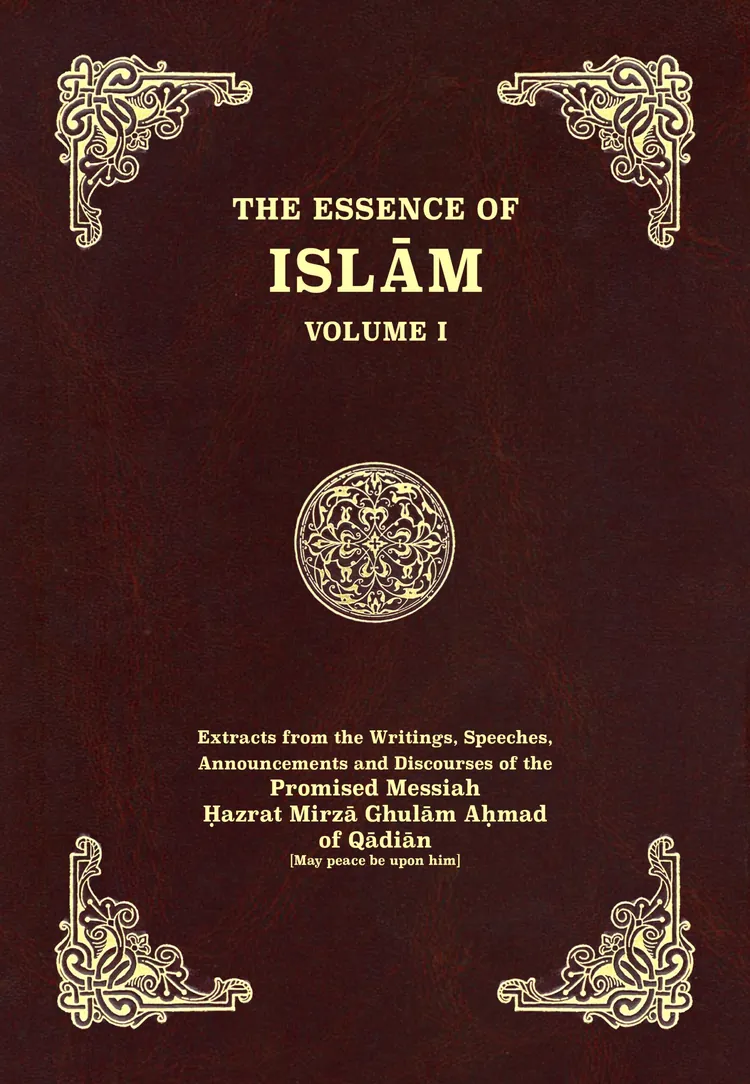
In this discourse from Essence of Islam (Volume 3), Hazrat Mirza Ghulam Ahmad (AS), the Promised Messiah and Mahdi, expounds upon Evidence Regarding the Death of Jesus, presenting profound spiritual insights and scriptural verities.
Book Series: Essence of Islam (Volume 3)
Author: Hazrat Mirza Ghulam Ahmad of Qadian (AS)
Section: Part 6: The Messiah and His Second Coming
Navigation: Book Table of Contents | « Previous: Correct Meanings of Nuzul | Next: True Status of Jesus »
The Messiah and his Second Coming 193 cally alive, then, after the passage of so many centuries, he must have arrived at extreme old age and will no longer be capable of performing any religious function or service. His descent upon earth in such a condition would serve no useful purpose and would only put him to unnecessary travail.
[Izala-e-Auham, Ruhani Khaza’in, vol. 3, pp. 125-127]
[Essence of Islam, Vol. 3, p. 193]
We have so many certain and conclusive proofs of the death of Jesus, son of Mary, that they cannot all be set out in this brief publication. Read the Holy Qur’an carefully and you will find the death of Jesus mentioned so clearly and definitely that it is not possible to interpret it otherwise. For instance, the Holy Qur’an reports the acknowledgement of Jesus: 158
Can we interpret the word Tawaffi in this verse as meaning sleep? Would it be right to understand this verse as meaning: Since Thou didst cause me to sleep Thou hast been the One to watch over them? Of course not. The only appropriate interpretation of Tawaffi in this context is the straightforward one of death; and the context does not permit us to interpret that death will occur after Jusus’ bodily ascent to heaven. This is because the question put to Jesus refers to the going astray of his people, which had happened after his supposed bodily ascent to heaven and had been completed before the advent of the Holy Prophet (peace and blessings of Allah be upon him.) 158 ‘Since Thou didst cause me to die, Thou hast been the Watcher over them.’—Al-Ma’idah, 5:118 [Publisher] The Hadith also confirms the death of Jesusas. On page 162 of the Commentary Ma‘alim it is mentioned on the authority of ‘Ali bin Talhah that Ibn-e-‘Abbasra interpreted the verse: 159
to mean i.e., ‘I will cause you to die.’ This is supported by other verses like: 160 161 162
Thus Ibn-e-‘Abbas, may Allah be pleased with him, believed that Jesus had died. Our readers must be aware that Ibn-e-‘Abbas was among the foremost of those who comprehended the Holy Qur’an perfectly. The Holy Prophet (peace and blessings of Allah be upon him) had prayed for him that he might be bestowed true knowledge of the Holy Qur’an.
[Izala-e-Auham, Ruhani Khaza’in, vol. 3, pp. 224-225]
[Essence of Islam, Vol. 3, p. 193]
It is for this purpose that Imam Bukhari (may Allah have mercy on him), has quoted the verse: 163 159 ‘O Jesus, I will cause thee to die a natural death and will exalt thee to Myself.’—Al-e-mran, 3:56 [Publisher] 160 Say, ‘The angel of death…will cause you to die.’—Al-Sajdah, 32:12 [Publisher] 161 ‘Those whom the angels cause to die while they are pure.’—AlNahl, 16:33 [Publisher] 162 ‘Those whom the angels cause to die while they are wronging their souls.’—Al-Nahl, 16:29 [Publisher] 163 ‘Since Thou didst cause me to die, Thou hast been the Watcher The Messiah and his Second Coming 195 in Kitab-ut-Tafsir. In so doing, he intended to convey that the correct interpretation of the word Tawaffaitani is the one which the Holy Prophet (peace and blessings of Allah be upon him) attributed to it, that is to say, ‘Thou didst cause me to die’. In the following Hadith: the Holy Prophetsa says that: “on the Day of Judgement some of my people will be driven to hell, and I will supplicate, ‘Lord! these are my companions’. Then it will be said to me, ‘You know not what they did after you’. Upon this I will say what a righteous servant of God, i.e., Jesus son of Mary, had said when he was asked: ‘Did you teach your people that they should worship you and your mother as gods?’ I will say what Jesus had then said: ‘I was witness over them while I was amongst them; but since Thou didst cause me to die, Thou hast been the One to watch over them.’” (Bukhari)
[Izala-e-Auham, Ruhani Khaza’in, vol. 3, pp. 585-586]
The Holy Prophet (peace and blessings of Allah be upon him) meant that he would make the same affirmation as Jesus would make when he would be asked whether he had taught his people to take him and his mother as gods. In this manner the Holy Prophet (peace and blessings of Allah be upon him) interpreted the expression Tawaffaitani as meaning death.
[Essence of Islam, Vol. 3, p. 194]
over them.’—Al-Ma’idah, 5:118 [Publisher] I put only one question to the clerics who differ with me on the question of the death of Jesus. Had they pondered over it sincerely, it would have been enough to guide them aright, but they did not ponder over it, as none was desirous of being rightly guided. My question is: Twice has Allah the Glorious, applied the expression Tawaffi in the Holy Qur’an with reference to Jesusas; and the same has been applied to the Holy Prophet (peace and blessings of Allah be upon him); and it has also been used in the prayer of Joseph (peace be on him.) There are several other places where it has been used in the Holy Qur’an. Pondering over all these references, a just minded person would be satisfied that in each case Tawaffi connotes death and nothing but death. The expression Tawaffi has been used in hundreds of places in the Ahadith but nobody can show you a single occasion where it has been used to connote anything other than death. If an illiterate Arab were told Tuwuffiya Zaidun he would understand by it that Zaid has died. Whenever a companion or a relative of the Holy Prophetsa died, he always used the expression Tawaffi for the purpose of conveying that the person mentioned had died. When he himself died, the companions used the expression Tawaffi to convey that he had died. In the same way, this expression was used to indicate the death of Abu Bakr, ‘Umar and all other companions of the Holy Prophet (May Allah be pleased with them.) The use of this word to indicate the death of a Muslim is an honourable way of conveying the news of his death. In view of all this, why is it that this expression, when used with reference to Jesus, should be interpreted in any other way?
[Itmam-ul-Hujjah, Ruhani Khaza’in, vol. 8, pp. 292-293]
[Essence of Islam, Vol. 3, p. 195]
In the idiom of the Holy Qur’an, the word Tawaffi has The Messiah and his Second Coming 197 always been used in the connotation of death and taking possession of the soul. A minute study of Arabic prose and poetry—both ancient and modern—shows that wherever the expression Tawaffi is used for a human being, and the action is attributed to Allah the Glorious,
[Izala-e-Auham, Ruhani Khaza’in, vol. 3, pp. 583-585]
Tawaffi invariably means death and taking possession of the soul. In this context, there is not a single instance, where this expression means anything other than taking possession of the soul. Those who are wont to refer to lexicons like Qamus, Sihah, Sarah, etc., have not found a single instance where, in the context that we have mentioned, any other connotation has been attributed to the expression Tawaffi. There is not the slightest indication of the possibility of any other connotation. Then I studied the books of Hadith to discover whether the Holy Prophet (peace and blessings of Allah be upon him) or his companions had on any occasion applied the expression Tawaffi to a human being in any other connotation than that of death and taking possession of the soul. I had to labour hard in this search. What I discovered on checking every page of the compilations of Sahih Bukhari, Sahih Muslim, Tirmadhi, Ibn-e-Majah, Abu Dawud, Nasa’i, Darimi, Mu’atta’ and Sharh-us-Sunnah etc., was that the expression Tawaffi has been used three hundred and forty six times, and in no single instance has it been used, either by the Holy Prophet (peace and blessings of Allah be upon him) or by his companions, to mean anything other than ‘death’, or ‘taking possession of the soul’. I have gone through these books with great care line by line, and I can say that on each and every occasion the expression Tawaffi has been used only in the connotation of death or taking possession of the soul. A careful perusal of these books also establishes that, from the moment of the Call and all through his life, the Holy Prophet (peace and blessings of Allah be upon him) never used the expression Tawaffi in any connotation other than death and taking possession of the soul….
Imam Muhammad Isma‘il Bukhari has made a fine point in his compilation which indicates that the Holy Prophet (peace and blessings of Allah be upon him) used the expression Tawaffi at least seven thousand times between his Call and his death, and every time he used it in the connotation of death and taking possession of the soul. Seekers after truth should be grateful to Imam Bukhari for this information.
[Essence of Islam, Vol. 3, p. 196]
If anyone can cite a single instance from the Holy Qur’an or Hadith, or from ancient or modern Arabic poetry and prose, that the word Tawaffi, when applied to a human being, God being the subject, has been used in any connotation other than death and taking possession of the soul, for instance, in the connotation of the taking the body, I bind myself on oath that I shall pay that person one thousand rupees in cash by selling some of my property and shall always hold him in high esteem as a great scholar of the Holy Qur’an and Hadith.
[Izala-e-Auham, Ruhani Khaza’in, vol. 3, p. 603]
[Essence of Islam, Vol. 3, p. 198]
The Holy Qur’an clearly states that there never was a Prophet who did not pass away: 164 164 ‘Muhammad is only a Messenger. Verily, all Messengers have passed away before him. If then he die or be slain, will you turn back on your heels?’—Al-e-Imran, 3:145 [Publisher] The Messiah and his Second Coming 199 165 166
To conceive of Jesus as alive in the face of these verses, and to believe, contrary to the purport of the verse: 167
that Jesus is alive in heaven like the angels, without the need of food, would be to turn away from the Holy Word of God. I again affirm that if Jesus is alive in heaven in his physical body, then the Divine reasoning set out in one of the above verses—that if the Holy Prophet (peace and blessings of Allah be upon him) were to die it would not be inconsistent with his Prophethood as all Prophets before him have been subject to death—would be accounted as defective and meaningless. Surely God Almighty is far above saying that which is not true and is against the facts.
[Izala-e-Auham, Ruhani Khaza’in, vol. 3, pp. 277-278]
[Essence of Islam, Vol. 3, p. 198]
The Holy Qur’an says:
وَٱلَّذِينَ يَدۡعُونَ مِن دُونِ ٱللَّهِ لَا يَخۡلُقُونَ شَيۡـٔٗا وَهُمۡ يُخۡلَقُونَ أَمۡوَٰتٌ غَيۡرُ أَحۡيَآءٖ ۖ وَمَا يَشۡعُرُونَ أَيَّانَ يُبۡعَثُونَ
“And those on whom they call beside Allah create not anything, but they are themselves created. They are dead, not living; and they know not when they will be raised.” (Surah Al-Nahl, 16:21-22)
(Surah Al-Nahl, Part 14) This means that: ‘Those who are worshipped and called 165 ‘We granted not everlasting life to any human being before thee.’—Al-Anbiya’, 21:35 [Publisher] 166 ‘And We did not give them bodies that ate no food, nor were they to live forever.’—Al-Anbiya’, 21:9 [Publisher] 167 Ibid.
upon beside Allah cannot create anything but are themselves created. They are dead, not living. They do not know when they will be resurrected.’ Just see how clearly these verses affirm the death of all those human beings who were worshipped as gods by the Jews and Christians and some of the Arab tribes and to whom they supplicated. If you are still not convinced of the death of Jesus son of Mary, why don’t you simply admit that you are not prepared to believe in the Holy Qur’an?
[Izala-e-Auham, Ruhani Khaza’in, vol. 3, p. 431]
[Essence of Islam, Vol. 3, p. 199]
Question: Though the Holy Qur’an affirms the death of Jesus, it does not specify when he died. Why not reconcile the Qur’an and Ahadith by adopting the position that Jesus will die after his descent upon earth? Answer: The Holy Qur’an clearly says that Jesus died in the period when he was raised to reform the tribes of Israel which had gone astray; as Allah the Glorious, has said: 169
In this verse, ‘I shall cause thee to die’ precedes ‘I shall exalt thee’, which shows that death occurred before exaltation. A further proof is that Allah the Glorious, has said: After thy death I shall place those who follow thee above those who disbelieve (i.e., the Jews), until the Day of Judgement. All Christians and Muslims agree that this 169 ‘O Jesus, I will cause thee to die a natural death and will exalt thee to Myself, and will clear thee from the charges of those who disbelieve, and will place those who follow thee above those who disbelieve, until the Day of Resurrection.’—Al-e-‘Imran, 3:56 [Publisher] The Messiah and his Second Coming 201 prophecy had been fulfilled before the advent of Islam, inasmuch as God Almighty had subordinated the Jews to Christians and Muslims, and they have continued in that condition of subordination for centuries. The verse cannot be construed to mean that such subordination will take place after Jesus returns from heaven. Allah the Glorious quotes Jesus in the Holy Qur’an as saying:
وَجَعَلَنِي مُبَارَكًا أَيۡنَ مَا كُنتُ وَأَوۡصَٰنِي بِٱلصَّلَوٰةِ وَٱلزَّكَوٰةِ مَا دُمۡتُ حَيّٗا وَبَرَّۢا بِوَٰلِدَتِي وَلَمۡ يَجۡعَلۡنِي جَبَّارٗا شَقِيّٗا
“‘And He has made me blessed wheresoever I may be, and has enjoined upon me Prayer and almsgiving so long as I live; ‘And He has made me dutiful toward my mother, and He has not made me haughty and unblessed.” (Surah Maryam, 19:32-33)
That is: ‘God has enjoined upon me Prayer and almsgiving throughout my life and has made me dutiful towards my mother as long as I live’. These commandments can obviously not be carried out in heaven. He who believes that Jesus was raised bodily to heaven will have to accept, according the above verse, that Jesus is still subject to all the commandments of the Torah and the Gospel, whereas this requirement cannot be fulfilled in heaven. It is also strange that, on the one hand, God Almighty should command Jesus to be dutiful to his mother throughout his life, but He should then separate him from her while he was still living; and that He should command him to give alms throughout his life, but should then convey him alive to a place where he cannot give alms himself nor can direct anyone else to do so; and that He should command him to observe Prayer, but should convey him far away from the company of the believers whose companionship was necessary for Prayer services. Did his bodily ascent to heaven have any other result than making him
incapable of discharging his obligations towards his fellow beings and from carrying out the duty of enjoining virtue and forbidding vice? Had he continued to live on earth during these 1891 years, how beneficial his person would have been for God’s creatures! The only result of his bodily ascent to heaven was that his people went astray and he himself was totally deprived of the opportunity to carry out the functions of Prophethood.
[Izala-e-Auham, Ruhani Khaza’in, vol. 3, pp. 330-332]
[Essence of Islam, Vol. 3, p. 200]
We have established fully that the belief that Jesus had ascended bodily to heaven is not supported by the Holy Qur’an and true Ahadith. It seems to be based upon senseless and contradictory speculation. In this philosophical age, which is accompanied by cultured reason and sharpness of intellect, it would be a great mistake to hope for religious success on the basis of such doctrines. If these meaningless speculations were to be presented to the illiterate Bedouins of Arabia, or the inhabitants of the deserts of Africa, or the wild dwellers of the far off islands in the oceans, they might gain some acceptance; but we cannot hope to propagate among educated people such doctrines as are utterly opposed to reason, experience, laws of nature and philosophy. Moreover, they cannot be attributed to the Holy Prophet (peace and blessings of Allah be upon him); indeed they contradict the Ahadith. Nor can we present such doctrines as a gift to the scholars of Europe and America who are discarding the absurdities of their own respective faiths. How can those, whose hearts and minds have been developed by the light of new kinds of knowledge, accept such concepts which are disrespectful to God Almighty, denigrate His Unity, falsify His Law and abrogate the teachings of His Books?
[Izala-e-Auham, Ruhani Khaza’in, vol. 3, pp. 235-236]
The notion that Jesus will descend bodily from heaven is The Messiah and his Second Coming 203 only a consequence of the concept that he was raised bodily to heaven. Therefore, we should first consider whether or not the primary factor can be established on the basis of the Holy Qur’an and Hadith. If the basic factor is established, we will be able to accept that a person whose bodily ascent to heaven is proved could likewise descend bodily from heaven. But if the basic factor is not established on the authority of the Holy Qur’an and the Hadith and instead contradicts them, we cannot accept the accuracy of the alleged consequence. And if there should be any Ahadith whose purport might be indicative of such consequential proposition, we would try to reconcile them to the basic factor.
[Essence of Islam, Vol. 3, p. 202]
When the Muslims of our time affirm the death of the Holy Prophet (peace and blessings of Allah be upon him) and his burial on earth, and at the same time affirm that Jesus is still alive, they furnish the Christians with a written acknowledgement that Jesus possessed qualities different from those of the common man and also different from all the Prophets. If it were true that while the Best of Mankind (peace and blessings of Allah be upon him), who appeared six hundred years after Jesus, died after a brief life thirteen hundred years ago, yet Jesus has not yet died, would it not prove that Jesus possesses qualities that are superhuman? Though the Muslim divines of these times formally reject every form of association of partners with God, yet they lend their full support to those who are guilty of such association. It is an outrage that while Allah the Glorious, in His Holy Word, proclaims the death of Jesus, these divines create countless difficulties in the way of Islam by adhering to the notion that he is still alive. They acknowledge Jesus as everliving and self-subsisting in heaven, and affirm the death and burial upon earth of the Chief of the Prophets (peace and blessings of Allah be upon him)! The Holy Qur’an records the testimony of Jesus to the effect:
وَإِذۡ قَالَ عِيسَى ٱبۡنُ مَرۡيَمَ يَٰبَنِيٓ إِسۡرَـٰٓءِيلَ إِنِّي رَسُولُ ٱللَّهِ إِلَيۡكُم مُّصَدِّقٗا لِّمَا بَيۡنَ يَدَيَّ مِنَ ٱلتَّوۡرَىٰةِ وَمُبَشِّرَۢا بِرَسُولٖ يَأۡتِي مِنۢ بَعۡدِي ٱسۡمُهُۥٓ أَحۡمَدُ ۖ فَلَمَّا جَآءَهُم بِٱلۡبَيِّنَٰتِ قَالُواْ هَٰذَا سِحۡرٞ مُّبِينٞ
“And remember when Jesus, son of Mary, said, ‘O children of Israel, surely I am Allah’s Messenger unto you, fulfilling that which is before me of the Torah, and giving glad tidings of a Messenger who will come after me. His name will be Ahmad.’ And when he came to them with clear proofs, they said, ‘This is clear enchantment.’” (Surah Al-Saff, 61:7)
That is: ‘I give glad tidings of a Messenger who will come after me (i.e., after my death,) whose name will be Ahmad.’ Hence, if Jesus is still bodily alive, it follows that the Holy Prophet (peace and blessings of Allah be upon him) has not yet appeared on earth. [A’ina-e-Kamalat-e-Islam, Ruhani Khaza’in, vol. 5, pp. 41-42]. It is absolutely wrong to say that Jesus (peace be on him) has ascended bodily to heaven. There is no proof of this in the Holy Qur’an nor in Ahadith, nor can reason accept it; indeed the Qur’an and the Hadith and reason all three reject it. The Holy Qur’an has clearly said that Jesus (peace be on him) has died, and the Hadith narrating the Me‘raj [Spiritual Ascent] of the Holy Prophetsa informs us that Jesusas has joined the souls of the departed Prophets (peace be on them), and has cut asunder completely from the earth. Reason tells us that it is not the way of Allah that a mortal body should ascend to heaven and, discarding all the characteristics of earthly life like eating and drinking etc., should join the souls who have suffered bodily death and have arrived in the hereafter. Reason can furnish no such instance. Moreover, as the belief that Jesus (peace be on him) ascended bodily to heaven is inconsistent with the Holy Qur’an, so is the doctrine of his bodily descent inconsistent with the Holy Qur’an.
The Messiah and his Second Coming 205 The Holy Qur’an affirms the death of Jesus in the verses:
مَا قُلۡتُ لَهُمۡ إِلَّا مَآ أَمَرۡتَنِي بِهِۦٓ أَنِ ٱعۡبُدُواْ ٱللَّهَ رَبِّي وَرَبَّكُمۡ ۚ وَكُنتُ عَلَيۡهِمۡ شَهِيدٗا مَّا دُمۡتُ فِيهِمۡ ۖ فَلَمَّا تَوَفَّيۡتَنِي كُنتَ أَنتَ ٱلرَّقِيبَ عَلَيۡهِمۡ ۚ وَأَنتَ عَلَىٰ كُلِّ شَيۡءٖ شَهِيدٌ
““I said nothing to them except that which Thou didst command me — ‘Worship Allah, my Lord and your Lord.’ And I was a witness over them as long as I remained among them, but since Thou didst cause me to die, Thou hast been the Watcher over them; and Thou art Witness over all things.” (Surah ‘When Thou didst cause me to die.’—Al-Ma’idah, 5:118)
173 174 175
and proclaims the end of normal Prophethood after the Holy Prophet (peace and blessings of Allah be upon him), and clearly affirms that the Holy Prophet (peace and blessings of Allah be upon him) is Khatam-ulAnbiya’ by stating: 176
But those who insist on bringing Jesus (peace be on him)
back to the earth believe that he will return with the status of a Prophet and for forty-five years Gabriel shall continue to convey Prophetic revelation to him. What room does this doctrine leave for the belief that Prophethood ended with the Holy Prophetsa? According to them it is Jesus who is the Khatam-ul-Anbiya’. [Tohfah-e-Golarhviyyah , Ruhani Khaza’in, vol. 17, pp. 173-174]. The citation by Hadrat Abu Bakr (may Allah be pleased with him), on the occasion of the death of the Holy 172 ‘When Thou didst cause me to die.’—Al-Ma’idah, 5:118
[Publisher] 173 ‘Verily, all Messengers have passed away before him.’— Al-e-‘Imran, 3:145 [Publisher] 174 ‘This day have I perfected your religion for you.’— Al-Ma’idah, 5:4 [Publisher] 175 ‘But he is the Messenger of Allah and the Seal of the
Prophets.’—Al-Ahzab, 33:41 [Publisher] 176 Ibid. Prophetsa, of the verse: 177shows that he believed Jesus (peace be on him) to be dead. If this verse is to be construed to mean that some Prophets had died before the advent of the Holy Prophet (peace and blessings of Allah be upon him) and some were still living, then it would not support the reasoning of Hadrat Abu Bakrra, as it would not be an authority for the death of all previous Messengers. Yet none of the companions of the Holy Prophetsa, who were all present on the occasion, took exception to the reasoning of Hadrat Abu Bakrra, which shows that it was supported by the consensus of the companions, which is held as binding and can never err. One of the many favours that Hadrat Abu Bakrra bestowed upon the Muslims is that during his rightful Khilafat he opened the door of truth and accuracy to deliver them from the error that was to arise in later times and erected such a strong barrier against the flood of misguidance as cannot be demolished by the divines of this age even if they were assisted by all the Jinns. So we pray that God Almighty may shower thousands of blessings on the soul of Hadrat Abu Bakrra who conclusively settled, on the basis of pure Divine revelation, that Jesus had died.
[Tiryaq-ul-Qulub, Ruhani Khaza’in, vol. 15, pp. 461-462 footnote]
[Essence of Islam, Vol. 3, p. 203]
The Holy Qur’an has categorically said that Jesus (peace be on him) had died. The verse:
مَا قُلۡتُ لَهُمۡ إِلَّا مَآ أَمَرۡتَنِي بِهِۦٓ أَنِ ٱعۡبُدُواْ ٱللَّهَ رَبِّي وَرَبَّكُمۡ ۚ وَكُنتُ عَلَيۡهِمۡ شَهِيدٗا مَّا دُمۡتُ فِيهِمۡ ۖ فَلَمَّا تَوَفَّيۡتَنِي كُنتَ أَنتَ ٱلرَّقِيبَ عَلَيۡهِمۡ ۚ وَأَنتَ عَلَىٰ كُلِّ شَيۡءٖ شَهِيدٌ
““I said nothing to them except that which Thou didst command me — ‘Worship Allah, my Lord and your Lord.’ And I was a witness over them as long as I remained among them, but since Thou didst cause me to die, Thou hast been the Watcher over them; and Thou art Witness over all things.” (Surah When Thou didst cause me to die. —Al-Ma’idah, 5:118)
177 ‘Muhammad is only a Messenger; Verily, all Messengers have passed away before him.’—Al-e-‘Imran, 3:145 [Publisher]
The Messiah and his Second Coming 207 clearly establishes that Jesus (peace be on him) died. Sahih Bukhari furnishes proof on the authority of Ibn-e- ‘Abbas (may Allah be pleased with him) that, in this verse, the expression Tawaffi connotes death. It is utterly wrong to suggest that the expression Tawaffaitani, which is in the past tense, should be construed to indicate the future, that is to say, that Jesusas had not yet died but would die in the latter days. The purport of the verse is that Jesusas would submit that his people did not go astray in his lifetime but were led astray after his death. If it is assumed that Jesus (peace be on him) is not dead, it will also have to be acknowledged that the Christians have not yet gone astray, because the verse clearly states that they went astray after the death of Jesusas. Only those who are utterly bereft of faith can deny such express authority. Seeing that the Holy Qur’an affirms the death of Jesus (peace be on him) and designates the Holy Prophetsa as the Seal of Prophets, and Hadith confirms both these verities and also states that the Messiah who is to come will be one of the Muslims, the question arises as to how such a consensus could have reached that Jesusas would descend bodily from heaven in the latter days? The answer is that there never was such a consensus, and anyone who claims to the contrary must either be extremely stupid or dishonest. The companions of the Holy Prophetsa were in no need of looking into the details of this affair. According to the verse:
مَا قُلۡتُ لَهُمۡ إِلَّا مَآ أَمَرۡتَنِي بِهِۦٓ أَنِ ٱعۡبُدُواْ ٱللَّهَ رَبِّي وَرَبَّكُمۡ ۚ وَكُنتُ عَلَيۡهِمۡ شَهِيدٗا مَّا دُمۡتُ فِيهِمۡ ۖ فَلَمَّا تَوَفَّيۡتَنِي كُنتَ أَنتَ ٱلرَّقِيبَ عَلَيۡهِمۡ ۚ وَأَنتَ عَلَىٰ كُلِّ شَيۡءٖ شَهِيدٌ
““I said nothing to them except that which Thou didst command me — ‘Worship Allah, my Lord and your Lord.’ And I was a witness over them as long as I remained among them, but since Thou didst cause me to die, Thou hast been the Watcher over them; and Thou art Witness over all things.” (Surah ‘But when Thou didst cause me to die.’—Al-Ma’idah, 5:118)
179 ‘But when Thou didst cause me to die.’—Al-Ma’idah, 5:118
[Publisher] they believed that Jesusas had died. That is why when Hadrat Abu Bakr (may Allah be pleased with him), perceived at the time of the death of the Holy Prophet (peace and blessings of Allah be upon him) that some people were in doubt concerning his death, he emphatically affirmed that all Prophets had died and no one of them was alive. He recited the verse: 180Not a single person questioned his statement. Then there is Imam Malik, a great Imam, a reputed scholar of the Qur’an and Hadith and a righteous one; he believed that Jesusas had died. So did Imam Bin Hazam whose high status is well known, and so did Imam Bukhari whose compilation of Ahadith is known as the truest book after the Book of God. In the same way, the learned Muhaddathin and commentators Ibn-e-Taimiyyah and Ibn-eQayyim, who were the Imams of their respective ages, believed that Jesusas had died. The Chief of the Sufis, Sheikh Mohy-ud-Din Ibn Al-‘Arabi very clearly stated in his commentary that Jesusas had died. The same has been the case with leading scholars, Muhaddathin and commentators. All the Imams and scholars of the Mu‘tazila held the same view. It would, therefore, be a daring invention to say that the bodily ascent of Jesusas to heaven and his expected descent has been a matter of consensus. These are the beliefs of the people of the time when thousands of innovations had found their way into Islam. These were the middle ages which are described by the Holy Prophet (peace and blessings of Allah be upon him) 180 ‘Verily, all Messengers have passed away before him.’— Al-e-‘Imran, 3:145 [Publisher] The Messiah and his Second Coming 209 as Faij-e-A‘waj181. It is concerning these people that he said: ‘They are not of me and I am not of them.’
[Kitab-ul-Bariyyah, Ruhani Khaza’in, vol. 13, pp. 219-226 footnote]
In adopting such a belief, they transgressed from the Holy Qur’an in four ways. They cannot cite any verse or any Hadith in support of the fiction that Jesusas had ascended bodily to heaven. They deceive the common people by adding the word heaven to the word Nuzul, whereas it does not occur in any Hadith whose accuracy is beyond doubt. In Arabic, the word Nuzul merely means ‘arrival’, like the arrival of a traveller. In our own country, the equivalent of Nuzul is used for the arrival of a stranger and no one has the slightest notion that such a one descends from heaven. A thorough search of the books of Hadith of all Muslim sects would not produce a single Hadith of any kind stating that Jesusas had ascended bodily to heaven and would return to earth in some later age. If anyone should set forth such a Hadith, we are prepared to pay him as much as twenty thousand rupees as penalty; we shall also publish a confession of our mistake and burn all our books. Let anyone who wishes come forward to satisfy himself.
[Essence of Islam, Vol. 3, p. 206]
That Jesus, son of Mary, will appear in the world by way of transmigration of souls is the worst and most shameful of notions. Those who believe in the transmigration of souls, believe that only an impure person would return to this life, but that those who leave the world, having
completed all stages of spiritual perfection, would stay in the house of salvation for a long time. Moreover, according to our belief, God Almighty has promised that those who are admitted to heaven would never be expelled therefrom. It surprises us as to why our divines would want to bring Jesus out of paradise. They relate the tale that Enoch, with the permission of the angel of death, stepped into paradise, and when the angel asked him to come out he refused to do so and recited the verse: 182
still they assert that Jesus will return to earth from heaven. Would he not be entitled to benefit from this verse? Is this verse to be considered abrogated in reference to him?
[Izala-e-Auham, Ruhani Khaza’in, vol. 3, pp. 147-148]
[Essence of Islam, Vol. 3, p. 209]
Book Series: Essence of Islam (Volume 3)
Author: Hazrat Mirza Ghulam Ahmad of Qadian (AS)
Section: Part 6: The Messiah and His Second Coming
Navigation: Book Table of Contents | « Previous: Correct Meanings of Nuzul | Next: True Status of Jesus »