
Frequent Converse With God—the Only Claim of the Promised Messiah — Essence of Islam Vol. 3
Introduction
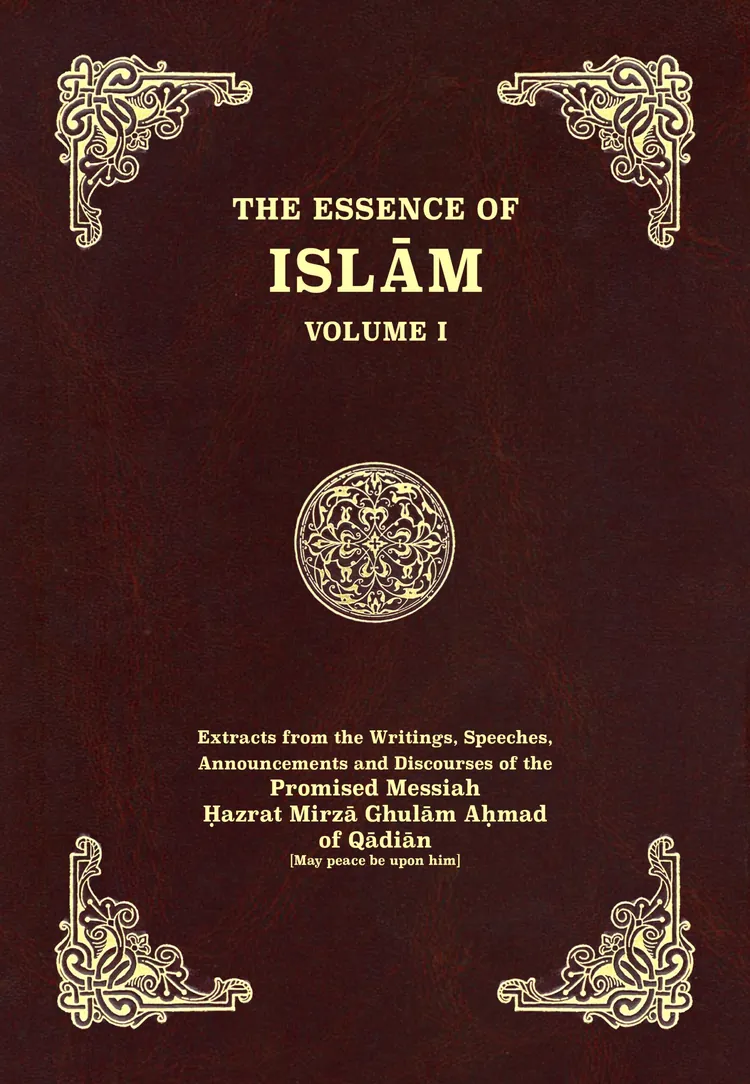
In this discourse from Essence of Islam (Volume 3), Hazrat Mirza Ghulam Ahmad (AS), the Promised Messiah and Mahdi, expounds upon Frequent Converse With God—the Only Claim of the Promised Messiah, presenting profound spiritual insights and scriptural verities.
Book Series: Essence of Islam (Volume 3)
Author: Hazrat Mirza Ghulam Ahmad of Qadian (AS)
Section: Part 5: Prophethood in Islam
Navigation: Book Table of Contents | « Previous: Prophethood by Way of Reflection | Next: Need for Reformers After the Perfection of Faith »
a new law, a new claim or a new name; but I am a Messenger and Prophet by virtue of perfect reflection. I am the mirror in which the form and the Prophethood of Muhammad are perfectly reflected. Had I been a claimant of distinct Prophethood, God Almighty would not have named me Muhammad and Ahmad and Mustafa and Mujtaba. Nor would I have been bestowed the title of Khatam-ul-Auliya’ [Seal of the Elect of God], resembling the title of the Seal of the Prophets. In such a case, I would have been given a separate name. But God Almighty admitted me completely into the being of Muhammad, so much so that He did not desire that I should have a separate name or a separate tomb, for a reflection cannot be separated from its original. Why did this come about? It came about because God had appointed the Holy Prophet (peace and blessings of Allah be upon him) as Seal of Prophets, and, in order to maintain the parallel between the Mosaic dispensation and the Muhammadi dispensation, it was necessary that the Muhammadi Messiah should be bestowed the dignity of Prophethood like the Mosaic Messiah, so that the Muhammadi Prophethood should not be considered deficient in any respect when compared to the Mosaic Prophethood. Therefore, God Almighty created me as a perfect reflection, and invested me with the reflection of Muhammadi Prophethood, so that in one aspect I should bear the title of Nabi’ullah [Prophet of God], and in another aspect the Seal of Prophethood should be safeguarded.
[Nuzul-ul-Masih, Ruhani Khaza’in, vol. 18, pp. 381-382, footnote]
[Essence of Islam, Vol. 3, p. 146]
Prophethood in Islam 147 false accusation. I do not claim any Prophethood that is barred by the Holy Qur’an. All I claim is that in one aspect I am a follower of the Holy Prophetsa and, in another, through the grace of the Prophethood of the Holy Prophet (peace and blessings of Allah be upon him), I am a Prophet. In my case Prophethood means only that I am frequently honoured with converse with God Almighty. The truth is as the revered reformer of Sarhind has recorded in his Maktubat: Though some individuals from among the Muslims are honoured with converse with the Divine and will continue to be so honoured, yet only he is called a Prophet who is so honoured most frequently and to whom the unseen is frequently disclosed. There is a prophecy in the Ahadith that there will appear among the Muslims one who will be called ‘Isa and Ibne-Maryam and will be designated a Prophet, that is to say, he will be so frequently honoured with converse with God and so much of the unseen will be disclosed to him as is not possible in the case of anyone except a Prophet as God Almighty has said:
عَٰلِمُ ٱلۡغَيۡبِ فَلَا يُظۡهِرُ عَلَىٰ غَيۡبِهِۦٓ أَحَدًا إِلَّا مَنِ ٱرۡتَضَىٰ مِن رَّسُولٖ فَإِنَّهُۥ يَسۡلُكُ مِنۢ بَيۡنِ يَدَيۡهِ وَمِنۡ خَلۡفِهِۦ رَصَدٗا
“He is the Knower of the unseen; and He reveals not His secrets to any one, Except to him whom He chooses, namely a Messenger of His. And then He causes an escort of guarding angels to go before him and behind him,” (Surah Al-Jinn, 72:27-28)
This means that: ‘God does not grant anyone clear and consistent ascendancy over His domain of the unseen, except him whom He chooses as His Messenger.’
It has been established that the bounty of converse with God and of disclosure of the unseen has been bestowed on me to a degree to which it has not been bestowed on anyone during the last thirteen hundred years. Should anyone challenge this, the onus of proof lies with him.In short, I alone have been honoured with so great a share of Divine revelation and of knowledge of the unseen as has not been bestowed on any of the Auliya’ and Abdal and Aqtab among the Muslims before me. For this reason I alone have been bestowed the title of Prophet and no one else has deserved it because it implies frequency of revelation and repeated disclosure of the unseen, a condition which was not fulfilled by any of them.
[Haqiqat-ul-Wahi, Ruhani Khaza’in, vol. 22, pp. 406-407]
[Essence of Islam, Vol. 3, p. 146]
My critic has further objected that God Almighty has said: 116
Therefore no reformer or Prophet is now needed. In so thinking the critic has raised an objection against the Holy Qur’an itself, inasmuch as the Holy Qur’an has promised the appointment of successors from among the Muslims and has said that through them faith would be strengthened, doubts would be set at rest and security would be restored after a state of fear. Thus if nothing is permissible after the perfection of the faith, then, according to the critic, the Khilafat that continued for thirty years after the Holy Prophetsa would also be rendered unnecessary, as the faith had been perfected and nothing more was needed. The citation of the verse 117 by the critic is out of place. We do not allege that a reformer or a Muhaddath detracts anything from the faith or adds anything to it. What we say is that when, after the lapse 116 ‘This day have I perfected your religion for you and completed My favour upon you.’—Al-Ma’idah, 5:4, [Publisher] 117 Ibid. Prophethood in Islam 149 of time, the holy teaching of the faith is covered with the dust of wrong thinking and the pure countenance of truth becomes hidden, then reformers, Muhaddathin and spiritual successors appear to reveal the true and beautiful countenance of the faith.
We do not know whence our poor critic has learnt that reformers and spiritual successors arrive for the purpose of adding to or abrogating the faith. Their purpose is not to abrogate but to display the light and brilliance of the faith. The conception of the critic that there is no such need reveals that he does not have much regard for the faith. He has never reflected on what Islam is, what its progress signifies, how its real progress can be achieved, and who can be considered a true Muslim. That is why he considers it enough that the Holy Qur’an being available, and there being a plethora of divines, the hearts of most people are automatically drawn to Islam and no reformer is needed. He does not appreciate the fact that reformers and spiritual successors are needed among the Muslims, in the same way as Prophets are needed among other people. It cannot be denied that Moses (peace be upon him) was a Prophet and a Messenger and that the Torah was a complete code for the children of Israel; and just as the Holy Qur’an contains the verse 118so does the Torah contain verses to the effect that the children of Israel have been given a perfect and glorious Book. The Holy Qur’an also describes the Torah as such. Yet hundreds of Prophets appeared among the children of Israel after the Torah, who brought no new book and whose function was to pull people who had departed 118 Ibid. from the teachings of the Torah back to it and to purify the hearts of those who had been afflicted with doubts, atheism and lack of faith. God the Exalted has affirmed in the Holy Qur’an:
وَلَقَدۡ ءَاتَيۡنَا مُوسَى ٱلۡكِتَٰبَ وَقَفَّيۡنَا مِنۢ بَعۡدِهِۦ بِٱلرُّسُلِ ۖ وَءَاتَيۡنَا عِيسَى ٱبۡنَ مَرۡيَمَ ٱلۡبَيِّنَٰتِ وَأَيَّدۡنَٰهُ بِرُوحِ ٱلۡقُدُسِ ۗ أَفَكُلَّمَا جَآءَكُمۡ رَسُولُۢ بِمَا لَا تَهۡوَىٰٓ أَنفُسُكُمُ ٱسۡتَكۡبَرۡتُمۡ فَفَرِيقٗا كَذَّبۡتُمۡ وَفَرِيقٗا تَقۡتُلُونَ
“And verily, We gave Moses the Book and caused after him Messengers to follow in his footsteps; and to Jesus, son of Mary, We gave manifest Signs, and strengthened him with the Spirit of holiness. Will you then, every time a Messenger comes to you with what you yourselves desire not, behave arrogantly and treat some as liars and slay others?” (Surah Al-Baqarah, 2:88)
That is: ‘We bestowed the Torah upon Mosesas and thereafter sent many Messengers in its support and to testify to its truth.’
ثُمَّ أَرۡسَلۡنَا رُسُلَنَا تَتۡرَا ۖ كُلَّ مَا جَآءَ أُمَّةٗ رَّسُولُهَا كَذَّبُوهُ ۖ فَأَتۡبَعۡنَا بَعۡضَهُم بَعۡضٗا وَجَعَلۡنَٰهُمۡ أَحَادِيثَ ۚ فَبُعۡدٗا لِّقَوۡمٖ لَّا يُؤۡمِنُونَ
“Then We sent Our Messengers one after another. Every time there came to a people their Messenger, they treated him as a liar. So We made them follow one another to destruction and We made them mere tales. Cursed, then, be the people who believe not!” (Surah Al-Mu’minun, 23:45)
That is: ‘Then, We sent Our Messengers one after the other.’ All these verses show that it is the way of Allah that after sending down His Book He sends Prophets in support of it. In support of the Torah sometimes as many as four hundred Prophets were sent at one and the same time; as testified by the Bible. The reason for sending so many Prophets is that God Almighty has warned emphatically that abiding hell is the punishment for denial of His Book; as is said:
وَٱلَّذِينَ كَفَرُواْ وَكَذَّبُواْ بِـَٔايَٰتِنَآ أُوْلَـٰٓئِكَ أَصۡحَٰبُ ٱلنَّارِ ۖ هُمۡ فِيهَا خَٰلِدُونَ
“But they who will disbelieve and treat Our Signs as lies, these shall be the inmates of the Fire; therein shall they abide.” (Surah Al-Baqarah, 2:40)
This means that: ‘Those who are disbelievers and reject Our signs are condemned to the fire and shall abide therein forever.’ Thus as the punishment of rejection of a Divine Book is so severe and the phenomenon of Prophethood and divine revelation is so difficult of comprehension, indeed
Prophethood in Islam 151 God Almighty Himself is so transcendent that unless the human eye is illumined by divine light it is not possible to achieve true and holy comprehension of Him, let alone the comprehension of Prophets and divine books, therefore, the Rahmaniyyat of God demanded that his blind and unseeing creatures should be helped very greatly, and it should not be considered enough that a Messenger and a Book having been sent, thereafter, despite the passage of a long period of time, the disbelievers may be committed to the everlasting torment of hell on account of the denial of such doctrines as later generations can comprehend as merely pure and excellent statements.
It should be clear to a thoughtful person that God, Who is Rahman [Gracious] and Rahim [Merciful], cannot, without convincing explanation, prescribe so great a punishment as condemnation to everlasting hell for people of different countries who have heard of the Qur’an and of the Holy Prophetsa after centuries and who, not being proficient in Arabic, cannot perceive the excellence of the Holy Qur’an. Nor can human conscience reconcile itself to the fact that a person may be condemned without being convinced that the Holy Qur’an is the Word of God. That is why God Almighty has promised that He will continue to appoint vicegerents so that they, being invested reflectively with the lights of Prophethood, should demonstrate the excellences of the Holy Qur’an and its holy blessings to the people and thus make them responsible for believing in it and acting upon it.
It should also be remembered that such exposition has to adopt different forms in every age, and that a reformer is equipped with the faculties, capacities and qualities which are suited to the reform of the mischief which is current in his time. Thus God Almighty will ever continue to do so, as long as He wills, so that reform and virtue may continue to flourish. These statements are not without proof and are testified by an unbroken series of precedents.
Apart from the Prophets, Messengers and Muhaddathin who appeared at different times in different countries, if one takes into account only those who appeared in Israel, it would be discovered that in the fourteen centuries between Mosesas and Jesusas, thousands of Prophets and Muhaddathin appeared and occupied themselves diligently in the service of the Torah. The Holy Qur’an and the Bible both testify to this. Those Prophets brought no new book and taught no new faith. They only served the Torah. They appeared whenever atheism, disbelief, misconduct, and hard-heartedness became prevalent in Israel.
It is a point to ponder that the Law of Mosesas was limited in its scope and was not meant for the whole of mankind, nor was it to last forever, yet God Almighty took care to send thousands of Prophets for the revival of that law and those Prophets exhibited such signs as enabled the children of Israel to behold God afresh. Then how can it be that Muslims, who have been designated the best of people, and are attached to the Best of the Prophets (peace and blessings of Allah be upon him) be accounted so unfortunate that God Almighty looked at them with mercy only for thirty years and after exhibiting heavenly lights to them during that time, turned His face away from them. Centuries passed after the departure of the Holy Prophetsa, and thousands of disorders arose, and great earthquakes were felt, and diverse forms of corruption spread, and a whole world mounted attacks against Islam, and all its blessings and miracles were denied, and Prophethood in Islam 153 that which was acceptable was declared unacceptable, and yet God Almighty never again looked upon the Muslims nor had mercy on them, nor did He consider that the Muslims were also weak human beings and, like the children of Israel, their plants also were in need of heavenly water. Could the Beneficent God, Who had sent the Holy Prophet (peace and blessings of Allah be upon him) to remove all corruption forever, turn away from the Muslims like this? Can we conceive that God Almighty was so merciful towards previous people and, having revealed the Torah, sent thousands of Prophets and Muhaddathin in support of the Torah and for the repeated revival of the hearts of the children of Israel, but that the Muslims were subject to His wrath and, therefore, after the revelation of the Holy Qur’an, He forgot them and left them forever to the reasoning and deduction of clerics? God clearly stated concerning Mosesas:وَرُسُلٗا قَدۡ قَصَصۡنَٰهُمۡ عَلَيۡكَ مِن قَبۡلُ وَرُسُلٗا لَّمۡ نَقۡصُصۡهُمۡ عَلَيۡكَ ۚ وَكَلَّمَ ٱللَّهُ مُوسَىٰ تَكۡلِيمٗا
“And We sent some Messengers whom We have already mentioned to thee and some Messengers whom We have not mentioned to thee — and Allah spoke to Moses particularly —” (Surah Al-Nisa’, 4:165)
رُّسُلٗا مُّبَشِّرِينَ وَمُنذِرِينَ لِئَلَّا يَكُونَ لِلنَّاسِ عَلَى ٱللَّهِ حُجَّةُۢ بَعۡدَ ٱلرُّسُلِ ۚ وَكَانَ ٱللَّهُ عَزِيزًا حَكِيمٗا
“Messengers, bearers of glad tidings and warners, so that people may have no plea against Allah after the coming of the Messengers. And Allah is Mighty, Wise.” (Surah Al-Nisa’, 4:166)
That is to say: ‘Allah spoke to Mosesas’ and ‘sent Messengers bearing glad tidings as well as warnings to help him and to testify to his truth, so that people may not have any excuse after that, and, after witnessing a host of Prophets, should believe in the Torah with all their heart.’ Then He says:
124
That is: ‘We sent many Messengers before thee, some of whom We have mentioned to thee and some We have not so mentioned.’
[Essence of Islam, Vol. 3]
But God made no such arrangement for the Muslims and withheld from them the mercy and grace He had bestowed upon the people of Mosesas! It is obvious that, with the passage of time, previous miracles and wonders became mere tales. Succeeding generations, finding themselves bereft of all such wonders, begin to entertain doubts about miracles and extraordinary happenings. Having the example of thousands of Prophets of Israel before them, the Muslims would be disheartened and, considering themselves unfortunate, would either envy the children of Israel or would consider the history of Israel also a chain of imaginary tales. It is idle to assert that, as there have been thousands of Prophets and many miracles have been shown in the past, the Muslims were in no need of extraordinary events and wonders and blessings and that is why God Almighty held everything of that kind back from the Muslims. This is the kind of thing that is asserted by those who have no regard for the faith. Man is very weak and always needs strengthening of faith. In this respect no help can be derived from selfconceived arguments. It is necessary to realize afresh that God exists. False belief, which is not effective in restraining a person from misconduct, may however continue to exist as a matter of speculation and form.
[Essence of Islam, Vol. 3, p. 148]
Book Series: Essence of Islam (Volume 3)
Author: Hazrat Mirza Ghulam Ahmad of Qadian (AS)
Section: Part 5: Prophethood in Islam
Navigation: Book Table of Contents | « Previous: Prophethood by Way of Reflection | Next: Need for Reformers After the Perfection of Faith »