
Prophethood by Way of Reflection — Essence of Islam Vol. 3
Introduction
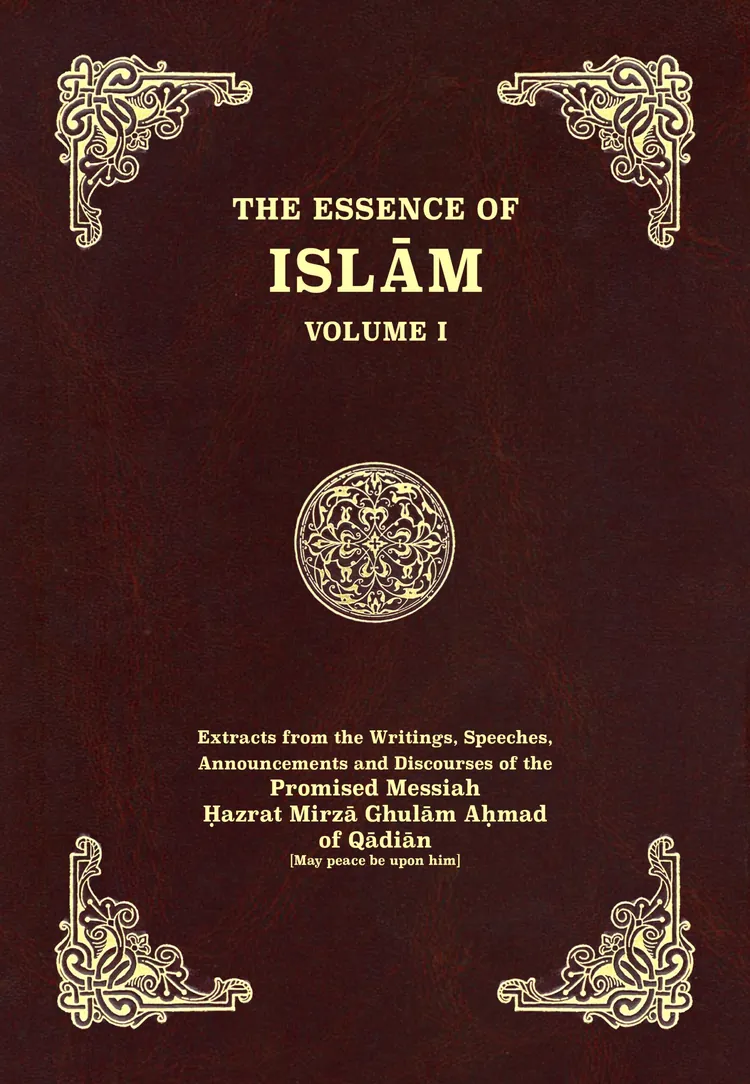
In this discourse from Essence of Islam (Volume 3), Hazrat Mirza Ghulam Ahmad (AS), the Promised Messiah and Mahdi, expounds upon Prophethood by Way of Reflection, presenting profound spiritual insights and scriptural verities.
Book Series: Essence of Islam (Volume 3)
Author: Hazrat Mirza Ghulam Ahmad of Qadian (AS)
Section: Part 5: Prophethood in Islam
Navigation: Book Table of Contents | « Previous: The Seal of Prophethood as the Perfect Man | Next: Frequent Converse With God—the Only Claim of the Promised Messiah »
Prophethood by way of zill [reflection], which is to receive Divine revelation through the grace of Muhammadsa, shall continue till the Judgement Day, so that the door of spiritual perfection should not be closed on mankind and the sign which the high resolve of the Holy Prophet (peace and blessings of Allah be upon him) desired—namely, that the doors of converse with God should remain open and the comprehension of the Divine, which is the basis of salvation, should not become extinct. [Haqiqat-ul-Wahi, Ruhani Khaza’in, vol. 22, pp. 29-30]. The question can be raised that as there have been many Prophets among the followers of Mosesas, it therefore follows that the status of Mosesas was higher than that of the Holy Prophetsa. The answer is that these Prophets were raised by God independently of Mosesas, but there have been thousands of saints through the blessing of following the Holy Prophet (peace and blessings of Allah be upon him), and also the one who was both a follower and a Prophet. There is no other instance of such bounteous grace in the case of any other Prophet. Among the followers of Mosesas, with the exception of the Prophets, most other people were spiritually imperfect, and the Prophets themselves were raised independently of Mosesas. But among Muslims thousands achieved sainthood by following the Holy Prophetsa alone.
[Haqiqat-ul-Wahi, Ruhani Khaza’in, vol. 22, p. 30, footnote]
[Essence of Islam, Vol. 3, p. 130]
When Maulavi Sahibzadah ‘Abdul Latif Sahib came to Qadian, not only did he have the advantage of listening to detailed reasons in support of my claim, but during the few months that he spent in my company in Qadian and Prophethood in Islam 131 during my journey to Jhelum when he was with me, he observed many heavenly signs in my support. By witnessing all these lights and extraordinary events, he was filled with rare certainty and was pulled upward by superior power. On one occasion, I explained a particular point to him which pleased him greatly. The point was that, as the Holy Prophet (peace and blessings of Allah be upon him) was the like of Mosesas and his Khulafa’ are the likes of the Prophets of Israel, then why is it that the Promised Messiah has been called a Prophet in the Ahadith while all other Khulafa’ have not been so named? I told him that as the Holy Prophet (peace and blessings of Allah be upon him) was the Seal of the Prophets and there was to be no Prophet after him, therefore, if all the Khulafa’ had been named Prophets, his being the Seal of the Prophets would have been put in doubt, and if no one of his followers had been designated a Prophet, his being the like of Mosesas would have been open to question, inasmuch as the Khulafa’ of Mosesas were Prophets. Therefore, Divine wisdom determined that a large number of Khulafa’ be sent down, but out of regard for the Seal of Prophethood, not be called Prophets, nor be granted the rank of Prophethood, so as to emphasize the Seal of Prophethood. Divine wisdom also determined that the last Khalifa, i.e., the Promised Messiah, should be designated as a Prophet, so that the two dispensations should be proved as being alike in the matter of Khilafat. I have pointed out several times that the Prophethood of the Promised Messiah is by way of reflection, inasmuch as he has been designated a Prophet by virtue of his being the perfect reflection of the Holy Prophet (peace and blessings of Allah be upon him.) In one of my revelations God Almighty has told me: ‘O Ahmad, you have been made a Messenger’; i.e., as you were held worthy of the name of Ahmad, by way of buruz [second coming], while your name was Ghulam Ahmad, in the same way you have been held worthy of the title of a Prophet by way of buruz, inasmuch as Ahmad is the Prophet and Prophethood cannot be separated from him.
[Tadhkirat-ush-Shahadatain, Ruhani Khaza’in, vol. 20, pp. 45-46]
[Essence of Islam, Vol. 3, p. 130]
If anyone should ask how there can be a Prophet among the Muslims when God has put an end to Prophethood, the answer would be that God, the Lord of Honour and Glory, has named me Prophet only as proof of the perfection of the Prophethood of the best of mankind. The perfection of the Holy Prophetsa would be established only by the proof of the perfection of his followers, for, in the absence of such proof, the claim of the perfection of the Holy Prophetsa would not be substantiated in the eyes of the wise. The only meaning of the Seal of Prophethood is that all the excellences of Prophethood achieved their climax in the person of the Holy Prophetsa. Of the great excellences of Prophethood, is the perfection of the Holy Prophetsa in respect of the conveyance of spiritual grace to his followers, which cannot be established without its manifestation among them. Besides, I have mentioned several times that in the design of God, Prophethood in my case means only the frequency of converse with God and this concept is accepted by the leaders of the Ahl-eSunnah.
[Al-Istifta, Ruhani Khaza’in, vol. 22, p. 637 footnote]
Thus the controversy is purely verbal. Therefore, O you who possess wisdom and understanding, do not hasten towards denial. Allah’s curse and the curse of Prophethood in Islam 133 mankind and of the angels be upon him who makes a claim beyond this even by as much as a particle.
[Essence of Islam, Vol. 3, p. 132]
The Divine revelation: 102
means that God felt that, because of its widespread corruption, mankind was in need of a grand reformer, so the Seal of God blessed a follower of the Holy Prophet (peace and blessings of Allah be upon him) with the rank of being a follower on the one hand, and a Prophet on the other. Allah the Exalted, bestowed upon the Holy Prophet (peace and blessings of Allah be upon him) the Seal for the purpose of conveying spiritual excellence, which had not been bestowed on any other Prophet and that is why he was named the Seal of Prophets. This means that obedience to the Holy Prophetsa bestows the excellences of Prophethood and his spiritual attention fashions Prophets. No other Prophet has been granted such spiritual power. This is the meaning of the Hadith: ‘The divines from among my people will be like the Prophets of Israel.’
There were many Prophets from among the children of Israel, but their Prophethood was not because of their obedience to Mosesas; rather it was a direct bounty from God. That is why they were not designated Prophets in one aspect and the followers of a Prophet in another, but 102 ‘What a grand task has been accomplished by the ‘feeling’ of God and His Seal.’ Note: This Urdu revelation contains the actual English word ‘feeling’. [Publisher] were called independent Prophets and the dignity of Prophethood was bestowed directly upon them. Leaving them aside, if we look at the rest of the children of Israel, we observe that they had very little guidance and righteousness. Few Auliya’ullah [friends of Allah] appeared among the followers of Mosesas and Jesusas. Most of them were disobedient, vicious and worshippers of the world. That is why the Torah and the Gospel make no mention of the evidence of their spiritual influence. The Torah frequently designates the companions of Mosesas as disobedient, hard-hearted, sinful and rebellious. The Holy Qur’an mentions that their disobedience had reached such a degree that on the occasion of a battle, their response to Mosesas was:قَالُواْ يَٰمُوسَىٰٓ إِنَّا لَن نَّدۡخُلَهَآ أَبَدٗا مَّا دَامُواْ فِيهَا فَٱذۡهَبۡ أَنتَ وَرَبُّكَ فَقَٰتِلَآ إِنَّا هَٰهُنَا قَٰعِدُونَ
“They said, ‘O Moses, we will never enter it so long as they remain in it. Therefore, go thou and thy Lord and fight, and here we sit.’” (Surah Al-Ma’idah, 5:25)
That is: ‘Go thou and thy Lord and fight the enemy; here we shall sit.’ Such was the measure of their disobedience. In contrast, the hearts of the companions of the Holy Prophet (peace and blessings of Allah be upon him) were so inspired by love of God, and they were so affected by the spiritual attention of the Holy Prophet (peace and blessings of Allah be upon him), that they sacrificed themselves in the cause of God like sheep and goats. Can anyone show us followers of any previous Prophet, who demonstrated such sincerity and devotion? We have mentioned the companions of Mosesas. Now let us turn to the Jesus’ disciples. One of them, Judas Iscariot, betrayed him in return for thirty pieces of silver. Peter, to whom had been committed the keys of heaven, cursed Jesus to his face
Prophethood in Islam 135 and the remaining disciples deserted Jesus at the time of his trial. Not one of them remained steadfast. They all turned out to be cowards. In contrast, the companions of the Holy Prophet (peace and blessings of Allah be upon him) demonstrated such steadfastness and were so reconciled to death that any mention of their devotion brings tears to one’s eyes.
What was it that inspired them with such devotion? Whose hand was it that brought about such a change in them? In their pre-Islamic ignorance, there was no sin and no wrong that they did not commit. On becoming the followers of the Holy Prophetsa, they were so drawn to God, as if God dwelt within them. I tell you truly that it was the spiritual attention of the Holy Prophetsa that pulled them out of a low life into a holy one. Those who later entered Islam in hosts did not do so under the threat of a sword. They did so in consequence of the sincere supplications and humble and passionate prayers which the Holy Prophet (peace and blessings of Allah be upon him) offered in Mecca for thirteen years, so that even the soil of Mecca confessed that it was under the blessed feet of him whose heart proclaimed the Unity of God so passionately that heaven was filled with his cries. God is Self-Sufficient. He does not care whether anyone is rightly guided or goes astray. The light of guidance which was so extraordinarily manifested in Arabia, and then spread to the rest of the world, was a consequence of the heartfelt desire of the Holy Prophet (peace and blessings of Allah be upon him.) Followers of every religion had digressed and strayed away from the spring of Tauhid [belief in the Unity of God] but it continued to flow in Islam. All these blessings were granted in answer to the supplications of the Holy Prophet (peace and blessings of Allah be upon him) as God Almighty has said:لَعَلَّكَ بَٰخِعٞ نَّفۡسَكَ أَلَّا يَكُونُواْ مُؤۡمِنِينَ
“Haply thou wilt grieve thyself to death because they believe not.” (Surah Al-Shu‘ara’, 26:4)
Meaning that: ‘Will you grieve yourself to death because they did not believe?’
The reason why the followers of previous Prophets did not achieve such a high grade in righteousness was that those Prophets did not have the same degree of concern and anguish for their followers as did the Holy Prophetsa. It is a pity that ignorant Muslims of this age do not appreciate the Holy Prophetsa as he deserves, and therefore they stumble at every step. They interpret the Seal of Prophethood in a manner that is derogatory of the Holy Prophet (peace and blessings of Allah be upon him) and does not hold him up to praise as if he had no power to bestow spiritual grace upon his followers or to help perfect them spiritually, and had been appointed merely to teach them the law. God Almighty has taught Muslims the prayer: 105If the Muslims are not the heirs of the previous Prophets and have no share in the favours that were bestowed upon them, why were they taught this prayer? It is a pity that Muslims, on account of their bigotry and ignorance, do not reflect duly on this verse. They are too eager to see Jesus descend from heaven, while the Holy Qur’an testifies that he is dead and was buried in Srinagar, Kashmir, as God Almighty has said:
105 ‘Guide us along the straight path, the path of those upon whom Thou has bestowed Thy favours.’—Al-Fatihah, 1:6-7 [Publisher] Prophethood in Islam 137 106
That is: ‘We delivered Jesus and his mother from the hands of the Jews and conveyed them to a region of high mountains which was a place of security and was watered with clear springs.’
[Haqiqat-ul-Wahi, Ruhani Khaza’in, vol. 22, pp. 99-104, footnote]
This was Kashmir. And this is why Mary’s tomb is not to be found in Palestine, and the Christians claim that she too disappeared like Jesus. How unjust it is of the ignorant Muslims to believe that the followers of the Holy Prophet (peace and blessings of Allah be upon him) are deprived of converse with God while at the same time they repeat the sayings of the Holy Prophet (peace and blessings of Allah be upon him) that among his people there will be those who will resemble the Prophets of Israel, and there will also be one who will be a Prophet in one aspect and the follower of the Holy Prophetsa in another. He would be the one who will be called the Promised Messiah.
[Essence of Islam, Vol. 3, p. 133]
I tell you truly that Islam is so patently true that if all the disbelievers of the world were to stand in prayer on one side, and I were to stand alone on the other, in supplication before God for a particular purpose, God will support me, not because I am better than all others, but because I believe sincerely in His Messenger and know that all Prophethood ended with him and that all law is comprised in his law. Yet one type of Prophethood has not ended, that is to say, the Prophethood which is granted in consequence of complete obedience to the Holy Prophet (peace and blessings of Allah be upon him)
and which is illumined by his lamp. This Prophethood has not ended inasmuch as it is a reflection of his Prophethood and is given through him and is his manifestation and receives grace from him. God is the enemy of whoever regards the Holy Qur’an as abrogated and follows a law opposed to the law of Muhammad and seeks to put his own law in practice and does not follow the Holy Prophetsa and seeks to set up himself in his place. But God loves him who makes the Holy Qur’an his code and regards the Holy Prophet (peace and blessings of Allah be upon him) as the Seal of the Prophets and knows that he is dependent upon his grace. Such a man becomes the beloved of God Almighty. God’s love pulls him towards Him and honours him with His converse and displays signs in his support. When such a person’s obedience to the Holy Prophetsa arrives at its climax, God bestows a Prophethood upon him which is a reflection of the Prophethood of Muhammad (peace and blessings of Allah be upon him), so that Islam may continues to remain fresh and alive through such people and should remain supreme over its opponents.
[Chashma-e-Ma‘rifat, Ruhani Khaza’in, vol. 23, pp. 339-341]
A foolish one, who is in truth an enemy of the faith, does not desire that converse with God should continue as a characteristic of Islam. He rather wishes that Islam too should become a dead religion like all the others; but that is not what God desires. In the revelation vouchsafed to me, God Almighty has employed the expression Prophet and Messenger concerning me hundreds of times, but these expressions mean only frequent converse with God which comprises the unseen. Everyone is entitled to use an expression in a particular sense. God too designates frequent experience of converse with Him as Prophethood, meaning that such converse comprises a Prophethood in Islam 139 great deal of that which is unseen. Accursed is he who claims to be a Prophet, but whose Prophethood is divorced from the grace of the Holy Prophet (peace and blessings of Allah be upon him.) The Prophethood that has been bestowed on me belongs to the Holy Prophet (peace and blessings of Allah be upon him) and is not a new Prophethood. Its only purpose is to make manifest to the world the truth of Islam and to display the righteousness of the Holy Prophet (peace and blessings of Allah be upon him.)
[Essence of Islam, Vol. 3, p. 137]
I believe truly and completely in God’s word: 107
This verse contains a prophecy of which our opponents are not aware: God Almighty affirms in this verse that, after the Holy Prophet (peace and blessings of Allah be upon him), the door of prophecy has been closed forever and that it is no longer possible that a Hindu or a Jain or a Christian or a nominal Muslim should be able to rightfully assume the title of Prophet. All doors of Prophethood have been closed except that of complete devotion to the Holy Prophetsa. He who approaches God through this door is clothed, by way of reflection, in the same mantle of Prophethood that is the mantle of the Prophethood of Muhammad. Therefore, his Prophethood is not a cause for jealousy, because he does not claim anything on his own account but acquires everything from the spring of the Holy Prophetsa. He is given the names Muhammad and Ahmad in heaven. This means 107 ‘….but he is the Messenger of Allah and the Seal of the Prophets.’—Al-Ahzab, 33:41 [Publisher] that the Prophethood of Muhammad is bestowed on Muhammad by way of reflection and on none other. The meaning of the verse: 108
is that: 109
In short, my Prophethood and Messengership is because of my being Muhammad and Ahmad and not because of my own self, and I have been given this name by virtue of my utter devotion to the Holy Prophetsa. Thus there is no contravention of the Seal of Prophethood, but the supposed descent of Jesus from heaven would certainly amount to such contravention. It should also be remembered that the literal meaning of ‘Nabi’ is one who discloses the unseen in consequence of being informed of it by God. Therefore, wherever this connotation is established, the title of Prophet would be justified. A Prophet is necessarily a Messenger, for if he is not a Messenger, he cannot be the recipient of knowledge of the unseen as indicated by the verse: 110 108 ‘Muhammad is not the father of any of your men, but he is the Messenger of Allah and the Seal of the Prophets.’—Al-Ahzab, 33:41 [Publisher] 109 ‘Muhammad is not the father of any man of the world, but he is the father of men of the hereafter because he is Seal of the Prophets, and there is no way of receiving Divine grace except through him.’ [Publisher] 110 ‘He reveals not His secrets to anyone, except to him whom He Prophethood in Islam 141 If it were held that there could be no Prophet in this connotation after the Holy Prophet (peace and blessings of Allah be upon him), it would follow that the Muslims are deprived of converse with the Divine; for he who discloses the unseen on the basis of knowledge bestowed upon him by God, would necessarily be a Prophet within the meaning of the above verse. In the same way, he who is sent by God Almighty must be designated a Messenger. The only distinction is that, after the Holy Prophet (peace and blessings of Allah be upon him), there cannot be any Prophet till the end of days who shall be the bearer of a new law, or who would be granted the title of a Prophet without having arrived at such a stage of utter devotion to the Holy Prophet (peace and blessings of Allah be upon him) wherein he is named Muhammad and Ahmad in heaven; 111
The key to this mystery is that the true connotation of the ‘Seal of the Prophets’ demands that if anyone calls himself a Prophet while there is the slightest distance between him and the Holy Prophetsa, will be guilty of contravening the Seal of Prophethood. But he who is so completely devoted to the Holy Prophetsa that, on account of his complete unity and the absence of any difference between them, he is given his name and reflects, like a bright mirror, the countenance of the Holy Prophetsa, then he would be called a Prophet without contravening the Seal, because he is Muhammad, though only by way of reflection. Thus, despite the claim of chooses, namely a Messenger of His.’—Al-Jinn, 72:27-28 [Publisher]
Prophethood by a person who is designated Muhammad and Ahmad, by way of reflection, our lord and master Muhammad would still be the Seal of the Prophets inasmuch as this second Muhammad is his reflection and bears his name. But Jesus cannot come without breaking that Seal, since his Prophethood is distinct from the Prophethood of the Holy Prophetsa. If no one can be a Prophet or a Messenger, even by way of reflection, then what is the purpose of the prayer: 112
I do not deny being a Prophet and a Messenger in this connotation. It is for the same reason that the Promised Messiah has been designated a Prophet in Sahih Muslim. If one who is bestowed knowledge of the unseen by God Almighty cannot bear the title of ‘Nabi’, how then should he be designated? If you say that such a one should be called Muhaddath, I would counter that no lexicon attributes to the word ‘Tahdith’ the meaning ‘disclosure of the unseen’, but Prophethood has this connotation. The word ‘Nabi’ [Prophet] is common to Arabic and Hebrew. In Hebrew it is called Nabi and is derived from the root Naba meaning to prophesize on the basis of knowledge derived from God. Nabi is not necessarily law-bearing. This is a Divine gift which carries with it knowledge of the unseen.
[Eik Ghalati ka Izalah, Ruhani Khaza’in, vol. 18, pp. 207-210]
[Essence of Islam, Vol. 3, p. 139]
All doors are closed except the one which has been opened by the Holy Qur’an. Now there is no need to follow the Prophets and Books of the past, inasmuch as the 112 ‘Guide us in the right path–the path of those upon whom Thou hast bestowed Thy blessings.’—Al-Fatihah, 1:6-7 [Publisher] Prophethood in Islam 143 Prophethood of Muhammad comprises all of them and all ways are closed except the way of this Prophethood. All verities that lead to God are comprised in the Holy Qur’an. No new verity will be disclosed after the Holy Qur’an, nor is there any verity which was disclosed before it and is not contained in it. Therefore, all Prophethood is closed with this Prophethood and so it should have been, for everything that has a beginning must have an end. But the Prophethood of Muhammad is not deficient in bestowing grace. Indeed it possesses this quality in a greater degree than all previous Prophethoods. By following this Prophethood a person easily attains nearness to God. Obedience to it makes one more worthy of the bounty of the love of God, and of converse with Him, than was the case with previous Prophethoods. But a perfect follower of this Prophethood cannot just be called a Prophet, for this would be an offence against the complete and perfect Prophethood of Muhammad. He can be called a Prophet and the follower of a Prophet at the same time, for this involves no offence against the complete and perfect Prophethood of Muhammad, but rather adds to its brightness. When converse with the Divine arrives at its climax, both quantitatively and qualitatively, and suffers from no impurity or deficiency and unequivocally comprehends the matters relating to the unseen, it is designated Prophethood. All Prophets are agreed on this. In short, it was not possible that a people about whom it was said: 113 113 ‘You are the best people raised for the benefit of mankind.’— and who were taught the prayer: 114
should have been deprived of this high rank and not one of them should have achieved it. In that case, not only would the Ummah have remained inferior and imperfect and like the blind, but also the spiritual grace of the Holy Prophet (peace and blessings of Allah be upon him) would have been deemed imperfect and tainted, and the prayer that the Muslims had been taught to repeat in their five daily prayers, would have proved purposeless. On the other hand, if this rank had been bestowed upon a Muslim directly and not through his following the light of the Prophethood of Muhammad, the significance of the Seal of Prophethood would have been obscured. Therefore, in order to safeguard the Muslims against both these contingencies, God Almighty bestowed the honour of perfect, complete and holy converse with Himself upon some individuals from among the Muslims who had arrived at the climax of devotion to the Holy Prophetsa. No intervening barrier remained and they illustrated in their person the meaning of being followers of the Holy Prophetsa in the true sense of the word, so much so that their own being gave place to the reflection of the Holy Prophetsa in the mirror of their devotion, and they were bestowed complete and perfect converse with God.
[Al-Wasiyyat, Ruhani Khaza’in, vol. 20, pp. 311-312]
In this way, some individuals from among the Muslims were bestowed the title of Prophet, for such a Prophethood is not distinct from the Prophethood of Al-e-‘Imran, 3:111 [Publisher] 114 ‘Guide us in the right path–The path of those upon whom Thou has bestowed Thy favours.’—Al-Fatihah, 1:6-7 [Publisher] Prophethood in Islam 145 Muhammad (peace and blessings of Allah be upon him); but if it is viewed carefully, it is the very Prophethood of Muhammad manifested in a new aspect. This is the meaning of the Holy Prophet (peace and blessings of Allah be upon him) having described the Promised Messiah as: which means that he will be a Prophet but he will also be from the Ummah. No outsider can be admitted to such a rank. Blessed is he who appreciates this point and saves himself from ruin.
[Essence of Islam, Vol. 3, p. 142]
What God requires of you, in the matter of belief, is that God is One and that Muhammad (peace and blessings of Allah be upon him) is His Prophet and the Seal of Prophets and is the greatest of them all. After him there is no Prophet except only one who is reflectively clothed in the mantle of Muhammadiyyat. Inasmuch as a servant cannot be separated from his master, nor is a branch separable from its root, he who is designated Prophet by God on account of his perfect devotion to his master does not contravene the Seal of Prophethood. Just as when you look into a mirror, there are not two of you but only one, although there appear to be two: the real one and the reflection. That is what God designated in the case of the Promised Messiah. This is also the meaning of the saying of the Holy Prophet (peace and blessings of Allah be upon him) that the Promised Messiah would be buried with him in the same grave; which means that they would be completely identical.
[Kashti-e-Nuh, Ruhani Khaza’in, vol. 19, pp. 15-16]
[Essence of Islam, Vol. 3, p. 145]
Remember, I am not a Messenger or Prophet by virtue of a new law, a new claim or a new name; but I am a Messenger and Prophet by virtue of perfect reflection. I am the mirror in which the form and the Prophethood of Muhammad are perfectly reflected. Had I been a claimant of distinct Prophethood, God Almighty would not have named me Muhammad and Ahmad and Mustafa and Mujtaba. Nor would I have been bestowed the title of Khatam-ul-Auliya’ [Seal of the Elect of God], resembling the title of the Seal of the Prophets. In such a case, I would have been given a separate name. But God Almighty admitted me completely into the being of Muhammad, so much so that He did not desire that I should have a separate name or a separate tomb, for a reflection cannot be separated from its original. Why did this come about? It came about because God had appointed the Holy Prophet (peace and blessings of Allah be upon him) as Seal of Prophets, and, in order to maintain the parallel between the Mosaic dispensation and the Muhammadi dispensation, it was necessary that the Muhammadi Messiah should be bestowed the dignity of Prophethood like the Mosaic Messiah, so that the Muhammadi Prophethood should not be considered deficient in any respect when compared to the Mosaic Prophethood. Therefore, God Almighty created me as a perfect reflection, and invested me with the reflection of Muhammadi Prophethood, so that in one aspect I should bear the title of Nabi’ullah [Prophet of God], and in another aspect the Seal of Prophethood should be safeguarded.
[Nuzul-ul-Masih, Ruhani Khaza’in, vol. 18, pp. 381-382, footnote]
[Essence of Islam, Vol. 3, p. 145]
Frequent Converse with God—the only Claim of the Promised Messiah In order to provoke the common people, my opponents allege that I lay claim to Prophethood. This is an utterly
[Essence of Islam, Vol. 3]
[Essence of Islam, Vol. 3, p. 146]
Book Series: Essence of Islam (Volume 3)
Author: Hazrat Mirza Ghulam Ahmad of Qadian (AS)
Section: Part 5: Prophethood in Islam
Navigation: Book Table of Contents | « Previous: The Seal of Prophethood as the Perfect Man | Next: Frequent Converse With God—the Only Claim of the Promised Messiah »