
Moral Qualities Related to Discarding Evil — Essence of Islam Vol. 3
Introduction
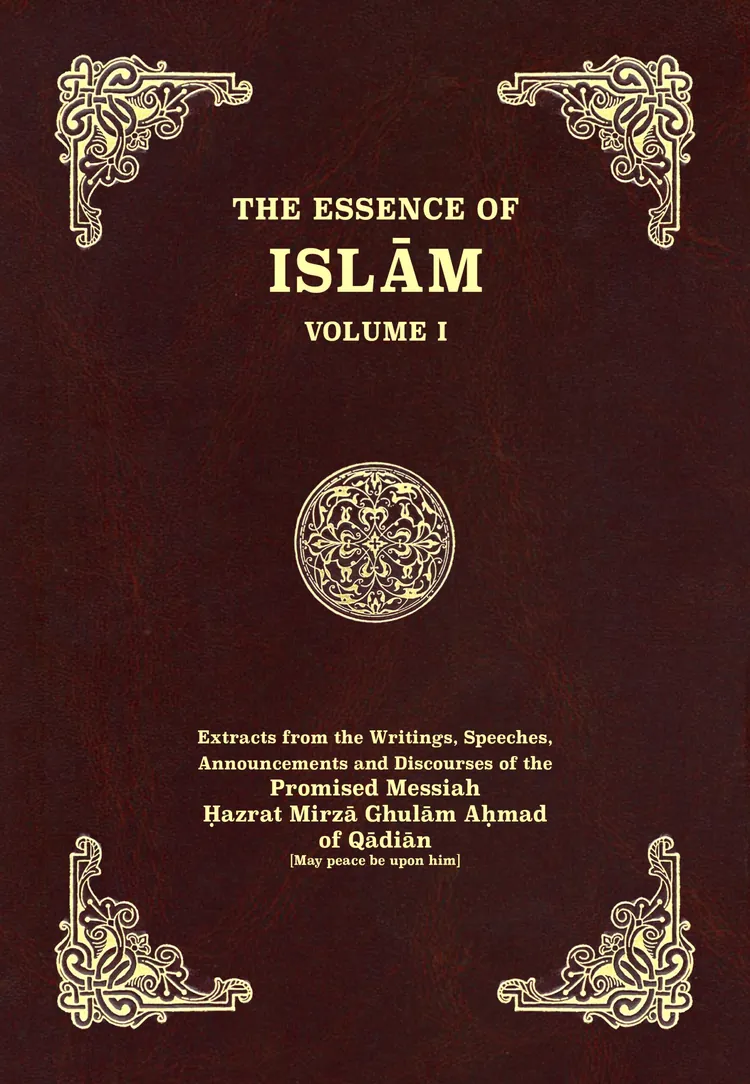
In this discourse from Essence of Islam (Volume 3), Hazrat Mirza Ghulam Ahmad (AS), the Promised Messiah and Mahdi, expounds upon Moral Qualities Related to Discarding Evil, presenting profound spiritual insights and scriptural verities.
Book Series: Essence of Islam (Volume 3)
Author: Hazrat Mirza Ghulam Ahmad of Qadian (AS)
Section: Part 1: Natural, Moral and Spiritual States of Man
Navigation: Book Table of Contents | « Previous: Moral State of Man | Next: Moral Qualities Related to Doing Good »
Natural, Moral and Spiritual States of Man 13 patience, benevolence, sincerity, loyalty, etc., when they find expression at their proper time and place, under the guidance of reason and reflection, are designated moral. All such qualities are in reality the natural states and emotions of the human person and they are designated as such only when exercised at their proper time and place.
[Islami Usul ki Philosophy, Ruhani Khaza’in, vol. 10, p. 333]
[Essence of Islam, Vol. 3, p. 13]
Moral State of Man Moral qualities are of two kinds. First, those moral qualities that enable a person to discard evil and, secondly, those moral qualities that enable him to do good. Discarding evil includes those moral qualities through which a person tries that he should cause no harm to the person, property, honour or life of another person by his tongue, hand, eyes or any other organ, nor should he intend to cause any harm or humiliation. Doing good comprises all those morals through which a person tries to benefit the property or honour of another person through his tongue or hand or property or knowledge or through other means, or even intends to do so. Or he overlooks if anyone had done him any harm, for which the perpetrator deserved to be punished, and thus saves him from suffering physical torment, or financial loss; or tries to award him the punishment which in reality proves to be a blessing in disguise for the culprit.
[Islami Usul ki Philosophy, Ruhani Khaza’in, vol. 10, pp. 339-340]
[Essence of Islam, Vol. 3, p. 13]
It should be clear that the moral qualities that the True Creator has prescribed for discarding evil are known by four names in Arabic, which has a specific name for all human ideas, actions and morals. The first moral quality for discarding evil is known as Ihsan. This term connotes the particular kind of chastity which relates to the procreative power of man and woman. Muhsin and Muhsinah respectively connote the man or woman who abstains from illicit sex or its preliminaries, the consequence of which for both is disgrace and curse in this world and torment in the hereafter; and for their relatives it is quite damaging, as well as a source of disgrace….
Remember, the moral quality of Ihsan or chastity or sexual purity, can be called moral only when a person, who is capable of ogling or fornicating restrains himself from it. If a person lacks manhood, on account of immaturity, impotence, being a eunuch or because of old age, we cannot credit him with this particular moral quality known as chastity….
God Almighty has not only commanded chastity, but has also prescribed five remedies to safeguard it, namely, abstaining from looking at those whom we are not allowed to, or hearing their voices, or listening to stories about them and avoiding participating in all those occasions which are likely to lead to evil, and fasting, if one is unmarried.
We can confidently claim that this excellent teaching with all its details, as set out in the Holy Qur’an, is peculiar to Islam alone….
Of the various forms of discarding evil, the second is the virtue known as Amanat and Diyanat [honesty and integrity], which is the indisposition to harm anyone by taking possession of his property mischievously and dishonestly. It should be clear that honesty and integrity constitute a natural human condition. That is why a child, Natural, Moral and Spiritual States of Man 15 which is by nature simple and naïve, and, because of its young age, has not yet acquired any bad habits, dislikes what belongs to others; so much so that it is with great difficulty that it allows a strange woman to breastfeed it. If a wet-nurse is not appointed early enough, it becomes very difficult for another woman to suckle the baby, and in such a case the child suffers so much that its very life is endangered. It is naturally averse to the milk of another woman. What is the secret of this aversion? Only that it has an innate aversion to leave its mother and turn to what belongs to a stranger. When we reflect deeply upon this habit of the infant it becomes clear that this characteristic of disliking what belongs to a stranger, and even suffering because of it, is the source of honesty and integrity. No one can be credited with the quality of integrity unless, like the infant, he develops in his heart a deep dislike and abhorrence for the possession of another person’s property. But an infant does not employ this habit on its proper occasion and often suffers a great deal on account of its ignorance. This habit is a natural mode of behaviour, which it exhibits involuntarily; it cannot, therefore, form part of its morals, though in human nature this is the root cause of the moral values of honesty and integrity. Just as an infant cannot be described as faithful and trustworthy on account of this unconscious habit, similarly a person who does not employ this natural state on its proper occasion, cannot be said to possess this moral quality.
To be honest and trustworthy is a very delicate matter and a person cannot be honest and trustworthy unless he fulfils all aspects of it. In the following verses God, by way of illustration, teaches us how to be honest:وَلَا تُؤۡتُواْ ٱلسُّفَهَآءَ أَمۡوَٰلَكُمُ ٱلَّتِي جَعَلَ ٱللَّهُ لَكُمۡ قِيَٰمٗا وَٱرۡزُقُوهُمۡ فِيهَا وَٱكۡسُوهُمۡ وَقُولُواْ لَهُمۡ قَوۡلٗا مَّعۡرُوفٗا وَٱبۡتَلُواْ ٱلۡيَتَٰمَىٰ حَتَّىٰٓ إِذَا بَلَغُواْ ٱلنِّكَاحَ فَإِنۡ ءَانَسۡتُم مِّنۡهُمۡ رُشۡدٗا فَٱدۡفَعُوٓاْ إِلَيۡهِمۡ أَمۡوَٰلَهُمۡ ۖ وَلَا تَأۡكُلُوهَآ إِسۡرَافٗا وَبِدَارًا أَن يَكۡبَرُواْ ۚ وَمَن كَانَ غَنِيّٗا فَلۡيَسۡتَعۡفِفۡ ۖ وَمَن كَانَ فَقِيرٗا فَلۡيَأۡكُلۡ بِٱلۡمَعۡرُوفِ ۚ فَإِذَا دَفَعۡتُمۡ إِلَيۡهِمۡ أَمۡوَٰلَهُمۡ فَأَشۡهِدُواْ عَلَيۡهِمۡ ۚ وَكَفَىٰ بِٱللَّهِ حَسِيبٗا
“And give not to the foolish your property which Allah has made for you a means of support; but feed them therewith and clothe them and speak to them words of kind advice. And prove the orphans until they attain the age of marriage; then, if you find in them sound judgment, deliver to them their property; and devour it not in extravagance and haste against their growing up. And whoso is rich, let him abstain; and whoso is poor, let him eat thereof with equity. And when you deliver to them their property, then call witnesses in their presence. And Allah is sufficient as a Reckoner.” (Surah Al-Nisa’, 4:6-7)
وَلۡيَخۡشَ ٱلَّذِينَ لَوۡ تَرَكُواْ مِنۡ خَلۡفِهِمۡ ذُرِّيَّةٗ ضِعَٰفًا خَافُواْ عَلَيۡهِمۡ فَلۡيَتَّقُواْ ٱللَّهَ وَلۡيَقُولُواْ قَوۡلٗا سَدِيدًا إِنَّ ٱلَّذِينَ يَأۡكُلُونَ أَمۡوَٰلَ ٱلۡيَتَٰمَىٰ ظُلۡمًا إِنَّمَا يَأۡكُلُونَ فِي بُطُونِهِمۡ نَارٗا ۖ وَسَيَصۡلَوۡنَ سَعِيرٗا
“And let those fear God who, if they should leave behind them their own weak offspring, would be anxious for them. Let them, therefore, fear Allah and let them say the right word. Surely, they who devour the property of orphans unjustly, only swallow fire into their bellies, and they shall burn in a blazing fire.” (Surah Al-Nisa’, 4:10-11)
Translation: ‘If there is a rich person among you who is not mentally fit, e.g., an orphan, or a minor, and there is a risk that he will waste his property due to imbecility, take charge of the property (as court of wards) and do not hand over the property which can be used for trade and commerce to the feeble-minded. But feed them and clothe them properly as required and speak to them appropriately, that is, teach them things that add to their understanding and skills until they are no longer ignorant and inexperienced. If they are the progeny of a trader, teach them trade, and if their parents belonged to another profession, train them accordingly. In short, train them and keep testing them to make sure that your training is not in vain, until they reach the marriageable age, i.e., the age of 18. Then if you find them capable of managing their own property, hand it over to them. Do not squander away their property. Nor, for that matter, should you hasten to consume their belongings fearing that they will come asking for it when they grow up. A person who is rich should not take any compensation for
Natural, Moral and Spiritual States of Man 17 managing the property, but one who is needy can do so only to the extent allowed by custom.’ It was customary among the Arabs that they only accepted a part of the profits of the property of orphans and left the principal intact. The same in indicated here. Then it is said: ‘When you deliver their property to them, do so in the presence of witnesses. And if a person dies, leaving behind weak and minor children, he should not make a will that does injustice to the children. Those who devour the property of orphans in a manner unjust to the orphans do not devour property, rather they swallow fire and they shall be cast into a blazing fire’. In these verses, Allah the Most High has listed comprehensively all the ways of being dishonest, and no type of dishonesty has been left out. God did not merely forbid stealing, lest an ignorant one should think that theft alone was unlawful for him and that all other improprieties were permitted. Declaring all dishonest acts unlawful is true wisdom.
In short, if a person does not possess the qualities of integrity and honesty with full awareness of their implications, even if he does appear to exercise integrity and honesty in certain matters, this behaviour of his will not be considered moral. Instead it will be a natural state lacking rational awareness and insight. The third moral quality in the context of renouncing evil is called Hudnah and Haun in Arabic, which means not to inflict physical suffering on anyone wrongfully, to be harmless, and to live peacefully. Peacefulness is undoubtedly a high moral quality and is a must for mankind. The natural faculty corresponding to this moral quality possessed by a child, the regulation of which produces this moral quality, is affection, or malleability. In his natural state, when man is deprived of reason, he can neither understand the subject of peace nor the concept of making war. At that time the impulse of attachment found in him is the root of peacefulness. But, as it is not exercised because of reason, reflection and choice, it cannot be called moral. It would become moral only when a person chooses to be harmless and employs the moral quality of peacefulness on its proper occasion and refrains from employing it out of place. In this context the Divine teaching is: 9That is: ‘Try to promote accord among yourselves.’ ‘Goodness lies in reconciliation.’ ‘If they incline towards peace, incline thou also towards it.’ ‘The true servants of the Gracious Lord are those who walk upon earth in peace.’ ‘When they happen to hear anything impertinent which portends argument or spells trouble, they pass on with quiet dignity and do not pick up fights on minor matters.’ This means that, unless faced with extreme repression, they do not like to protest. These indeed are the 9 (i)Al-Anfal, 8:2 (ii)Al-Nisa’, 4:129 (iii)Al-Anfal, 8:62 (iv)Al-Furqan, 25:64 (v)Al-Furqan, 25:73 (vi)Ha Mim Al-Sajdah, 41:35 [Publisher] Natural, Moral and Spiritual States of Man 19 proprieties of peacefulness that one should ignore trivialities and be ready to forgive. The term ‘laghv’, according to Arabic lexicon, means the certain kind of behaviour, for instance, when a mischief monger indulges in loose talk or does something to cause harm, but in fact is unable to cause harm or create trouble; hence it is the sign of peacefulness to condone such senseless misdemeanour.
The fourth form of renouncing evil consists in Rifq and Qaul-i-Hasan [gentleness and politeness] and the natural state that gives birth to this quality is called Talaqat, or cheerfulness. Until a child learns to speak, it displays cheerfulness in place of courtesy and politeness. This shows that the root of courtesy is cheerfulness. Cheerfulness is a natural faculty and courtesy is a moral quality that is generated by the proper use of this faculty. In this context the teaching of God Almighty is: 10Translation: ‘Say to people that which is really good.’ ‘Let not one people laugh at another people; it may well be that those who are laughed at are really praiseworthy. Let one group of women not deride other women; it is possible that those who are mocked at are really good. Do not cast aspersions and do not address your fellow 10 (i)Al-Baqarah, 2:84 (ii)Al-Hujurat, 49:12 (iii)Al-Hujurat, 49:13
[Essence of Islam, Vol. 3]
(iv) Bani Isra’il, 17:37 [Publisher] men with offensive names.’ ‘Do not spread doubts and suspicions, nor should you be curious about other people’s faults. Do not complain or grumble. ‘Do not accuse anyone without proof. Remember, every organ of the body will be called to account. The ear, the eye and the heart shall all be answerable.’
[Essence of Islam, Vol. 3, p. 13]
Book Series: Essence of Islam (Volume 3)
Author: Hazrat Mirza Ghulam Ahmad of Qadian (AS)
Section: Part 1: Natural, Moral and Spiritual States of Man
Navigation: Book Table of Contents | « Previous: Moral State of Man | Next: Moral Qualities Related to Doing Good »