
The Meaning of Istighfar — Essence of Islam Vol. 2
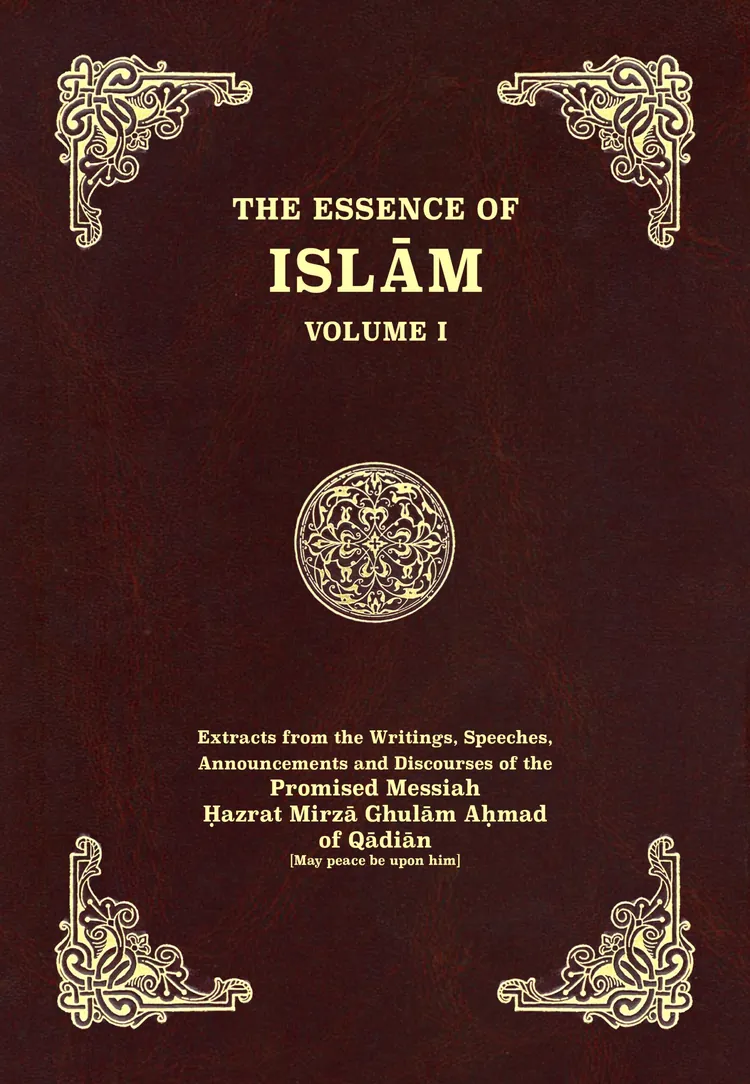
Introduction
In this discourse from Essence of Islam (Volume 2), Hazrat Mirza Ghulam Ahmad (AS), the Promised Messiah and Mahdi, expounds upon The Meaning of Istighfar, presenting profound spiritual insights and scriptural verities.
Book Series: Essence of Islam (Volume 2)
Author: Hazrat Mirza Ghulam Ahmad of Qadian (AS)
Section: Part 6: Repentance and Seeking Forgiveness
Navigation: Book Table of Contents | « Previous: Three Conditions for Repentance | Next: Priority of Istighfar Over Repentance »
The second condition is remorse. Everyone’s conscience admonishes him over every evil, but an unfortunate person leaves his conscience suspended. So a sinner should express remorse over his sin and evil action and should reflect that the pleasure to be derived from them is temporary. He should also consider that every time there is a decline in that pleasure and that in the end, in old age when his faculties are weakened, he will perforce have to give up all these pleasures. Then why indulge in that which in the end has to be given up anyhow? Most fortunate is the person who turns in repentance and becomes determined to discard all corrupt thoughts and vile fancies. When he gets rid of this impurity, he should be remorseful. The third condition is a firm resolve that he will not revert to those vices. If he adheres to this resolve, God will bestow upon him the strength for true repentance and he will be rid altogether of his vices which will be replaced by good morals and praiseworthy actions. This is a moral victory. It is for God Almighty to bestow the power and strength for it for He is the Master of all power and all strength, as He has said: 80
[Malfuzat, vol. I, pp. 138-40]
[Essence of Islam, Vol. 2, p. 241]
The true meaning of Istighfar is to supplicate God that no human weakness should be manifested and that God might support nature with His strength and might enclose it in the circle of His help and protection. The root of
Istighfar is ghafara, which means to cover up. Thus, the meaning of Istighfar is that God should cover up the natural weakness of the supplicant with His power. This meaning is then enlarged to include the covering up of a sin that has been committed, but the true meaning is that God should safeguard the supplicant against his natural weakness and should bestow upon him power from His power, and knowledge from His knowledge, and light from His light.
Having created man, God has not become separated from him, but as He is man’s Creator and the Creator of all his external and internal faculties, He is also All-Sustaining, that is to say, He safeguards with His support everything that He has created. It is, therefore, necessary for man that as he has been created by God, he should seek to safeguard the features of his creation through the AllSustaining attribute of the Divine…. Thus this is a natural need of man for which he has been directed to carry out Istighfar. This is referred to in the verse: 81…. He is both Creator and All-Sustaining. When man was created, the function of creation was completed, but the function of sustaining is forever and that is why Istighfar is needed all the time. Every attribute of God possesses a grace and Istighfar is needed for winning the grace of the attribute of ‘All-Sustaining’. The same is indicated in the verse of Surah Fatihah:
إِيَّاكَ نَعۡبُدُ وَإِيَّاكَ نَسۡتَعِينُ
“Thee alone do we worship and Thee alone do we implore for help.” (Surah Al-Fatihah, 1:5)
81 ‘Allah – there is no God but He, the Living, the Self-Subsisting and All-Sustaining.’—Al-Baqarah, 2:256 [Publisher] This means that: we worship Thee alone and implore Thee alone for help. Thy attributes of Providence and All-Sustaining should help us and should safeguard us against stumbling, lest our weakness may become manifest and we should fall short of worshipping Thee. It is thus obvious that the true meaning of Istighfar is not that a default has occurred, but that no default should occur. Human nature finding itself weak naturally seeks strength from God, as a child seeks milk from its mother. As God has bestowed upon man from the beginning, tongue, eyes, heart, and ears, etc., so He has bestowed upon him from the beginning the desire for Istighfar and has made him feel that he is dependent upon God for help. This is indicated in the verse: 83
This means that the Holy Prophet (peace and blessings of Allah be on him) was directed to supplicate that his nature should be safeguarded against human weakness and should be so strengthened that that weakness should not become manifest. He was also directed to supplicate by way of intercession on behalf of the men and women who believed in him that they should be safeguarded against the punishment for the defaults that might have been committed by them and that during the rest of their lives they should be safeguarded against sin.
This verse comprises a very high philosophy of protection against sin and intercession. It indicates that a person can achieve a high stage of protection against sin and win83 ‘Ask forgiveness for thy frailties, and for believing men and believing women.’—Muhammad, 47:20 [Publisher]
[Review of Religions—Urdu, vol. I, pp. 187-190]
[Essence of Islam, Vol. 2, p. 241]
Book Series: Essence of Islam (Volume 2)
Author: Hazrat Mirza Ghulam Ahmad of Qadian (AS)
Section: Part 6: Repentance and Seeking Forgiveness
Navigation: Book Table of Contents | « Previous: Three Conditions for Repentance | Next: Priority of Istighfar Over Repentance »