
The Second Source: The Self-Reproaching Self — Essence of Islam Vol. 3
Introduction
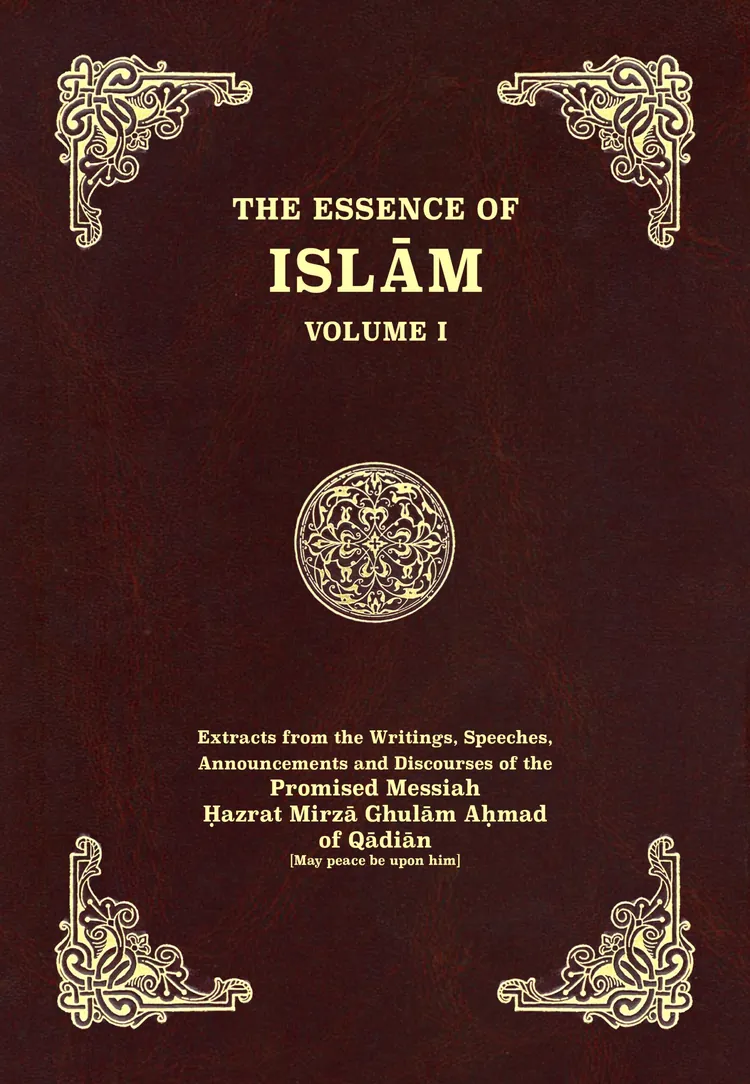
In this discourse from Essence of Islam (Volume 3), Hazrat Mirza Ghulam Ahmad (AS), the Promised Messiah and Mahdi, expounds upon The Second Source: The Self-Reproaching Self, presenting profound spiritual insights and scriptural verities.
Book Series: Essence of Islam (Volume 3)
Author: Hazrat Mirza Ghulam Ahmad of Qadian (AS)
Section: Part 1: Natural, Moral and Spiritual States of Man
Navigation: Book Table of Contents | « Previous: The First Source—the Self That Incites to Evil | Next: The Third Source: The Soul at Rest »
1
This means that it is a characteristic of Nafs-e-Ammarah that it incites man to evil—which is contrary to his excellence, and goes against his moral condition—and seeks to lead him to undesirable and sinful ways. Thus, to be drawn towards intemperance and evil is the natural state which dominates man until the moral state takes over and he begins to be guided by reason and understanding. Until that happens, he continues to follow his natural instincts in eating, drinking, sleeping, walking, anger and emotion etc. When, under the direction of reason and understanding, he begins to control his natural states and creates a balance, it is at this point that the three states cease to be natural and come to be known as moral, as we shall elaborate later. The source of moral state, according to the Holy Qur’an , is Nafs-e-Lawwamah [the self-reproaching self.] Allah says in the Holy Qur’an:
وَلَآ أُقۡسِمُ بِٱلنَّفۡسِ ٱللَّوَّامَةِ
“And I do call to witness the self-accusing soul, that the Day of Judgment is a certainty.” (Surah Al-Qiyamah, 75:3)
This means that: ‘I call to witness the self which reproaches itself over misdeeds and all acts of intemperance.’ Nafs-e-Lawwamah [the self-reproaching self] is the second source of human states; it gives birth to moral conditions and, at this stage, man is emancipated from his resemblance to animals. In the above verse, Nafs-eLawwamah has been called to witness for the purpose of
Natural, Moral and Spiritual States of Man 3 dignifying it. Which means that because of his progress from Nafs-e-Ammarah to Nafs-e-Lawwamah, a person becomes worthy of being admitted to Divine presence. It is called ‘self-reproaching’ because it rebukes man on vice and does not approve of him following his natural inclinations and leading the life of animals. It desires that he should adopt good conduct, exhibit good morals, display no intemperance and that his natural emotions and desires should be manifested under the direction of reason. As it rebukes man over vice, it is called the selfreproaching self. But although it does not approve of natural desires and rebukes itself, it does not have complete power to do good and is at times overcome by natural passions; hence it is likely to fall and stumble. It is very much like a frail child who does not want to fall, but falls because it is weak, and it is ashamed of its weakness. In short, this is the moral state which seeks to attain high moral qualities and is disgusted with being selfwilled, yet it cannot assert itself completely.
[Essence of Islam, Vol. 3]
[Essence of Islam, Vol. 3, p. 2]
Book Series: Essence of Islam (Volume 3)
Author: Hazrat Mirza Ghulam Ahmad of Qadian (AS)
Section: Part 1: Natural, Moral and Spiritual States of Man
Navigation: Book Table of Contents | « Previous: The First Source—the Self That Incites to Evil | Next: The Third Source: The Soul at Rest »