
The Third Source: The Soul at Rest — Essence of Islam Vol. 3
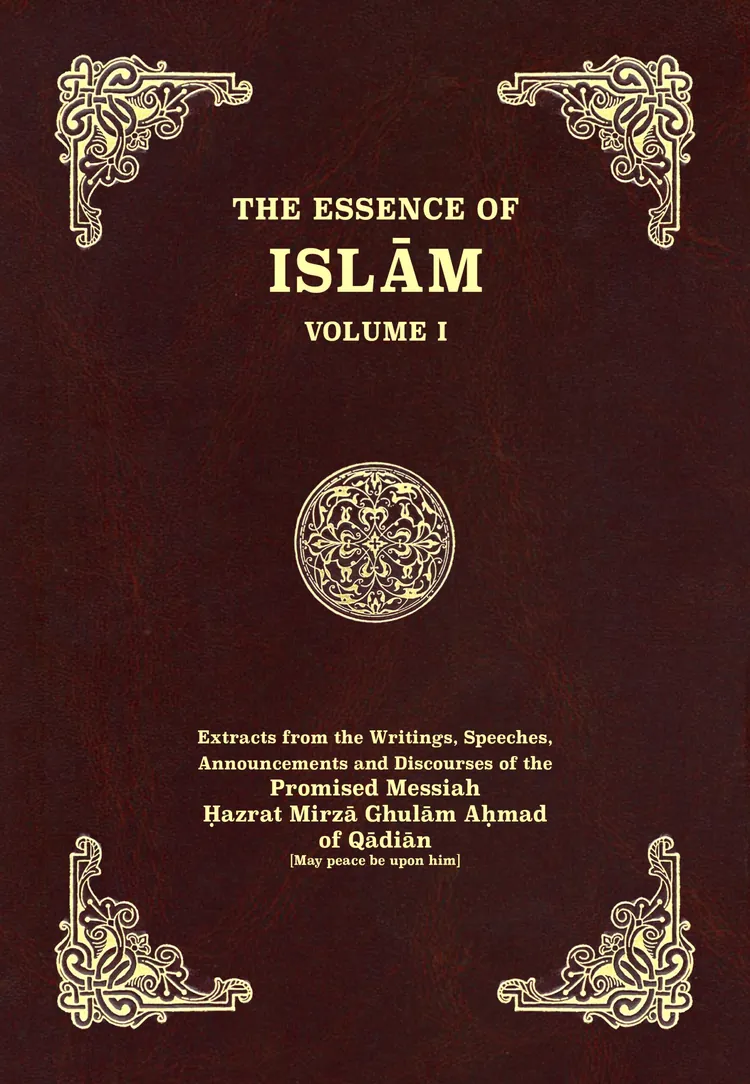
Introduction
In this discourse from Essence of Islam (Volume 3), Hazrat Mirza Ghulam Ahmad (AS), the Promised Messiah and Mahdi, expounds upon The Third Source: The Soul at Rest, presenting profound spiritual insights and scriptural verities.
Book Series: Essence of Islam (Volume 3)
Author: Hazrat Mirza Ghulam Ahmad of Qadian (AS)
Section: Part 1: Natural, Moral and Spiritual States of Man
Navigation: Book Table of Contents | « Previous: The Second Source: The Self-Reproaching Self | Next: Natural and Moral States of Man »
Natural, Moral and Spiritual States of Man
يَـٰٓأَيَّتُهَا ٱلنَّفۡسُ ٱلۡمُطۡمَئِنَّةُ ٱرۡجِعِيٓ إِلَىٰ رَبِّكِ رَاضِيَةٗ مَّرۡضِيَّةٗ فَٱدۡخُلِي فِي عِبَٰدِي وَٱدۡخُلِي جَنَّتِي
“And thou, O soul at peace! Return to thy Lord well pleased with Him and He well pleased with thee. So enter thou among My chosen servants, And enter thou My Garden.” (Surah Al-Fajr, 89:28-31)
dignifying it. Which means that because of his progress from Nafs-e-Ammarah to Nafs-e-Lawwamah, a person becomes worthy of being admitted to Divine presence. It is called ‘self-reproaching’ because it rebukes man on vice and does not approve of him following his natural inclinations and leading the life of animals. It desires that he should adopt good conduct, exhibit good morals, display no intemperance and that his natural emotions and desires should be manifested under the direction of reason. As it rebukes man over vice, it is called the selfreproaching self. But although it does not approve of natural desires and rebukes itself, it does not have complete power to do good and is at times overcome by natural passions; hence it is likely to fall and stumble. It is very much like a frail child who does not want to fall, but falls because it is weak, and it is ashamed of its weakness. In short, this is the moral state which seeks to attain high moral qualities and is disgusted with being selfwilled, yet it cannot assert itself completely. Then there is a third source, which signifies the beginning of the spiritual state. The Holy Qur’an describes it as Nafs-e-Mutma’innah [the soul at rest]; it says: 3
(Part 30, Ruku‘ 14) This means that: ‘O tranquil soul that has found peace in God, return to thy Lord well pleased with Him as He is well pleased with thee. Join My chosen servants and
enter My Paradise.’ This is the stage at which the soul, having been delivered from all weakness, is filled with spiritual strength and has such a relationship with God Almighty that it cannot live without Him. Just as water flows downwards and rushes forth because of its sheer volume, and removes all obstacles in its way, so does the soul flow towards God. It is to this state that the Divine injunction refers: ‘O soul that has found peace in God, return to Him.’ It brings about a great transformation, not only after death, but also in this very life, and is granted a paradise in this world even before the hereafter. As indicated in the above verse, such a soul is directed to return to its Lord the Nourisher, for He nurtures it. His love becomes its sustenance, and it drinks from the same life-giving spring. Thus it is delivered from death, as Almighty Allah says in the Holy Qur’an:
قَدۡ أَفۡلَحَ مَن زَكَّىٰهَا وَقَدۡ خَابَ مَن دَسَّىٰهَا
“He indeed truly prospers who purifies it, And he who corrupts it is ruined.” (Surah Al-Shams, 91:10-11)
That is, He who cleanses his self of earthly passions shall be saved and will not perish, but he who is lost in such sensual desires shall lose hope in life. In short, these are the three states, which may be called the natural, moral and spiritual states. Since natural urges become dangerous when aroused and very often destroy morality and spirituality, they have been described in the Holy Book of God Almighty as Nafs-e-Ammarah [the self that incites to evil.] If it is asked how the Holy Qur’an affects these natural states of man and what guidance it furnishes about them, and to what extent it
Natural, Moral and Spiritual States of Man 5 seeks to retain them, then let it be known that, according to the Holy Qur’an, the physical states of man are closely related to his moral and spiritual states. Even a man’s habits and his way of eating and drinking affect his moral and spiritual states. If the physical states are exercised under the direction of Divine law, then, just as everything becomes salty in a salt mine, these natural states become moral states and have a deep impact on spirituality. That is why the Holy Qur’an has placed so much stress on physical cleanliness, proprieties and temperance in connection with all kinds of worship, as well as on inner purity for the purpose of attaining righteousness and humility. When we ponder over it, it becomes clear that physical conditions deeply affect the soul. We can see that our outward actions, though apparently physical in nature, have a great effect on our spiritual condition. For instance, when our eyes shed tears, even if by way of affectation, the tears immediately affect the heart, which becomes sorrowful. In the same way, when we laugh, even if for show, the heart begins to feel cheerful. It is also observed that physical prostration generates humility in the soul, and when we strut about with our head raised and chest pushed out, this attitude generates a kind of arrogance and vanity. These illustrations demonstrate how physical conditions directly affect spiritual ones.
[Islami Usul ki Philosophy, Ruhani Khaza’in, vol. 10, pp. 316-320]
[Essence of Islam, Vol. 3, p. 3]
Book Series: Essence of Islam (Volume 3)
Author: Hazrat Mirza Ghulam Ahmad of Qadian (AS)
Section: Part 1: Natural, Moral and Spiritual States of Man
Navigation: Book Table of Contents | « Previous: The Second Source: The Self-Reproaching Self | Next: Natural and Moral States of Man »